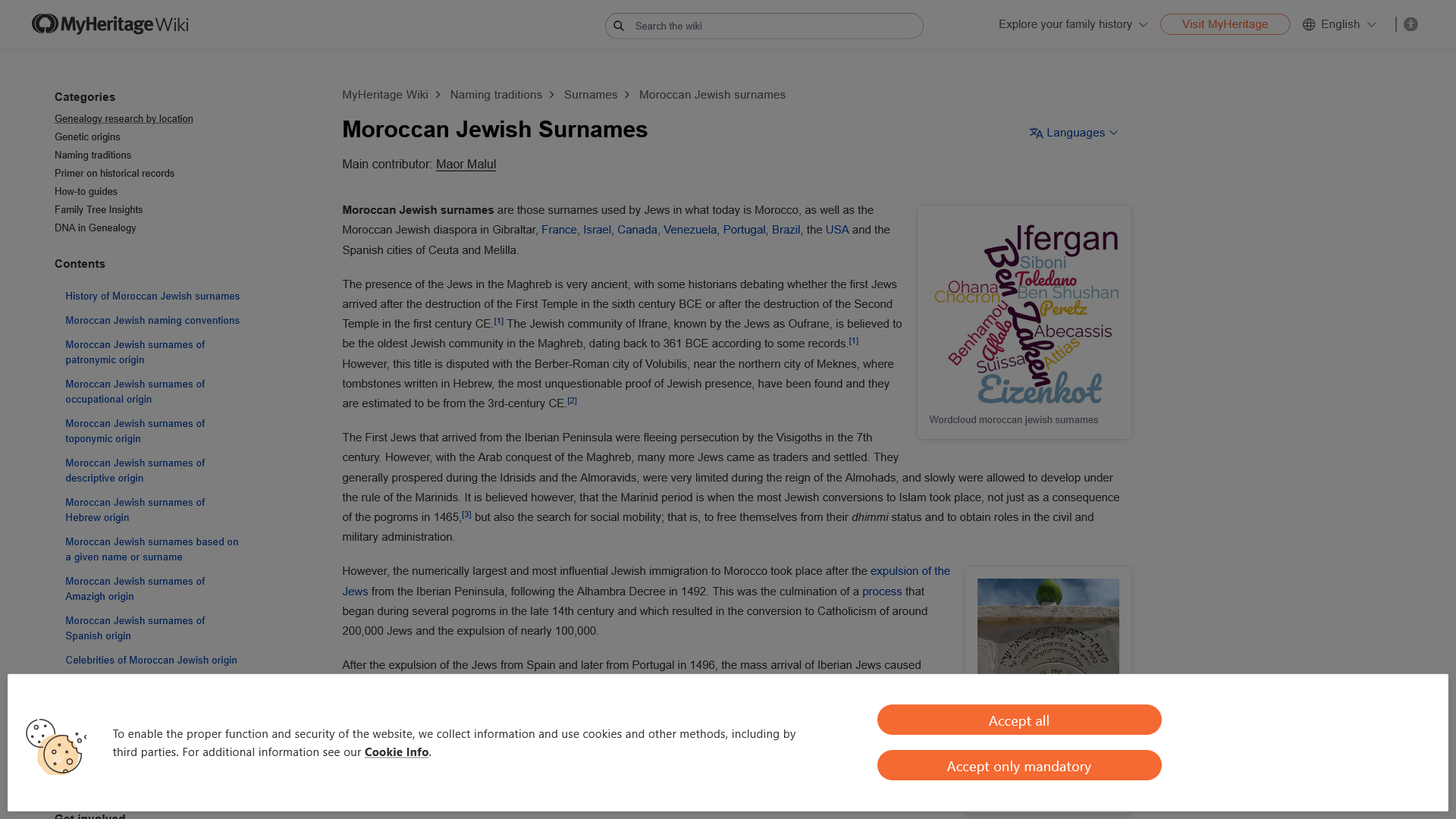
This MyHeritage wiki page provides a comprehensive examination of Moroccan Jewish surnames, serving as both a genealogical resource and historical document for understanding the complex naming traditions of Jewish communities in Morocco and their global diaspora. The page, primarily contributed by Maor Malul, focuses on the surnames used by Jews in historic and modern Morocco, as well as Moroccan Jewish communities that have spread across Gibraltar, France, Israel, Canada, Venezuela, Portugal, Brazil, the United States, and the Spanish cities of Ceuta and Melilla.
The content reveals the deep historical roots of Jewish presence in the Maghreb, with scholarly debate centering on whether the first Jewish communities arrived after the destruction of the First Temple (6th century BCE) or the Second Temple (1st century CE). The page highlights competing claims for the oldest Jewish community, noting that Ifrane (known as Oufrane to Jews) may date back to 361 BCE, while Hebrew tombstones found in the Berber-Roman city of Volubilis near Meknes provide concrete evidence of Jewish presence from the 3rd century CE. The analysis traces several waves of Jewish immigration, from early Visigothic persecution refugees in the 7th century through the massive influx following the 1492 Alhambra Decree, which brought nearly 100,000 expelled Iberian Jews to Morocco and fundamentally transformed the local Jewish community structure.
A crucial insight presented is the evolution of surname usage among Moroccan Jews, which was relatively uncommon before the late 15th century Spanish expulsion. The earliest documented hereditary surnames date to the 12th century, with examples like L'Mdioni (El Medioni) and Bahlul, but the practice only became widespread after the arrival of Spanish Jewish refugees who brought their established naming conventions. The page emphasizes how European influence in the 1800s, particularly through institutions like the Alliance Israélite Universelle, further standardized surname usage among Moroccan Jewish communities.
The page serves as a practical genealogical tool by addressing the complex spelling variations that characterize Moroccan Jewish surnames due to the multilingual nature of record-keeping under Arabic, French, Spanish, and Hebrew administrative systems. Examples like M'loul/Melloul/Melul/Malul and Botbol/Abitbol/Abutbul/Boutboul demonstrate how a single family name could appear in up to four different spellings depending on the registrar's language. The page specifically mentions MyHeritage's SuperSearch technology as a solution for researchers dealing with these variant spellings, while also beginning to categorize surnames by origin, particularly highlighting patronymic surnames beginning with the "Ben-" prefix meaning "son of" in both Arabic and Hebrew.
Cette page web de MyHeritage, principalement rédigée par Maor Malul, constitue une ressource encyclopédique exhaustive consacrée aux noms de famille juifs marocains. Elle explore l'origine, l'évolution et les caractéristiques de ces patronymes portés non seulement par les communautés juives du Maroc historique, mais aussi par la diaspora marocaine dispersée à travers Gibraltar, la France, Israël, le Canada, le Venezuela, le Portugal, le Brésil, les États-Unis et les enclaves espagnoles de Ceuta et Melilla. L'objectif principal est de fournir aux généalogistes et aux chercheurs une compréhension approfondie de l'histoire onomastique de cette communauté séfarade.
Le contenu révèle une histoire millénaire fascinante, remontant potentiellement au VIe siècle avant J.-C. avec la destruction du Premier Temple, bien que certains historiens situent l'arrivée des premiers juifs après la destruction du Second Temple au Ier siècle de notre ère. La page détaille comment la communauté juive d'Ifrane (Oufrane) pourrait être la plus ancienne du Maghreb (361 av. J.-C.), tout en mentionnant la découverte de stèles hébraïques à Volubilis près de Meknès, datées du IIIe siècle. L'analyse met particulièrement l'accent sur l'impact transformateur de l'expulsion des juifs d'Espagne en 1492 suite au décret de l'Alhambra, événement qui a révolutionné la structure sociale de la communauté juive marocaine. Les nouveaux arrivants, appelés *rūmiyīn* ("Européens" en arabe), plus aisés, ont supplanté les communautés locales plus pauvres, créant des tensions socio-économiques durables.
La page aborde brillamment les conventions de dénomination complexes résultant de la coexistence de plusieurs langues officielles (arabe, français, espagnol, hébreu) au fil des siècles. Cette particularité linguistique génère jusqu'à quatre variantes orthographiques pour un même nom : M'loul/Melloul/Melul/Malul ou Botbol/Abitbol/Abutbul/Boutboul. L'auteur explique que l'usage des noms de famille héréditaires était rare avant l'arrivée des réfugiés espagnols à la fin du XVe siècle, les premiers exemples documentés remontant au XIIe siècle avec des patronymes comme L'Mdioni et Bahlul. Cette tradition s'est progressivement généralisée sous l'influence européenne du XIXe siècle, notamment grâce à l'Alliance Israélite Universelle.
L'article se distingue par son approche technique et généalogique, incluant des éléments visuels comme une photographie de la stèle de Solica Hachuel à Fès (1834) et un nuage de mots-clés. Il cible spécifiquement les généalogistes et les chercheurs en histoire familiale, en soulignant les capacités technologiques de MyHeritage SuperSearch pour identifier les variantes orthographiques des noms. La page annonce également une analyse des noms patronymiques commençant par le préfixe "Ben-" (signifiant "fils de"), démontrant ainsi sa valeur académique pour comprendre les structures familiales et l'évolution culturelle de cette communauté juive séfarade.
דף האינטרנט הזה, הנמצא באתר MyHeritage, מתמחה בחקר ובתיעוד של שמות משפחה יהודיים מרוקאים. הדף מספק מידע מקיף על ההיסטוריה, המקורות והמאפיינים של שמות המשפחה שנשאו יהודי מרוקו לאורך הדורות, כולל הקהילות היהודיות המרוקאיות בגלות שהתפזרו למדינות כמו ישראל, צרפת, קנדה, ונצואלה, ברזיל וארצות הברית. הדף מציג גישה אקדמית ומעמיקה לנושא, תוך שהוא משלב היסטוריה, גנאלוגיה ולשונאות.
הדף חושף כי הנוכחות היהודית במרוקו עתיקת יומין, כאשר היסטוריונים מתווכחים האם היהודים הראשונים הגיעו עקב חורבן בית ראשון במאה השישית לפני הספירה או לאחר חורבן בית שני. הקהילה היהודית של איפראן (שנקראה על ידי היהודים "אופראן") נחשבת לעתיקה ביותר במגרב, ויש הטוענים שהיא מתוארכת לשנת 361 לפני הספירה. הדף מסביר שלפני הגעת הפליטים היהודים מספרד בסוף המאה ה-15, רק מעט יהודים מרוקאים השתמשו בשמות משפחה תורשתיים. ההתייחסות המוקדמת ביותר לשמות משפחה מתוארכת לתחילת המאה ה-12, כ-300 שנה לאחר הכיבוש הערבי של מרוקו, עם דוגמאות מוכרות כמו ל'מדיוני ובהלול.
המידע החשוב ביותר שמציג הדף נוגע להשפעה המכרעת של גירוש יהודי ספרד ב-1492 על שמות המשפחה היהודיים המרוקאיים. הגעתם ההמונית של יהודים איבריים (שנקראו "רומיים" בערבית, כלומר "אירופיים") שינתה באופן מהותי את הקהילה היהודית המרוקאית. היהודים החדשים, שהיו בדרך כלל אמידים יותר, השתלטו על עמדות הכוח בקהילה על חשבון היהודים המקומיים העניים יותר שנקראו "פוראסטרוס" (זרים בספרדית). בסופו של דבר המסורת הדתית הספרדית הפכה להיות דומיננטית, תוך שמירה על השפעה מגרבית מובחנת.
הדף כולל חלק מעניין במיוחד העוסק במוסכמות המינוח המרוקאיות-יהודיות, המסביר כיצד שמות משפחה זהים יכולים להיכתב בעד ארבע דרכים שונות בהתאם לשפה של הרושם (ערבית, צרפתית, ספרדית או עברית). למשל, שם המשפחה יכול להופיע כ-M'loul, Melloul, Melul או Malul. הדף מציין שטכנולוגיית MyHeritage מסוגלת לכסות את כל הווריאציות הללו, מה שחוסך זמן יקר לחוקרים. כמו כן, הדף מתחיל לדון בשמות משפחה מרוקאיים-יהודיים ממקור פטרונימי, במיוחד אלה המתחילים בקידומת "בן-" שמשמעותה "בן של" הן בערבית והן בעברית.
هذه الصفحة من موقع MyHeritage تقدم دراسة شاملة ومفصلة حول ألقاب اليهود المغاربة، وهي موضوع يحمل أهمية تاريخية وثقافية كبيرة. تركز الصفحة على تتبع وتحليل الألقاب التي استخدمها اليهود في المغرب عبر التاريخ، بالإضافة إلى المجتمعات اليهودية المغربية المنتشرة في جبل طارق وفرنسا وإسرائيل وكندا وفنزويلا والبرتغال والبرازيل والولايات المتحدة والمدن الإسبانية سبتة ومليلية. يساهم في هذا المحتوى الباحث معور مالول، وتهدف الصفحة إلى مساعدة الباحثين في علم الأنساب على تتبع أصولهم اليهودية المغربية.
يقدم المحتوى سياقاً تاريخياً عميقاً يعود إلى العصور القديمة، حيث يذكر أن الوجود اليهودي في المغرب قديم جداً، مع اختلاف المؤرخين حول ما إذا كان أول وصول لليهود بعد تدمير الهيكل الأول في القرن السادس قبل الميلاد أم بعد تدمير الهيكل الثاني في القرن الأول الميلادي. تشير الصفحة إلى أن جماعة إفران اليهودية، المعروفة باسم "أوفران"، تعتبر أقدم جماعة يهودية في المغرب العربي وتعود إلى عام 361 قبل الميلاد. كما تسلط الضوء على نقطة تحول تاريخية مهمة وهي وصول اليهود الإسبان بأعداد كبيرة بعد مرسوم الحمراء عام 1492، والذي أدى إلى طرد حوالي 100,000 يهودي وتحويل 200,000 آخرين إلى المسيحية. هؤلاء اليهود الوافدون الجدد، والذين كانوا أكثر ثراءً ونُعتوا بـ"الرومييين" (الأوروبيين بالعربية)، استولوا على مواقع القوة في المجتمع على حساب اليهود المحليين الأفقر.
تتناول الصفحة تطور استخدام الألقاب الوراثية بين اليهود المغاربة، مشيرة إلى أنه قبل وصول اللاجئين اليهود من إسبانيا في أواخر القرن الخامس عشر، كان قلة قليلة من اليهود المغاربة تستخدم ألقاباً وراثية. أقدم الأمثلة المعروفة تعود إلى القرن الثاني عشر مثل "المديوني" و"بهلول". مع وصول اليهود الإسبان، أصبح استخدام الألقاب الوراثية أكثر شيوعاً، ووصل إلى ذروته في القرن التاسع عشر بتأثير المؤسسات الأوروبية مثل التحالف الإسرائيلي العالمي. تقدم الصفحة أيضاً معلومات قيمة حول تقاليد التسمية، موضحة كيف أن الألقاب اليهودية المغربية تُكتب بأشكال مختلفة حسب لغة الكاتب (عربية، فرنسية، إسبانية، أو عبرية)، مما يؤدي إلى وجود أربع طرق مختلفة لكتابة نفس اللقب، مثل "ملول/مالول" و"بوطبول/أبيطبول".
تتميز الصفحة بكونها تجمع بين البحث الأكاديمي والتطبيق العملي، حيث تقدم معلومات تاريخية مفصلة مع إرشادات عملية للباحثين في الأنساب. تحتوي على مراجع تاريخية مهمة وتذكر شاهد قبر سوليكا هاشويل في فاس عام 1834 كمثال على التوثيق التاريخي. كما تروج الصفحة لتقنيات MyHeritage المتقدمة في البحث الفائق (SuperSearch) التي تغطي جميع الاختلافات الإملائية للألقاب، مما يوفر وقتاً ثميناً للباحثين. الجمهور المستهدف يشمل الباحثين في الأنساب، والمهتمين بالتاريخ اليهودي المغربي، وأفراد المجتمعات اليهودية المغربية حول العالم الذين يسعون لتتبع جذورهم التاريخية.
Esta página web de MyHeritage, desarrollada principalmente por Maor Malul, se centra en el estudio exhaustivo de los apellidos judíos marroquíes, abarcando tanto su origen histórico como su dispersión geográfica actual. El sitio examina los apellidos utilizados por las comunidades judías que habitaron en lo que hoy es Marruecos, así como por la diáspora judeo-marroquí establecida en Gibraltar, Francia, Israel, Canadá, Venezuela, Portugal, Brasil, Estados Unidos y las ciudades españolas de Ceuta y Melilla. La página presenta un enfoque genealógico y lingüístico, proporcionando herramientas de búsqueda para investigar apellidos específicos y conectar con la historia familiar de los usuarios.
El contenido revela la extraordinaria antigüedad de la presencia judía en el Magreb, con debates académicos sobre si los primeros judíos llegaron tras la destrucción del Primer Templo en el siglo VI a.C. o después de la destrucción del Segundo Templo en el siglo I d.C. La página destaca que la comunidad judía más antigua podría ser la de Ifrane (conocida como Oufrane), datada en 361 a.C., aunque este título se disputa con hallazgos arqueológicos en Volubilis, cerca de Meknés, donde se han encontrado lápidas en hebreo del siglo III d.C. El análisis histórico profundiza en las diversas oleadas migratorias, desde los refugiados visigodos del siglo VII hasta la inmigración masiva tras el Decreto de la Alhambra en 1492, cuando los judíos expulsados de España y Portugal transformaron radicalmente las comunidades judías marroquíes existentes.
Un aspecto fascinante que aborda la página es la evolución de las convenciones de nomenclatura judeo-marroquíes. Antes de la llegada de los refugiados españoles a finales del siglo XV, pocos judíos marroquíes utilizaban apellidos hereditarios, siendo L'Mdioni (El Medioni) y Bahlul algunos de los ejemplos más antiguos del siglo XII. La página explica cómo la influencia europea del siglo XIX, promovida por instituciones como la Alliance Israélite Universelle, consolidó definitivamente el uso de apellidos hereditarios. Además, documenta meticulosamente las variaciones ortográficas de los apellidos debido a los diferentes idiomas oficiales (árabe, francés, español y hebreo), proporcionando ejemplos específicos como M'loul/Melloul/Melul/Malul o Botbol/Abitbol/Abutbul/Boutboul.
La página incorpora elementos multimedia como una nube de palabras con apellidos judeo-marroquíes y referencias a lápidas históricas, como la de Solica Hachuel en Fez (1834). El sitio tiene un valor académico considerable para genealogistas, historiadores y descendientes de comunidades judeo-marroquíes, ofreciendo tecnología SuperSearch que reconoce automáticamente las variantes ortográficas de los apellidos. La estructura del contenido incluye secciones especializadas sobre apellidos de origen patronímico (con el prefijo Ben-, que significa "hijo de"), convenciones de nomenclatura y contexto histórico detallado, convirtiéndose en un recurso integral para la investigación genealógica e histórica de esta comunidad diaspórica.
Citation (APA Style)
Moroccan Jewish Surnames - Common Last Names in Moroccan History - MyHeritage Wiki. (2025, 11 22).
www.myheritage.com.
https://www.myheritage.com/wiki/Moroccan_Jewish_surnames