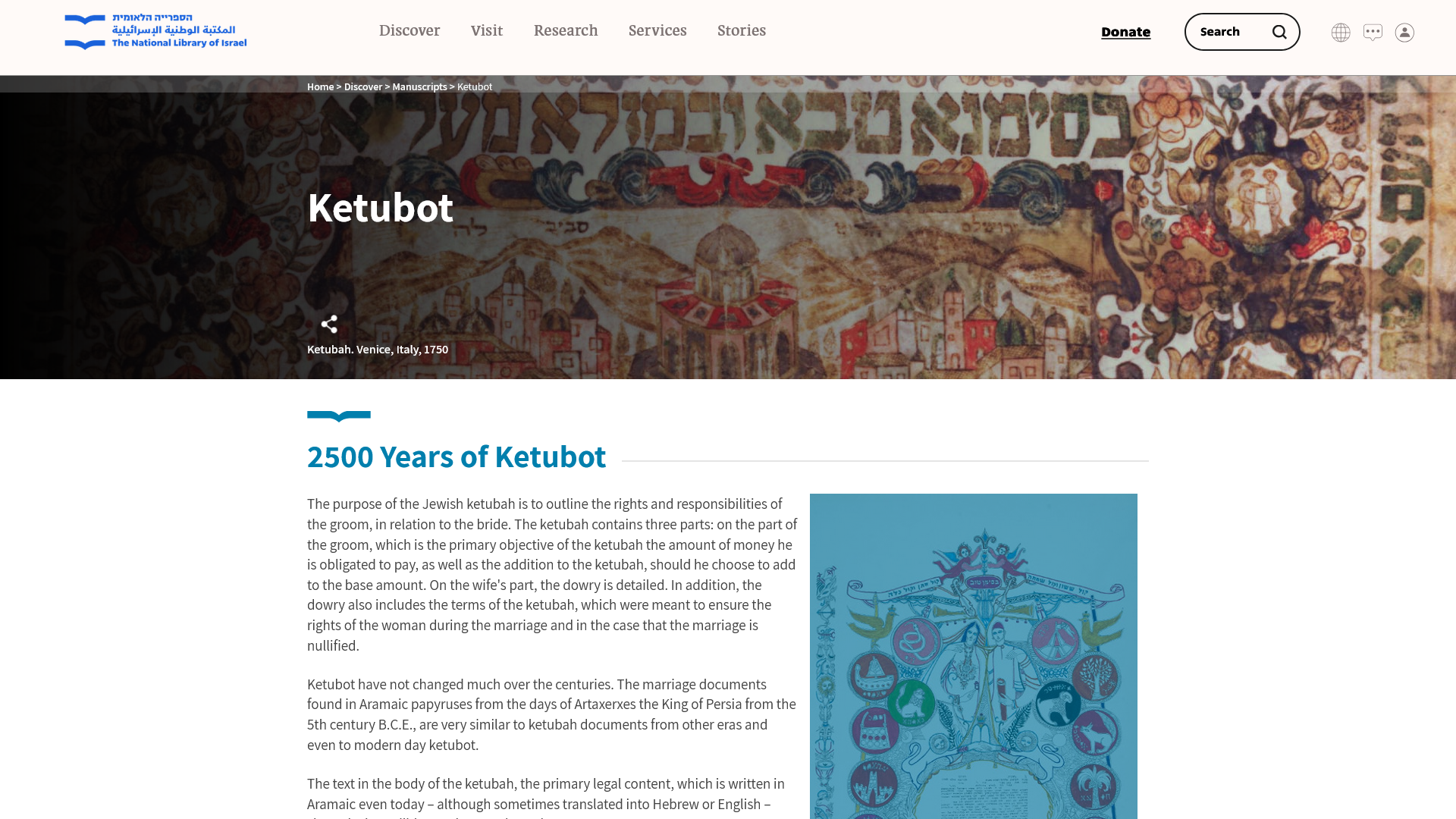
This web page from the National Library of Israel presents a fascinating exploration of Jewish marriage contracts (ketubot) spanning an extraordinary 2,500-year period, showcasing one of Judaism's most enduring legal documents. The page's primary focus is to illuminate the remarkable consistency and historical significance of the ketubah as both a religious document and vital historical source, drawing from the National Library's extensive collection to demonstrate how these marriage contracts have evolved while maintaining their essential legal framework across millennia.
The content reveals that ketubot serve as comprehensive legal documents outlining the mutual rights and responsibilities between bride and groom, structured around three key components: the groom's financial obligations (including mandatory payments and optional additions), the bride's dowry arrangements, and protective clauses ensuring the woman's rights during marriage and potential dissolution. Perhaps most striking is the documented continuity between ancient Aramaic papyrus marriage documents from 5th century B.C.E. Persia (during Artaxerxes' reign) and contemporary ketubot, with the core legal text remaining in Aramaic even today. This consistency demonstrates an unbroken chain of Jewish legal tradition that has survived across diverse geographical locations and historical periods.
The page provides rich cultural and historical context by detailing how different Jewish communities adapted the standard ketubah format to address local customs and concerns. These regional variations include North African and Yemeni requirements preventing husbands from forcing wives to relocate, Syrian and Eretz Yisrael provisions mandating conditional divorce documents before extended travel (protecting against "chained wife" situations), and various clauses addressing polygamy, inheritance without children, and levirate marriage arrangements. These adaptations reveal how Jewish communities balanced adherence to ancient legal traditions with practical responses to local social and economic conditions.
The page appears designed for both academic researchers and culturally interested general audiences, emphasizing the National Library of Israel's role as a repository for this invaluable documentary heritage. By highlighting their "vast and rich collection," the institution positions itself as offering comprehensive research opportunities into ketubot as multifaceted historical sources that illuminate Jewish legal development, social customs, and community life across different eras and geographical regions. The page effectively demonstrates how these marriage contracts transcend their immediate legal purpose to become windows into 2,500 years of Jewish social history and legal continuity.
Cette page web de la Bibliothèque nationale d'Israël présente une exposition fascinante sur les ketubot juives, ces contrats de mariage qui témoignent de 2500 ans d'histoire et de tradition juridique. Le site met en lumière la collection exceptionnelle de ketubot de la bibliothèque, en utilisant comme exemple emblématique une ketubah parisienne de 1970 pour expliquer la fonction et la structure de ces documents essentiels. L'objectif principal est de démontrer la remarquable continuité historique de ces contrats matrimoniaux tout en révélant leurs adaptations locales à travers les siècles et les communautés juives du monde entier.
Le contenu révèle des aspects juridiques et sociaux particulièrement éclairants sur la condition féminine dans le judaïsme historique. Chaque ketubah comprend trois éléments fondamentaux : les obligations financières du marié (montant de base et suppléments éventuels), la dot de l'épouse, et les clauses protectrices garantissant les droits de la femme pendant le mariage et en cas de dissolution. L'analyse comparative avec les papyrus araméens du Ve siècle avant notre ère, datant du règne d'Artaxerxès roi de Perse, démontre une stabilité textuelle remarquable, le corps principal du document étant encore rédigé en araméen aujourd'hui, parfois accompagné de traductions en hébreu ou en anglais.
L'exposition révèle également la richesse des variations régionales qui se sont développées au fil des siècles, reflétant les préoccupations spécifiques de chaque communauté. En Afrique du Nord et au Yémen, les maris s'engageaient à ne pas contraindre leurs épouses à déménager de ville en ville, tandis qu'en Syrie et en Eretz Yisraël, des clauses interdisaient aux hommes d'entreprendre de longs voyages sans laisser à leur femme un divorce conditionnel, protection cruciale contre le statut d'« épouse enchaînée ». Ces adaptations locales côtoient des dispositions plus universelles concernant les arrangements successoraux sans enfants, la polygamie dans les communautés où elle était pratiquée, et les règles du lévirat. Cette collection constitue ainsi une source historique inestimable pour comprendre l'évolution du droit matrimonial juif et des structures sociales à travers les âges, s'adressant tant aux chercheurs en études juives qu'au grand public intéressé par l'histoire culturelle et juridique.
**כתובות יהודיות: מסע של 2,500 שנה דרך המסורת היהודית**
דף האינטרנט של הספרייה הלאומית של ישראל מציג את עולם הכתובות היהודיות הרחב והמרתק, החל מן המאה ה-5 לפני הספירה ועד ימינו. הדף מתמקד בהצגת המשמעות החוקית והתרבותית של הכתובה כמסמך מכונן בחיי הנשואין היהודיים, תוך הדגשת העקביות המדהימה שלו לאורך אלפיים וחמש מאות שנה. הכתובה, כפי שמוסבר, מהווה מסמך משפטי המגדיר את זכויותיו וחובותיו של החתן כלפי הכלה, כולל סכום הכסף שעליו לשלם, תנאי הנדוניה, והסדרים המיועדים להגן על זכויות האישה הן במהלך הנישואין והן במקרה של ביטול הנישואין.
התוכן חושף את הרציפות ההיסטורית המרשימה של מסמכי הכתובות, תוך השוואה ישירה בין פירות נישואין ארמיים מימי המלך הפרסי ארתחשסתא במאה ה-5 לפני הספירה לבין כתובות מודרניות. הטקסט הליבה של הכתובה, הכתוב בארמית עד היום (אם כי לעיתים מתורגם לעברית או לאנגלית), מעיד על עמידותו ויציבותו לאורך ההיסטוריה. למרות הטקסט הקבוע והעתיק, הדף מתאר כיצד התפתחו מנהגים מקומיים בקהילות שונות: בצפון אפריקה ובתימן נדרשו בעלים שלא להכריח את נשותיהם לעבור ממקום למקום, בסוריה ובארץ ישראל הופיע תנאי האוסר על הבעל לצאת למסעות ארוכים מבלי להשאיר לאישתו גט על תנאי כדי למנוע ממנה להיהפך ל"עגונה".
הדף מדגיש את החשיבות האקדמית וההיסטורית של אוסף הכתובות הנרחב והעשיר של הספרייה הלאומית של ישראל, המאפשר מבט מקיף ומעמיק על הכתובה כמסמך יהודי, כיצירה יהודית וכמקור היסטורי חיוני. הדף מיועד לקהל רחב של חוקרים, היסטוריונים, וכל מי שמתעניין בהיסטוריה יהודית ובמסורת החוקית היהודית. האוסף מציע הזדמנות ייחודית להבין את התפתחות המוסד של הנישואין ביהדות, את השינויים הגיאוגרפיים והתרבותיים שהשפיעו על נוסח הכתובה, ואת הדרכים שבהן חתן התוכן המשפטי לתנאים החברתיים והכלכליים של כל תקופה ומקום.
تتناول هذه الصفحة من الموقع الإلكتروني للمكتبة الوطنية الإسرائيلية موضوع وثائق الكتوبا اليهودية عبر التاريخ، وهي عقود الزواج التي تُعرِّف بحقوق وواجبات العريس تجاه العروس. تُركز الصفحة على عرض المجموعة الواسعة من وثائق الكتوبا التي تحتفظ بها المكتبة، والتي تمتد عبر 2500 عام من التاريخ اليهودي. الهدف الأساسي من هذا العرض هو إبراز الكتوبا كوثيقة يهودية أصيلة ومصدر تاريخي حيوي يكشف عن التطورات الاجتماعية والقانونية في المجتمعات اليهودية المختلفة عبر العصور.
تكشف الصفحة عن البنية الثلاثية للكتوبا التي تشمل: التزامات العريس المالية وهي الهدف الأساسي من الوثيقة، ومهر العروس، والشروط التي تضمن حقوق المرأة أثناء الزواج وفي حالة انتهائه. ما يُميز هذه الوثائق هو استمراريتها التاريخية المذهلة، حيث تُظهر المقارنة بين وثائق الزواج الآرامية من عهد أرتحشستا ملك فارس في القرن الخامس قبل الميلاد والكتوبا الحديثة تشابهاً مدهشاً. النص الأساسي للكتوبا لا يزال يُكتب بالآرامية حتى اليوم، مما يعكس الثبات التشريعي لهذه الوثيقة عبر ألفين وخمسمائة عام، رغم ترجمتها أحياناً إلى العبرية أو الإنجليزية.
تُسلط الصفحة الضوء على التنويعات المحلية التي طرأت على الكتوبا في مجتمعات يهودية مختلفة، مما يجعلها مرآة للعادات والظروف الاجتماعية المتنوعة. ففي شمال أفريقيا واليمن، كان الأزواج ملزمين بعدم إجبار زوجاتهم على الانتقال من مدينة إلى أخرى، بينما في سوريا وأرض إسرائيل ظهرت شروط تمنع الزوج من السفر لرحلات طويلة دون ترك طلاق مشروط لحماية الزوجة من أن تصبح "زوجة مقيدة". كما تتضمن الكتوبا ترتيبات الميراث في حالة عدم وجود أطفال، وأحكام تعدد الزوجات في المجتمعات التي تُبيح ذلك، وفقرات متعلقة بزواج الأخ من أرملة أخيه، مما يجعل هذه المجموعة مصدراً لا يُقدر بثمن لفهم تطور القانون اليهودي والحياة الاجتماعية عبر التاريخ.
Esta página web de la Biblioteca Nacional de Israel presenta una fascinante exploración de los **ketubot** (contratos matrimoniales judíos) que abarca 2500 años de historia, destacando la extraordinaria continuidad de esta tradición legal y cultural. El sitio se centra en analizar la ketubah como documento fundamental del matrimonio judío, cuyo propósito principal es delinear los derechos y responsabilidades del novio en relación con la novia, estableciendo un marco legal protector para ambas partes.
El contenido revela aspectos cruciales de la estructura de estos documentos, que tradicionalmente constan de tres partes esenciales: las obligaciones financieras del novio (incluyendo la cantidad base que debe pagar y posibles adiciones), la descripción detallada de la dote aportada por la esposa, y las condiciones específicas diseñadas para garantizar los derechos de la mujer tanto durante el matrimonio como en caso de disolución del mismo. Lo más notable es la consistencia temporal de estos documentos: los papiros arameos encontrados de la época del rey persa Artajerjes (siglo V a.C.) muestran similitudes sorprendentes con las ketubot modernas, manteniendo incluso el texto principal en arameo hasta la actualidad, aunque a veces se traduce al hebreo o inglés.
La página también explora las variaciones culturales regionales que se desarrollaron a lo largo de los siglos, adaptándose a las necesidades específicas de diferentes comunidades judías. Por ejemplo, en el norte de África y Yemen se establecían cláusulas que prohibían a los maridos obligar a sus esposas a mudarse de ciudad; en Siria y Eretz Yisrael se incluían condiciones que requerían que el esposo dejara un divorcio condicional antes de emprender viajes largos para evitar que la mujer quedara en situación de "esposa encadenada" (*agunah*). Otras disposiciones comunes abordaban arreglos de herencia, situaciones de poligamia y matrimonio levirato.
La Biblioteca Nacional de Israel destaca su extensa colección de ketubot como una fuente histórica vital que permite un análisis comprensivo y profundo de estos documentos, no solo como creaciones legales judías, sino como ventanas únicas hacia la evolución social, cultural y jurídica de las comunidades judías a través de los milenios. Esta colección representa un recurso invaluable para investigadores, académicos y cualquier persona interesada en la historia del derecho matrimonial judío y su impacto en la preservación de los derechos de la mujer en contextos históricos diversos.