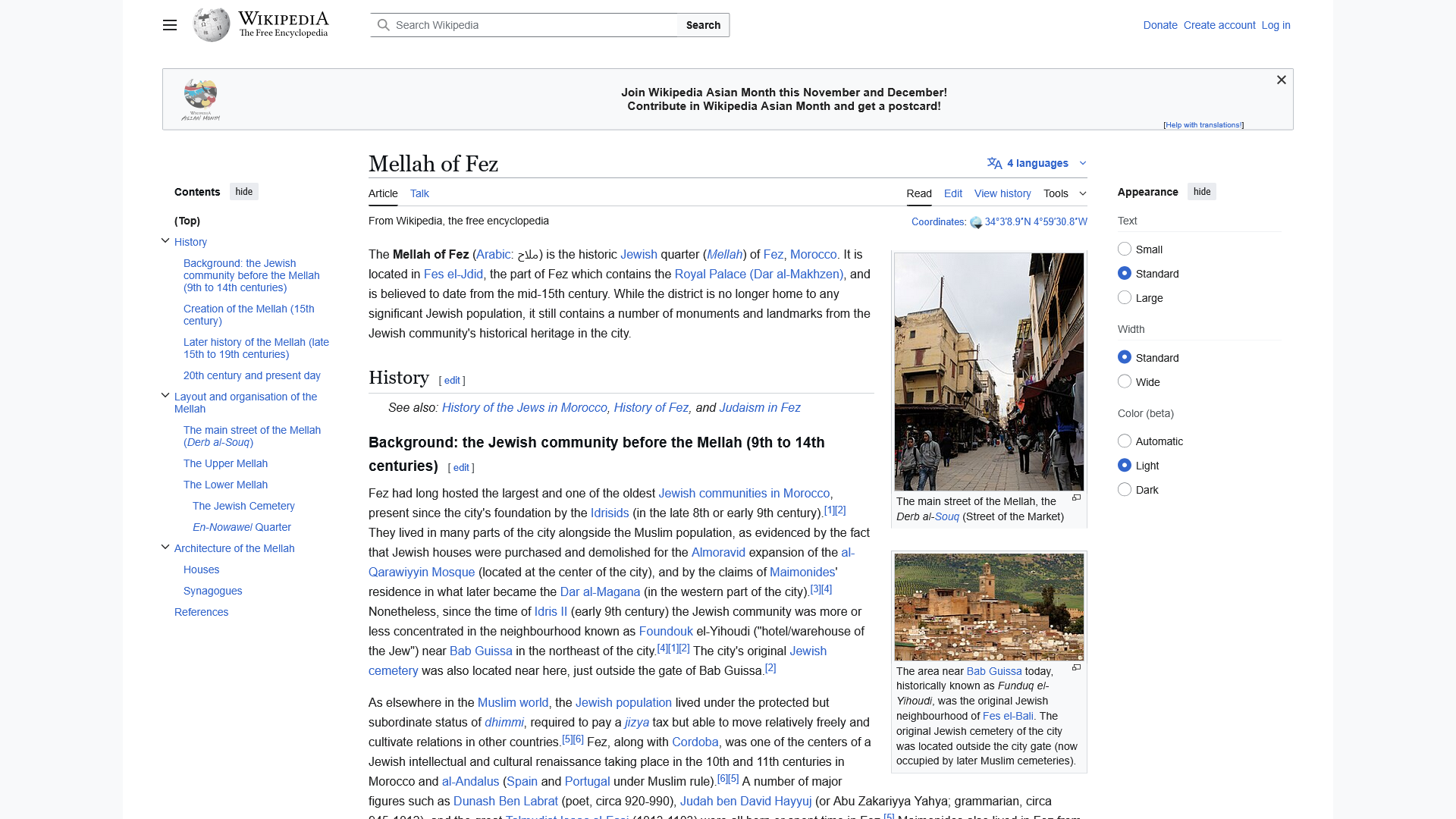
This Wikipedia page provides a comprehensive historical account of the Mellah of Fez, the historic Jewish quarter located in Fes el-Jdid, Morocco. The page serves as both a geographical and cultural reference, documenting the evolution of one of Morocco's most significant Jewish communities from its origins in the 9th century through to its transformation into the dedicated mellah district in the mid-15th century. The article's primary focus is to trace the complex history of Jewish settlement in Fez, examining how political changes, religious policies, and urban development shaped the community's physical and social landscape over several centuries.
The content reveals fascinating insights into the pre-mellah period (9th-14th centuries), when Jews lived integrated throughout Fez alongside the Muslim population. The page details how the original Jewish community was concentrated near Bab Guissa in the area called "Funduq el-Yihoudi" (hotel/warehouse of the Jew), and describes Fez's golden age as a center of Jewish intellectual renaissance in the 10th-11th centuries. Notable scholars like Maimonides, Dunash Ben Labrat, and Isaac al-Fasi lived and worked in the city during this period. However, the article also documents the dramatic persecution under the Almohad dynasty, which "abolished the jizya and the status of dhimmi, enforcing repressive measures against non-Muslims," forcing many Jews to convert or flee, before conditions improved under the more tolerant Marinid rule.
The historical narrative culminates with the creation of the actual Mellah in the 15th century, when the Marinids relocated the entire Jewish population from Fes el-Bali to a new district in the southern part of Fes el-Jdid. This area had previously housed "Muslim garrisons, notably by the Sultan's mercenary contingents of Syrian archers" before becoming the Jewish quarter. The page provides precise geographical context, noting the district's location "between the inner and outer southern walls of the city" and explaining that the name "Mellah" (meaning 'salt' or 'saline area') derived from either a local saline water source or a former salt warehouse.
This Wikipedia entry serves as a valuable academic resource for historians, urban planners, and those interested in Jewish diaspora studies or Moroccan cultural heritage. The page includes specific coordinates, references to multiple historical sources, and detailed cross-references to related topics like the broader history of Jews in Morocco and Judaism in Fez. While noting that the district "is no longer home to any significant Jewish population," the article emphasizes its continued importance as a repository of "monuments and landmarks from the Jewish community's historical heritage," making it relevant for both scholarly research and cultural tourism contexts.
Cette page Wikipedia présente une analyse historique détaillée du Mellah de Fès, l'ancien quartier juif de cette ville impériale marocaine. L'article se concentre sur l'évolution de la communauté juive de Fès depuis sa fondation au IXe siècle jusqu'à la création du quartier spécialisé au XVe siècle. Le Mellah, situé dans Fès el-Jdid près du Palais Royal (Dar al-Makhzen), constitue un témoignage architectural et culturel majeur de l'héritage juif au Maroc, bien qu'il ne soit plus habité par une population juive significative aujourd'hui.
L'article révèle des éléments fascinants sur l'âge d'or de la communauté juive de Fès, particulièrement aux Xe et XIe siècles, lorsque la ville était, avec Cordoue, l'un des centres de la renaissance intellectuelle juive au Maghreb et en Al-Andalus. Des figures emblématiques comme Maimonides (qui vécut à Fès de 1159 à 1165), le poète Dunash Ben Labrat, et le talmudiste Isaac al-Fasi ont marqué cette période de prospérité. L'histoire prend un tournant dramatique avec l'avènement des Almohades qui abolirent le statut de dhimmi et forcèrent les conversions, avant que la dynastie mérinide ne restaure un climat plus tolérant au XIIIe siècle.
La création du Mellah proprement dit s'inscrit dans le contexte de la fondation de Fès el-Jdid en 1276 par les Mérinides. Ce nouveau quartier juif occupa un district initialement habité par des garnisons musulmanes, notamment des archers syriens mercenaires du Sultan, disbanded vers 1325. L'origine du nom "Mellah" (signifiant "sel" en arabe) provient soit d'une source d'eau saline locale, soit de la présence d'un ancien entrepôt de sel. Cette page constitue une ressource académique précieuse pour comprendre l'histoire des communautés juives au Maroc, s'appuyant sur des références historiques solides et fournissant des coordonnées géographiques précises ainsi que des détails architecturaux comme la rue principale, le Derb al-Souq (rue du marché).
דף ויקיפדיה זה מתמקד במלאח פס, הרובע היהודי ההיסטורי בעיר פס שבמרוקו. המאמר מספק תיעוד מקיף של היסטוריה יהודית של כ-600 שנה, החל מתקופת האידריסים במאה ה-9 ועד להקמת המלאח במאה ה-15. הדף בוחן את התפתחותה של אחת מהקהילות היהודיות הגדולות והעתיקות ביותר במרוקו, תוך התמקדות במעבר הדרמטי מחיים משולבים בעיר העתיקה פס אל-באלי לריכוז בשכונה נפרדת בפס אל-ג'דיד.
המאמר חושף כי במקור חיו יהודי פס פזורים ברחבי העיר העתיקה, כפי שמעיד הרכישה והריסה של בתים יהודיים להרחבת מסגד אל-קרוויין בתקופת המורביטים, וכן מגוריו הטענה על של מימונידס באזור שלימים הפך לדאר אל-מגאנה. תקופת הזוהר של הקהילה במאות ה-10-11 הפכה את פס למרכז התחדשות יהודית אינטלקטואלית ותרבותית לצד קורדובה, שם פעלו דמויות מרכזיות כמו דונש בן לברט (משורר), יהודה בן דוד חיוג' (דקדוקן), ויצחק אלפאסי (תלמודיסט). תקופה זו הסתיימה באופן דרמטי עם עליית האלמוחדים שביטלו את מעמד הדמי ואילצו יהודים להתאסלם או לגלות.
היסטוריית יצירת המלאח במאה ה-15 חושפת תהליך מורכב של שינוי דמוגרפי ואורבני. המרינידים הקימו ב-1276 את פס אל-ג'דיד, עיר מנהלית מבוצרת חדשה, ובהמשך העבירו את כל תושבי יהודי פס אל-באלי לרובע חדש בחלק הדרומי של העיר החדשה. האזור, שהיה מאוכלס בעבר בידי חיילים סוריים ונקרא תחילה "חמס", קיבל את השם "מלאח" (מלח) עקב נוכחותו של מקור מים מלוח או מחסן מלח. המאמר מציין כי למרות שהרובע אינו מאכלס עוד אוכלוסייה יהודית משמעותית, הוא עדיין מכיל מונומנטים ואתרי מורשת חשובים מההיסטוריה היהודית של העיר, מה שהופך אותו לאתר של חשיבות תרבותית והיסטורית רבה.
**ملاح فاس: تاريخ الحي اليهودي العريق في المغرب**
تتناول هذه الصفحة من ويكيبيديا تاريخ ملاح فاس، وهو الحي اليهودي التاريخي في مدينة فاس المغربية، والذي يقع في فاس الجديد بالقرب من القصر الملكي (دار المخزن). يُعتبر هذا الملاح من أقدم وأهم الأحياء اليهودية في المغرب، حيث يعود تاريخ إنشائه إلى منتصف القرن الخامس عشر الميلادي. رغم عدم وجود تجمع يهودي كبير في المنطقة حاليًا، إلا أن الحي ما زال يحتفظ بعدد من المعالم والآثار التي تشهد على التراث اليهودي العريق في المدينة، بما في ذلك الشارع الرئيسي المعروف باسم "درب السوق".
تقدم المقالة تحليلاً تاريخياً مفصلاً يبدأ من الوجود اليهودي المبكر في فاس منذ تأسيس المدينة على يد الأدارسة في أواخر القرن الثامن أو بداية القرن التاسع الميلادي. في البداية، كان اليهود يعيشون في مختلف أنحاء المدينة جنباً إلى جنب مع السكان المسلمين، وتركزوا لاحقاً في منطقة "فندق اليهودي" بالقرب من باب جيسة. شهدت الجالية اليهودية في فاس عصراً ذهبياً خلال القرنين العاشر والحادي عشر، حيث أصبحت المدينة، إلى جانب قرطبة، مركزاً للنهضة الفكرية والثقافية اليهودية. من أبرز الشخصيات التي عاشت في فاس: الشاعر دناش بن لبراط، والنحوي يهوذا بن داود حيوج، وعالم التلمود إسحاق الفاسي، وحتى موسى بن ميمون (ميمونيدس) الذي أقام فيها من 1159 إلى 1165.
أما بخصوص إنشاء الملاح الفعلي، فقد تم ذلك في إطار التطورات السياسية والعمرانية التي شهدتها فاس تحت حكم المرينيين. ففي عام 1276، أسس المرينيون مدينة "فاس الجديد" كمدينة إدارية محصنة لإيواء القصر الملكي والثكنات العسكرية. لاحقاً، تم نقل جميع السكان اليهود من فاس البالي إلى حي جديد في الجزء الجنوبي من فاس الجديد، والذي كان في السابق يؤوي الحاميات العسكرية المسلمة، وخاصة كتائب الرماة السوريين المرتزقة. أُطلق على هذا الحي في البداية اسم "حمص"، ثم "الملاح" (من كلمة ملح) نسبة إلى وجود مصدر مياه مالحة في المنطقة أو لوجود مستودع ملح سابق، وقد احتفظ بهذا الاسم ليصبح مرادفاً للأحياء اليهودية في جميع أنحاء المغرب.
تتميز هذه المقالة بثراء المعلومات التاريخية والمراجع الأكاديمية، حيث تقدم إحداثيات جغرافية دقيقة للموقع وتستشهد بمصادر متخصصة في تاريخ اليهود في المغرب وتاريخ مدينة فاس. كما تتضمن خرائط ومعلومات عن التخطيط العمراني لفاس الجديد، مما يجعلها مرجعاً قيماً للباحثين في التاريخ الإسلامي والدراسات اليهودية والتراث المعماري المغربي. تشير المقالة أيضاً إلى التحولات الاجتماعية والسياسية الكبرى التي أثرت على الجالية اليهودية، مثل الاضطهاد في عهد الموحدين والتسامح النسبي في عهد المرينيين، وكذلك موجات الهجرة اليهودية من الأندلس بعد مذابح 1391.
## Análisis de la página web: El Mellah de Fez
Esta página de Wikipedia se centra en el Mellah de Fez, el histórico barrio judío de la ciudad imperial marroquí de Fez. Su propósito principal es documentar la rica historia y patrimonio cultural de esta zona específica, que representa uno de los testimonios más significativos de la presencia judía en el Norte de África. La página está estructurada como un artículo enciclopédico académico que aborda tanto los aspectos urbanísticos como la evolución histórica de esta comunidad desde sus orígenes hasta la actualidad.
El contenido revela información fascinante sobre la evolución de la comunidad judía de Fez a lo largo de más de mil años. Inicialmente, desde la fundación de la ciudad por los Idrisíes en los siglos VIII-IX, los judíos vivían integrados en Fes el-Bali (la ciudad antigua) en el barrio conocido como "Funduq el-Yihoudi" cerca de Bab Guissa. La página destaca que Fez fue un centro intelectual judío floreciente durante los siglos X y XI, albergando a figuras destacadas como Maimónides (1159-1165), Isaac al-Fasi y otros eruditos. Sin embargo, el período almohade trajo persecuciones severas que obligaron a muchos judíos a convertirse o exiliarse, hasta que la dinastía mariní en el siglo XIII restauró un clima más tolerante.
Un punto crucial del artículo es la creación del Mellah propiamente dicho en el siglo XV, cuando todos los judíos fueron trasladados desde Fes el-Bali a un nuevo distrito en la parte sur de Fes el-Jdid (la "Nueva Fez" mariní fundada en 1276). Este barrio, situado entre las murallas interiores y exteriores de la ciudad, había sido previamente ocupado por guarniciones militares sirias hasta 1325. El nombre "Mellah" (que significa "sal" en árabe) proviene posiblemente de una fuente de agua salina local o de un antiguo almacén de sal en la zona.
La página incluye elementos notables como coordenadas geográficas precisas, referencias a monumentos históricos específicos como la calle principal Derb al-Souq, y vínculos contextuales con la historia general de los judíos en Marruecos y el judaísmo en Fez. Aunque el texto se corta abruptamente, menciona que actualmente el distrito ya no alberga una población judía significativa, pero conserva importantes monumentos y sitios patrimoniales que testimonian la herencia histórica de esta comunidad en la ciudad.
Citation (APA Style)
Mellah of Fez - Wikipedia. (2025, 11 22).
en.wikipedia.org.
https://en.wikipedia.org/wiki/Mellah_of_Fez