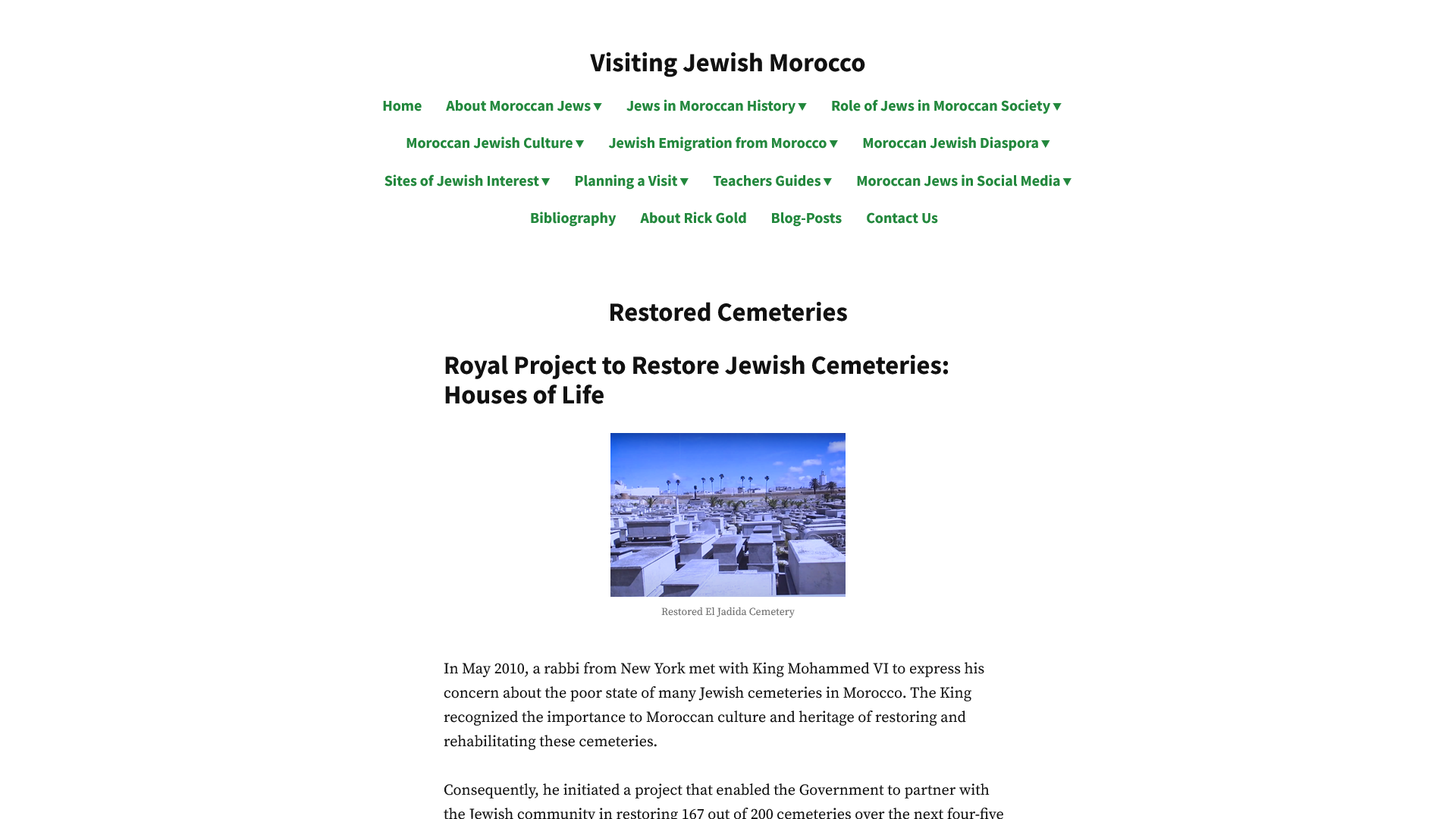
This webpage documents an extraordinary royal initiative in Morocco known as the "Houses of Life" project - a comprehensive restoration effort of Jewish cemeteries launched by King Mohammed VI following a 2010 meeting with a New York rabbi who expressed concerns about their deteriorating condition. The page serves as a detailed report on this cultural preservation project, highlighting Morocco's commitment to maintaining its Jewish heritage despite the significant exodus of Jews from the country over the past several decades. The initiative represents a remarkable example of interfaith cooperation and cultural stewardship in the Arab world.
The project's scope and accomplishments are impressive in scale and detail. Between 2010 and 2015, the Moroccan government partnered with the Council of Jewish Communities of Morocco, led by Serge Berdugo, to restore 167 out of 200 identified Jewish cemeteries across the country. The restoration work, carried out by 76 companies, included constructing 42,000 square meters of walls, cleaning 198,000 square meters of overgrown areas, installing 49,700 square meters of paving and tiling, and repairing 12,600 damaged tombs. Beyond physical restoration, the project created a comprehensive digital archive by mapping each cemetery, photographing every tomb, and building a national database of burial records managed by the Ministry of Islamic Affairs.
The webpage reveals fascinating insights into Morocco's diverse Jewish burial traditions and the geographic distribution of these historic sites. Most restored cemeteries are concentrated in the Souss-Massa-Draa, Marrakesh-Tensift-Al Haouz, and Meknes-Tafilelt regions, reflecting historical patterns of Jewish settlement. The project identified four distinct types of cemeteries (mountainside, open/walled, seaside, and those with ancient tombstones) and documented various tombstone styles ranging from simple stone markers in Debdou to elaborate anthropomorphic (human-figured) tombs found in coastal cemeteries, illustrating the rich diversity of Moroccan Jewish funerary art and regional customs.
The cultural and diplomatic significance of this initiative extends beyond preservation work, as evidenced by a joint letter from 26 rabbis from Morocco, Israel, and other countries thanking King Mohammed VI for his commitment to Moroccan Jewish heritage. This project stands as a testament to Morocco's unique position in the Arab world as a nation actively preserving its Jewish history, making it particularly valuable for researchers studying Jewish diaspora communities, interfaith relations, and cultural preservation efforts in post-colonial North Africa. The page targets both academic audiences interested in Jewish studies and heritage preservation, as well as descendants of Moroccan Jews worldwide who maintain connections to their ancestral homeland.
Cette page web documente un projet royal extraordinaire de préservation du patrimoine juif au Maroc, intitulé « Maisons de Vie » (traduction des mots hébreux figurant à l'entrée des cimetières juifs marocains). Lancé en 2010 par le Roi Mohammed VI suite à la rencontre avec un rabbin new-yorkais préoccupé par l'état dégradé des cimetières juifs marocains, ce projet gouvernemental ambitieux visait à restaurer et réhabiliter ces sites historiques en partenariat avec la communauté juive. L'initiative témoigne de l'engagement remarquable du royaume chérifien envers la préservation de son héritage culturel pluriel, reconnaissant l'importance de ces lieux pour la culture et le patrimoine marocains.
Le projet, mis en œuvre par le Conseil des communautés israélites du Maroc dirigé par Serge Berdugo en collaboration avec le ministère de l'Intérieur, a permis la restauration de 167 cimetières sur les 200 recensés entre 2010 et 2015. Les travaux, réalisés par 76 entreprises, ont été considérables : construction de 42 000 m² de murs, nettoyage de 198 000 m² de terrain, pavage de 49 700 m², et réparation de 12 600 tombes endommagées. Au-delà de la restauration physique, le projet a créé une base de données nationale numérique, cartographiant chaque cimetière et photographiant chaque tombe, démontrant une approche méthodique et respectueuse de cette mémoire collective.
La page révèle la diversité architecturale et géographique de ce patrimoine funéraire, identifiant quatre types de cimetières (montagnards, ouverts ou murés, côtiers, et ceux avec des pierres tombales anciennes) et neuf styles de sépultures distincts, depuis les tombes en pierre de Debdou jusqu'aux monuments anthropomorphes des cimetières côtiers. Cette typologie illustre la richesse culturelle des communautés juives marocaines dispersées géographiquement. L'impact international du projet se mesure également par la lettre de remerciement collective signée par 26 rabbins du Maroc, d'Israël et d'autres pays abritant des descendants de juifs marocains, soulignant la portée diplomatique et culturelle de cette initiative royale unique dans le monde arabe contemporain.
דף זה מוקדש לפרויקט מלכותי יוצא דופן שיזם המלך מוחמד השישי של מרוקו להחייאה ושימור של בתי קברות יהודיים ברחבי הממלכה. הפרויקט, שכונה "בתי החיים" על שם הכיתוב העברי המופיע בכניסות לבתי הקברות המרוקאים, החל בשנת 2010 לאחר פגישה בין המלך לבין רב מניו יורק שהביע דאגתו ממצבם הירוד של בתי הקברות היהודיים במדינה. בהבנת חשיבותם של אתרים אלו למורשת התרבותית המרוקאית, החליט המלك לשתף פעולה עם הקהילה היהודית המקומית ולהשקיע משאבים ממשלתיים רבים בשיקומם.
הפרויקט הביא לתוצאות מרשימות במיוחד: מתוך 200 בתי קברות יהודיים שנמצאו במפקד שנערך, שוקמו 167 מהם בתוך 4-5 שנים. העבודה כללה בניית 42,000 מ"ר של חומות הגנה, פינוי עשבים וניקיון של 198,000 מ"ר, ריצוף וחיפוי של 49,700 מ"ר, ותיקון של 12,600 יחידות קברים פגומים. בנוסף, העבודה בוצעה על ידי 76 חברות וכללה גם שיקום של קברי צדיקים יהודיים רבים ואף הקמת חדרי תפילה. המשרד לענייני דת אף יצר מאגר מידע דיגיטלי מקיף שמכיל מיפוי, צילומים ושמות הנקברים מכל הדתות.
מבחינה גיאוגרפית, רוב בתי הקברות המשוקמים נמצאים באזורי סוס-מאסה-דראע, מרקש-טנסיפט-אל חאוז ומקנס-תפילאלת. הפרויקט זיהה ארבעה סוגים של בתי קברות: הרריים, פתוחים או מוקפי חומה, חופיים, ובעלי מצבות עתיקות. סוגי המצבות מגוונים ביותר וכוללים מצבות אבן (דבדו), סלע (פיגיג), מסורתיות (מרקש), קברי אבן (סאלה), מאוזוליאומים מרוצפים (פאס), קברי שיש מונומנטליים (רבאט), וקברים אנתרופומורפיים בדמות דמות אדם (בבתי קברות חופיים). הפרויקט זוכה להכרה בינלאומית, כאשר 26 רבנים ממרוקו, ישראל ומדינות נוספות שכתבו מכתב תודה משותף למלך על מחויבותו לשימור המורשת היהודית המרוקאית.
تتناول هذه الصفحة المشروع الملكي الاستثنائي لترميم المقابر اليهودية في المغرب، والذي أُطلق عليه اسم "بيوت الحياة" (Houses of Life) نسبة إلى العبارة العبرية المحفورة على مداخل المقابر اليهودية المغربية. بدأت هذه المبادرة التاريخية عام 2010 عندما التقى حاخام من نيويورك بالملك محمد السادس للتعبير عن قلقه بشأن الحالة المتدهورة للعديد من المقابر اليهودية في المغرب. أدرك الملك الأهمية الثقافية والتراثية لهذه المواقع بالنسبة للثقافة المغربية، مما دفعه إلى إطلاق مشروع طموح لشراكة بين الحكومة والمجتمع اليهودي لترميم 167 مقبرة من أصل 200 مقبرة تم إحصاؤها.
يكشف المحتوى عن الإنجازات الملموسة لهذا المشروع الذي نفذته 76 شركة وأُكمل بحلول عام 2015. شملت الأعمال بناء 42,000 متر مربع من الجدران، وتنظيف 198,000 متر مربع من الأعشاب الضارة، وترصيف وتبليط 49,700 متر مربع، بالإضافة إلى ترميم 12,600 قبر متضرر. كما تم توثيق كل مقبرة وتصوير كل قبر رقمياً لإنشاء قاعدة بيانات وطنية شاملة للمقابر تديرها وزارة الأوقاف والشؤون الإسلامية. تركزت معظم أعمال الترميم في مناطق سوس ماسة درعة، ومراكش تانسيفت الحوز، ومكناس تافيلالت.
يبرز المحتوى التنوع الثقافي والتاريخي للمقابر اليهودية المغربية من خلال تصنيفها إلى أربعة أنواع: المقابر الجبلية، والمفتوحة أو المسورة، والساحلية، وتلك التي تحتوي على شواهد قبور أثرية قديمة. كما يصف أنواعاً متعددة من شواهد القبور تشمل الحجرية (دبدو)، والصخرية (فجيج)، والتقليدية (مراكش)، والرخامية الضخمة (مقبرة الرباط الجديدة)، والمصممة معمارياً (مقبرة الدار البيضاء الجديدة)، بالإضافة إلى القبور الأنثروبومورفية (على شكل جسم إنسان) في المقابر الساحلية. هذا المشروع يعكس التزام المغرب الراسخ بحفظ التراث اليهودي كجزء لا يتجزأ من الهوية المغربية المتعددة الثقافات، وقد لقي تقديراً دولياً من خلال رسالة شكر مشتركة وقعها 26 حاخاماً من المغرب وإسرائيل وبلدان أخرى تستضيف اليهود المغاربة وأحفادهم.
Esta página web documenta un extraordinario proyecto real iniciado por el Rey Mohammed VI de Marruecos para restaurar cementerios judíos en todo el país, conocido como el proyecto "Casas de Vida" (traducción de las palabras hebreas utilizadas en las entradas de los cementerios judíos marroquíes). El proyecto surgió tras una reunión en mayo de 2010 entre el Rey y un rabino de Nueva York que expresó su preocupación por el deteriorado estado de muchos cementerios judíos en Marruecos. Reconociendo la importancia de estos sitios para la cultura y el patrimonio marroquí, el monarca inició una colaboración entre el gobierno, el Consejo de Comunidades Judías de Marruecos dirigido por Serge Berdugo, y el Gran Rabino para restaurar 167 de los 200 cementerios identificados durante un período de cuatro a cinco años.
Los logros del proyecto son verdaderamente impresionantes tanto en escala como en alcance. Implementado por 76 empresas, el proyecto completó trabajos masivos de restauración que incluyeron la construcción de 42,000 metros cuadrados de muros, la limpieza de 198,000 metros cuadrados de maleza, 49,700 metros cuadrados de pavimentación y embaldosado, y la reparación de 12,600 tumbas dañadas. Además de la restauración física, el proyecto digitalizó meticulosamente cada cementerio mediante el mapeo de los sitios, la fotografía de cada tumba y la creación de una base de datos nacional de cementerios de todas las religiones gestionada por el Ministerio de Asuntos Islámicos. La mayoría de los cementerios restaurados se encuentran en las regiones de Souss-Massa-Draa, Marrakesh-Tensift-Al Haouz y Meknes-Tafilelt.
El proyecto revela la rica diversidad arquitectónica del patrimonio funerario judío marroquí, catalogando cuatro tipos de cementerios (de montaña, abiertos o amurallados, costeros y aquellos con lápidas antiguas) y múltiples estilos de tumbas que van desde lápidas de piedra en Debdou hasta elaborados mausoleos de azulejos en Fez, tumbas monumentales de mármol en el nuevo cementerio de Rabat y las únicas tumbas antropomórficas (con figura humana) encontradas en los cementerios costeros. Esta iniciativa real representa un compromiso extraordinario con la preservación del patrimonio judío en Marruecos, tan significativo que 26 rabinos de Marruecos, Israel y otros países que albergan judíos marroquíes y sus descendientes escribieron una carta conjunta agradeciendo al Rey Mohammed VI por su dedicación a preservar la herencia judía marroquí, convirtiéndose en un testimonio notable de tolerancia religiosa y preservación cultural en el mundo árabe contemporáneo.