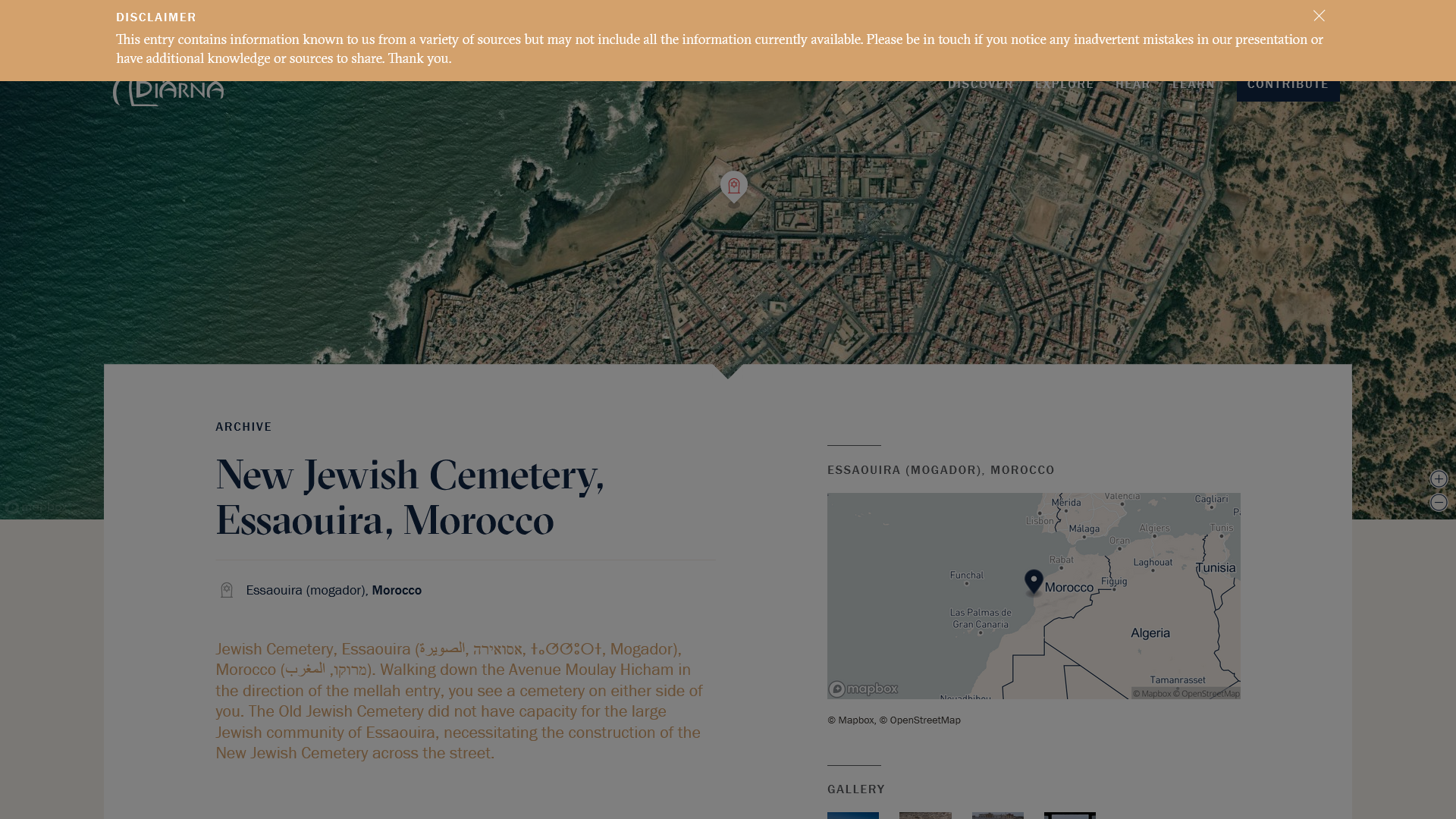
This webpage from the Diarna archive provides a comprehensive historical and cultural documentation of the New Jewish Cemetery in Essaouira, Morocco, serving as a digital preservation effort for Jewish heritage sites. The page functions as both an educational resource and historical record, detailing the establishment of this cemetery in 1875 as a response to the dramatic growth of Essaouira's Jewish population during the 19th century. The site presents detailed information about the cemetery's significance within the broader context of Moroccan Jewish history, including its role in serving one of Morocco's largest Jewish communities, which at its peak comprised approximately 40% of Essaouira's total population.
The content provides extensive historical context about Essaouira's Jewish quarter (mellah), tracing the community's origins to the city's founding by Alaouite Sultan Sidi Mohammed ben Abdellah in 1764. The page explains how the port city quickly became a major trading hub that attracted Jewish merchants and workers, leading to such population growth that both the mellah and cemetery facilities required expansion. Particularly noteworthy is the documentation of class divisions within the Jewish community, where elite families lived in the casbah quarter while poorer Jews resided in the mellah, and the description of the remarkably pluralistic society where "division was really a division of class and not of religion," with intermarriage being widely accepted and places of worship shared between Muslims and Jews.
The page details the cemetery's unique characteristics, noting that it houses tombs of over one hundred rabbis and important community members, including poet David Alkaïm, whose inscriptions are etched on various tombstones. An interesting cultural observation is made about the gravestones bearing epigraphic inscriptions and sculpted human forms, which typically contradicts Mosaic Law and Jewish tradition. The documentation also addresses the community's decline, explaining how the French Protectorate period (1912-1956) and the establishment of Israel in 1948 led to massive Jewish emigration, leaving only about 2% of the original population. Today, remarkably, a Muslim resident serves as the cemetery's caretaker, and burials have occurred as recently as 2010, demonstrating the site's continued relevance and the interfaith cooperation that characterizes modern Essaouira.
The webpage serves as part of a broader digital preservation initiative, featuring academic-level documentation with extensive footnoting and cross-references to related sites, including links to information about the Old Jewish Cemetery. The target audience appears to be researchers, students of Middle Eastern and Jewish history, and those interested in Moroccan cultural heritage. The page includes interactive mapping features, a photo gallery, and disclaimers encouraging community contribution to ensure accuracy and completeness of the historical record, reflecting modern collaborative approaches to cultural preservation and documentation.
Cette page web présente une documentation détaillée du Nouveau Cimetière Juif d'Essaouira (Mogador), au Maroc, dans le cadre du projet d'archive numérique Diarna. Le site constitue une ressource académique précieuse qui vise à préserver et documenter le patrimoine juif dans les pays arabes et islamiques. La page offre une analyse approfondie de ce lieu de sépulture établi en 1875, qui abrite les tombes de plus d'une centaine de rabbins et de membres importants de la communauté, notamment le poète David Alkaïm dont les inscriptions ornent plusieurs pierres tombales.
Le contenu révèle des aspects fascinants de l'histoire judéo-marocaine, notamment le fait que ce cimetière a été créé pour répondre à l'expansion démographique spectaculaire de la communauté juive d'Essaouira au XIXe siècle, qui représentait alors environ 40% de la population de la ville. La page documente minutieusement l'évolution de cette communauté depuis la fondation d'Essaouira par le Sultan alaouite Sidi Mohammed ben Abdellah en 1764 jusqu'à son déclin dramatique après 1948, quand seulement 2% de la population juive est restée après l'établissement d'Israël. L'analyse explore également les dynamiques sociales complexes du mellah (quartier juif), créé par décret sultanien en 1807, où coexistaient tensions de classe et harmonie interreligieuse.
La documentation met en lumière des éléments remarquables du cimetière, notamment ses pierres tombales sculptées avec des formes humaines - pratique généralement contraire à la loi mosaïque et à la tradition juive - ainsi que la rumeur selon laquelle le cimetière comporterait plusieurs "couches de tombes" superposées. La page souligne la continuité de ce lieu sacré avec l'inhumation récente en 2010 de l'écrivain Edmond Amran El Maleh, et note qu'un résident musulman local en assure aujourd'hui l'entretien. Cette ressource s'adresse principalement aux chercheurs, historiens et personnes intéressées par le patrimoine judéo-maghrébin, offrant une bibliographie académique solide avec 27 références citées, incluant des travaux de Daniel Schroeter et des rapports du World Monuments Fund sur les efforts de préservation en cours.
הדף עוסק בבית הקברות היהודי החדש באסואירה (מוגדור), מרוקו, וכהקשר רחב יותר בהיסטוריה של הקהילה היהודית במקום. זהו חלק מפרויקט דיאסנה (Diarna) לתיעוד אתרים יהודיים במזרח התיכון וצפון אפריקה. הדף מספק תיאור מפורט של בית הקברות ושל הרקע ההיסטורי של המלאח באסואירה, אשר היווה את אחת הקהילות היהודיות הגדולות במרוקו. המידע מבוסס על מחקר אקדמי ומיועד לחוקרים, סטודנטים ולכל מעוניין בהיסטוריה יהודית-מרוקאית.
הדף חושף עובדות מרתקות על הקהילה היהודית באסואירה: העיר נוסדה בשנת 1764 על ידי הסולטן סידי מוחמד בן עבדאללה והפכה במהירות למרכז מסחר בינלאומי שמשך יהודים רבים. במאות ה-19 וה-20, היהודים הגיעו לכ-40% מאוכלוסיית העיר, צמיחה שהחייבה הרחבת המלאח ובניית בית קברות חדש בשנת 1875. בבית הקברות החדש קבורים למעלה ממאה רבנים וחברי קהילה חשובים, כולל דוד אלכאים, משורר שכתביו חקוקים על המצבות. מעניין לציין שרבות מהמצבות נושאות כתובות אפיגרפיות ופיסולי דמויות אדם, דבר הנחשב בדרך כלל כנוגד למסורת יהודית.
הדף מספק הקשר היסטורי חשוב על שקיעת הקהילה: הפרוטקטורט הצרפתי (1912-1956) פיתח את קזבלנקה ואגדיר כנמלים חדשים, מה שפגע בעמדת אסואירה כמרכז מסחרי. יציאה נוספת ומשמעותית יותר התרחשה לאחר הקמת מדינת ישראל ב-1948, כאשר רק כ-2% מהיהודים נותרו במקום. כיום נותרו בעיר רק קומץ יהודים, ובית הקברות מתוחזק על ידי תושב מוסלמי מקומי. הדף מציין כי הקבורה האחרונה התקיימה ב-2010, של הסופר אדמון עמרן אל מאלח, ומספר על שמועה שבבית הקברות קיימות מספר "שכבות קבורה" זו על גבי זו.
בין הרכיבים הבולטים של הדף ניתן למצוא מפה אינטראקטיבית, גלריית תמונות, ורשימת מקורות אקדמית מקיפה הכוללת הפניות לחוקרים מובילים כמו דניאל שרויטר ואמילי גוטרייך. הדף כולל גם הפנייה לדף נפרד על בית הקברות היהודי הישן באסואירה, וכן הערה על כך שהמידע עשוי להיות חלקי ויש לפנות למחברים אם יש מידע נוסף או תיקונים.
تتناول هذه الصفحة من أرشيف ديارنا الرقمي المقبرة اليهودية الجديدة في الصويرة (الصويرة سابقاً موغادور)، المغرب، وتقدم دراسة تاريخية شاملة عن تطور الطائفة اليهودية في هذه المدينة الساحلية المغربية. تهدف الصفحة إلى توثيق التراث اليهودي المغربي والحفاظ على ذاكرة المواقع التاريخية ذات الأهمية الثقافية والدينية، مع التركيز بشكل خاص على تاريخ المقبرة الجديدة التي أنشئت عام 1875 لتلبية احتياجات الطائفة اليهودية المتنامية في الصويرة.
يكشف المحتوى عن الثراء التاريخي للطائفة اليهودية في الصويرة، حيث تأسست المدينة عام 1764 على يد السلطان العلوي سيدي محمد بن عبد الله، وسرعان ما أصبحت مركزاً تجارياً مهماً جذب العديد من التجار والعمال اليهود. في القرنين التاسع عشر والعشرين، شكّل اليهود حوالي 40% من سكان الصويرة، مما جعلها موطناً لإحدى أكبر الطوائف اليهودية في المغرب. تضم المقبرة الجديدة قبور أكثر من مئة حاخام وشخصيات مهمة في المجتمع، بما في ذلك الشاعر داوود الكاييم الذي نُقشت كتاباته على شواهد القبور. تميزت شواهد القبور بالنقوش الكتابية والأشكال البشرية المنحوتة، والتي تعتبر عموماً مخالفة للشريعة الموسوية والتقاليد اليهودية.
تسلط الصفحة الضوء على السياق التاريخي المعقد للعلاقات بين اليهود والمسلمين في الصويرة، حيث كان التقسيم الطبقي أكثر أهمية من التقسيم الديني، وكان الزواج المختلط مقبولاً على نطاق واسع، بل وتم تقاسم أماكن العبادة بين المسلمين واليهود. تتناول الدراسة أيضاً تأثير الحماية الفرنسية (1912-1956) وتأسيس دولة إسرائيل عام 1948 على هجرة اليهود من المدينة، حيث لم يبق سوى حوالي 2% من السكان اليهود بعد عام 1948. اليوم، لا يزال حارس مسلم يعتني بالمقبرة، وشهدت آخر دفنة فيها عام 2010 للكاتب إدمون عمران المالح، مما يؤكد على استمرارية الحفاظ على هذا التراث رغم تضاؤل أعداد الطائفة اليهودية في المدينة.
Esta página web forma parte del archivo digital DIARNA y está dedicada específicamente al **Nuevo Cementerio Judío de Essaouira, Marruecos**, proporcionando una documentación histórica detallada de este importante sitio patrimonial. El objetivo principal es preservar la memoria del patrimonio judío marroquí, ofreciendo información académica sobre un cementerio que constituye un testimonio físico de la rica historia de la comunidad judía en una de las principales ciudades portuarias de Marruecos.
El contenido revela datos fascinantes sobre la evolución demográfica y social de Essaouira. La ciudad fue establecida en 1764 por el sultán alauí Sidi Mohammed ben Abdellah y se convirtió rápidamente en un importante centro comercial que atrajo a numerosos comerciantes judíos. Durante los siglos XIX y XX, los judíos llegaron a representar aproximadamente el **40% de la población** de Essaouira, constituyendo una de las comunidades judías más grandes del país. Esta explosión demográfica hizo necesaria la construcción del Nuevo Cementerio Judío en 1875, ya que el cementerio costero original resultaba insuficiente. El texto explica que el concepto de *mellah* (barrio judío separado) se estableció mediante un decreto sultaní de 1807, aunque curiosamente en Essaouira "la división era realmente una división de clase y no de religión", con matrimonios mixtos ampliamente aceptados.
El cementerio alberga las tumbas de **más de cien rabinos** y miembros importantes de la comunidad, incluyendo al poeta David Alkaïm, cuyas inscripciones están grabadas en las lápidas. Un aspecto particularmente intrigante es que muchas lápidas presentan formas humanas esculpidas, lo cual contradice tanto la Ley Mosaica como la tradición judía. El sitio ha tenido entierros tan recientes como 2010, cuando fue sepultado el escritor Edmond Amran El Maleh, y existe el rumor de que el cementerio tiene "varias 'capas de tumbas' superpuestas". La página incluye un contexto histórico amplio que explica el declive de la comunidad judía debido al Protectorado Francés (1912-1956) y especialmente tras el establecimiento del Estado de Israel en 1948, después del cual solo permaneció aproximadamente el 2% de la población judía original.