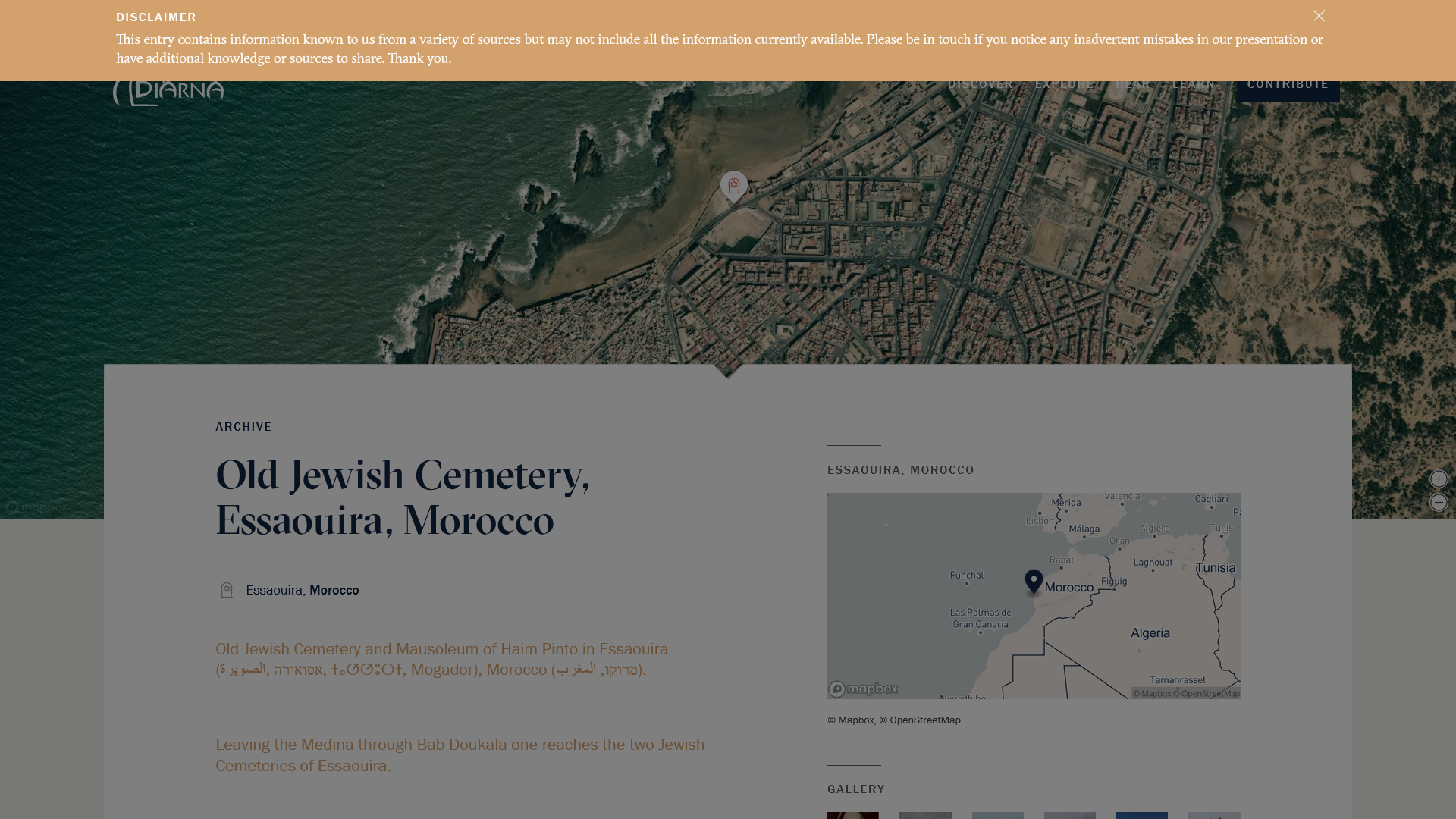
This webpage from the Diarna Archive provides a comprehensive historical and cultural documentation of the Old Jewish Cemetery in Essaouira, Morocco, serving as both an educational resource and preservation effort for Moroccan Jewish heritage. The page focuses specifically on the older of two Jewish cemeteries in Essaouira, which faces the Atlantic coast and was used until the 18th century, when rapid Jewish population growth necessitated a second burial ground. The cemetery houses prominent figures from Essaouira's Jewish community, most notably Rabbi Haim Pinto, whose mausoleum has become a pilgrimage site for visitors seeking the blessings of this revered sage and miracle worker.
The content provides rich historical context about Essaouira's remarkable Jewish community, which at its peak comprised approximately 40% of the city's population, making it one of Morocco's largest Jewish settlements. Founded in 1764 by Sultan Sidi Mohammed ben Abdellah as a major trading port, Essaouira attracted Jewish merchants and traders who played crucial roles in the city's economic development. The page details how the 1807 Sultan's decree established separate mellahs (Jewish quarters), though interestingly, class divisions often superseded religious ones in Essaouira, with wealthy Jewish families living in the casbah quarter alongside Muslims, and intermarriage being widely accepted. The community's decline began during the French Protectorate (1912-1956) as economic opportunities shifted to Casablanca and Agadir, culminating in massive emigration following Israel's establishment in 1948, after which only about 2% of the Jewish population remained.
The webpage particularly emphasizes ongoing preservation efforts and the cemetery's cultural significance in contemporary Morocco. It highlights the work of individuals like Asher Knafo, who transcribes tombstone inscriptions, and discusses the artistic legacy of David Elkaïm, a notable stone mason, poet, and rabbi whose Hebrew poetry adorns many tombstones and who is gaining recognition as a significant Hebrew poet for his works about Palestine. The site serves modern cultural tourism, attracting Jewish diaspora communities seeking to connect with their Moroccan heritage. As part of the Diarna Archive's mission to document Jewish sites across the Islamic world, this entry combines historical research with contemporary preservation advocacy, targeting both academic researchers and community members interested in Sephardic and Moroccan Jewish history.
Cette page web présente une documentation détaillée du **Vieux Cimetière Juif d'Essaouira** au Maroc, dans le cadre des archives numériques de Diarna, un projet de préservation du patrimoine juif dans le monde arabe et islamique. L'objectif principal est de documenter et de préserver la mémoire de ce site historique majeur, qui témoigne de la riche présence juive à Essaouira (anciennement Mogador), une ville portuaire fondée par le Sultan alaouite Sidi Mohammed ben Abdellah en 1764 sur les vestiges d'une forteresse portugaise.
Le contenu révèle l'histoire fascinante de la communauté juive d'Essaouira, qui représentait jusqu'à 40% de la population de la ville à son apogée aux XIXe et XXe siècles, constituant ainsi l'une des plus importantes communautés juives du Maroc. La page explique en détail la création du mellah (quartier juif séparé) suite au décret sultanien de 1807, tout en soulignant les particularités d'Essaouira où la cohabitation entre musulmans et juifs était remarquablement harmonieuse, avec des mariages mixtes acceptés et même des lieux de culte partagés. Le texte documente également le déclin dramatique de cette communauté : d'abord avec l'impact du Protectorat français (1912-1956) qui favorisa le développement de Casablanca et Agadir au détriment d'Essaouira, puis avec l'exode massif suivant la création d'Israël en 1948, ne laissant que 2% de la population juive originale.
L'aspect patrimonial est particulièrement mis en valeur à travers la description du vieux cimetière lui-même, situé face à l'océan Atlantique et utilisé jusqu'au XVIIIe siècle. Le site abrite notamment le mausolée du Rabbi Haim Pinto, sage réputé et faiseur de miracles, qui constitue aujourd'hui un lieu de pèlerinage important. La page souligne les efforts contemporains de préservation, notamment ceux d'Asher Knafo qui transcrit les inscriptions tombales créées par David Elkaïm, personnage remarquable décrit comme maçon, poète, rabbin et artiste, reconnu pour ses ketubahs (contrats de mariage) magnifiquement décorés et ses poèmes hébraïques sur les tombes. Cette documentation s'inscrit dans une démarche plus large de tourisme culturel et mémoriel, permettant à la diaspora juive de renouer avec ses racines marocaines tout en contribuant à la reconnaissance de figures historiques comme Elkaïm, progressivement reconnu comme un poète hébreu significatif pour ses écrits sur la Palestine et le maintien des liens entre le Maroc et la Terre Sainte.
דף האינטרנט מתעד ומתאר את בית הקברות היהודי הישן בעיר אסווירה, מרוקו, כחלק מפרויקט הדיאספורה הדיגיטלית. העמוד מתמקד בהיסטוריה של בית הקברות שפונה אל האוקיינוס האטלנטי והיה בשימוש עד המאה ה-18, כולל את מאוזוליאום הרב חיים פינטו, חכם נערץ ומפעיל נסים שקברו מהווה אתר עלייה לרגל יהודי. הדף מספק הקשר היסטורי מקיף על הקהילה היהודית של אסווירה, שהייתה בשיאה אחת הגדולות במרוקו, עם כ-40% מאוכלוסיית העיר.
התוכן מגולל את סיפור הקמת אסווירה בשנת 1764 על-ידי הסולטן העלאוי סידי מוחמד בן עבדאללה, שהפכה במהירות למרכז מסחרי בינלאומי שמשך סוחרים ועובדים יהודים רבים. הדף מתאר את הקמת המלאח (הרובע היהודי) בעקבות דהיר של 1807, ומסביר כיצד הפרדה זו יצרה חלוקה מעמדית בקהילה היהודית - עם משפחות עליתות שהתגוררו בקסבה מחוץ לחומות המלאח, ואילו יהודים עניים יותר התגוררו בתוך המלאח עצמו. למרות הפרדה פיזית זו, העמוד מדגיש שהחברה הייתה פלורליסטית, עם נישואי תערובת נפוצים ואפילו חלוקה של מקומות פולחן בין מוסלמים ליהודים.
העמוד מתעד את הדעיכה ההדרגתית של הקהילה היהודית, תחילה בעקבות הפרוטקטורט הצרפתי (1912-1956) שפיתח את קזבלנקה ואגדיר כנמלים ראשיים על חשבון אסווירה, ולאחר מכן עקב הגירה המונית בעקבות הקמת מדינת ישראל ב-1948. כיום נותרו רק בודדים יהודים בעיר. בתיאור המצב הנוכחי, העמוד מציין מאמצי שימור חשובים, במיוחד פעילותו של אשר כנפו, נכד רבא של רב יוסף כנפו מאסווירה, המתעד את כתובות המצבות שעוצבו על-ידי דוד אלקאים - חרש אבן, משורר ואמן מקומי שכתב שירים בעברית הרבה לפני תחיית השפה במדינת ישראל והותיר שירים על מצבות בבתי הקברות. הדף כולל גם מפה אינטראקטיבית, גלריית תמונות ורשימת מקורות אקדמיים מפורטת, מה שמעיד על אופיו המחקרי והתיעודי של הפרויקט.
## وصف شامل لصفحة المقبرة اليهودية القديمة في الصويرة
هذه الصفحة من أرشيف "ديارنا" تقدم توثيقاً شاملاً للمقبرة اليهودية القديمة في مدينة الصويرة المغربية، والتي تُعرف تاريخياً باسم "موغادور". الهدف الأساسي للصفحة هو الحفاظ على الذاكرة التاريخية للتراث اليهودي المغربي وتوثيق المعالم الدينية والثقافية المهمة. تركز الصفحة بشكل خاص على المقبرة القديمة التي تواجه ساحل المحيط الأطلسي والتي كانت تُستخدم حتى القرن الثامن عشر، بالإضافة إلى ضريح الحاخام حاييم بينتو، وهو شخصية دينية بارزة يُعتبر ضريحه موقعاً للحج اليهودي.
يقدم المحتوى سياقاً تاريخياً عميقاً حول تأسيس مدينة الصويرة عام 1764 على يد السلطان العلوي سيدي محمد بن عبد الله، والتي تحولت بسرعة إلى مركز تجاري مهم جذب العديد من التجار والعمال اليهود. في القرنين التاسع عشر والعشرين، شكل اليهود حوالي 40% من سكان المدينة، مما جعلها موطناً لإحدى أكبر الجاليات اليهودية في المغرب. يوضح النص كيف أن إنشاء الملاح (الحي اليهودي) عام 1807 بموجب ظهير سلطاني لم يكن يعكس انقساماً دينياً بل طبقياً، حيث كان التزاوج المختلط مقبولاً وكانت أماكن العبادة أحياناً مشتركة بين المسلمين واليهود.
تسلط الصفحة الضوء على الجهود المعاصرة للحفاظ على هذا التراث، خاصة عمل عاشر كنافو، حفيد الحاخام يوسف كنافو، في نسخ النقوش المحفورة على شواهد القبور التي صممها داوود الكائم، وهو نحات وشاعر مشهور من المدينة. تذكر الصفحة أن الكائم كان شخصية متعددة المواهب - حاخاماً وفناناً وشاعراً كتب بالعبرية قبل إحياء اللغة في إسرائيل، وأن بعض قصائده منحوتة على شواهد القبور. كما تشير إلى دور المقبرة في السياحة الثقافية المعاصرة، حيث يزورها أفراد من الجالية اليهودية المغربية المقيمة في الخارج كجزء من رحلات الحج والذاكرة.
تتميز الصفحة بمصادرها الأكاديمية الموثقة والتي تشمل موسوعة "يهود العالم الإسلامي" وصندوق الآثار العالمي، بالإضافة إلى معرض صور وخريطة تفاعلية للموقع. كما تتضمن إشارات إلى مشروع "بيت الذاكرة" في الصويرة ودور الناشطين المحليين مثل سيدني كوركوس في الحفاظ على هذا التراث، مما يجعلها مرجعاً قيماً للباحثين في التاريخ اليهودي المغربي والتراث الثقافي المشترك.
Esta página web del archivo digital DIARNA (Digitalización del Patrimonio Judío en el Norte de África y Oriente Medio) se centra en la documentación y preservación del Antiguo Cementerio Judío de Essaouira, Marruecos, incluyendo el mausoleo del venerado Rabino Haim Pinto. El sitio forma parte de un proyecto más amplio de catalogación del patrimonio judío marroquí, proporcionando tanto contexto histórico como información sobre los esfuerzos actuales de conservación de estos sitios de importancia cultural y religiosa.
El contenido presenta una rica narrativa histórica sobre la comunidad judía de Essaouira (antiguamente conocida como Mogador), establecida en 1764 por el sultán alauí Sidi Mohammed ben Abdellah sobre los restos de una fortaleza portuguesa. La página detalla cómo esta ciudad costera se convirtió en un importante centro comercial que atrajo a numerosos comerciantes y trabajadores judíos, llegando a representar aproximadamente el 40% de la población local en su apogeo durante los siglos XIX y XX. Particularmente significativo es el análisis del sistema de mellahs (barrios judíos separados), establecido por decreto sultaní en 1807, y cómo en Essaouira "la división era realmente una división de clase y no de religión", donde existía una notable tolerancia religiosa con matrimonios mixtos y lugares de culto compartidos entre musulmanes y judíos.
La descripción del cementerio revela su importancia tanto histórica como contemporánea: el cementerio más antiguo, que mira hacia la costa atlántica, fue utilizado hasta el siglo XVIII cuando el crecimiento demográfico de la comunidad judía requirió la construcción de un segundo cementerio. El sitio alberga las tumbas de figuras prominentes, especialmente la del Rabino Haim Pinto, cuyo mausoleo sirve como lugar de peregrinación. La página también documenta el trabajo de preservación actual realizado por Asher Knafo, bisnieto del Rabino Yoseph Knafo, quien transcribe las inscripciones de las lápidas diseñadas por David Elkaïm, reconocido poeta hebreo, artista y rabino cuyas obras poéticas aparecen grabadas en las tumbas y quien mantiene relevancia como poeta hebreo que escribía sobre Palestina antes del establecimiento de Israel, preservando la conexión espiritual entre Marruecos y Tierra Santa.