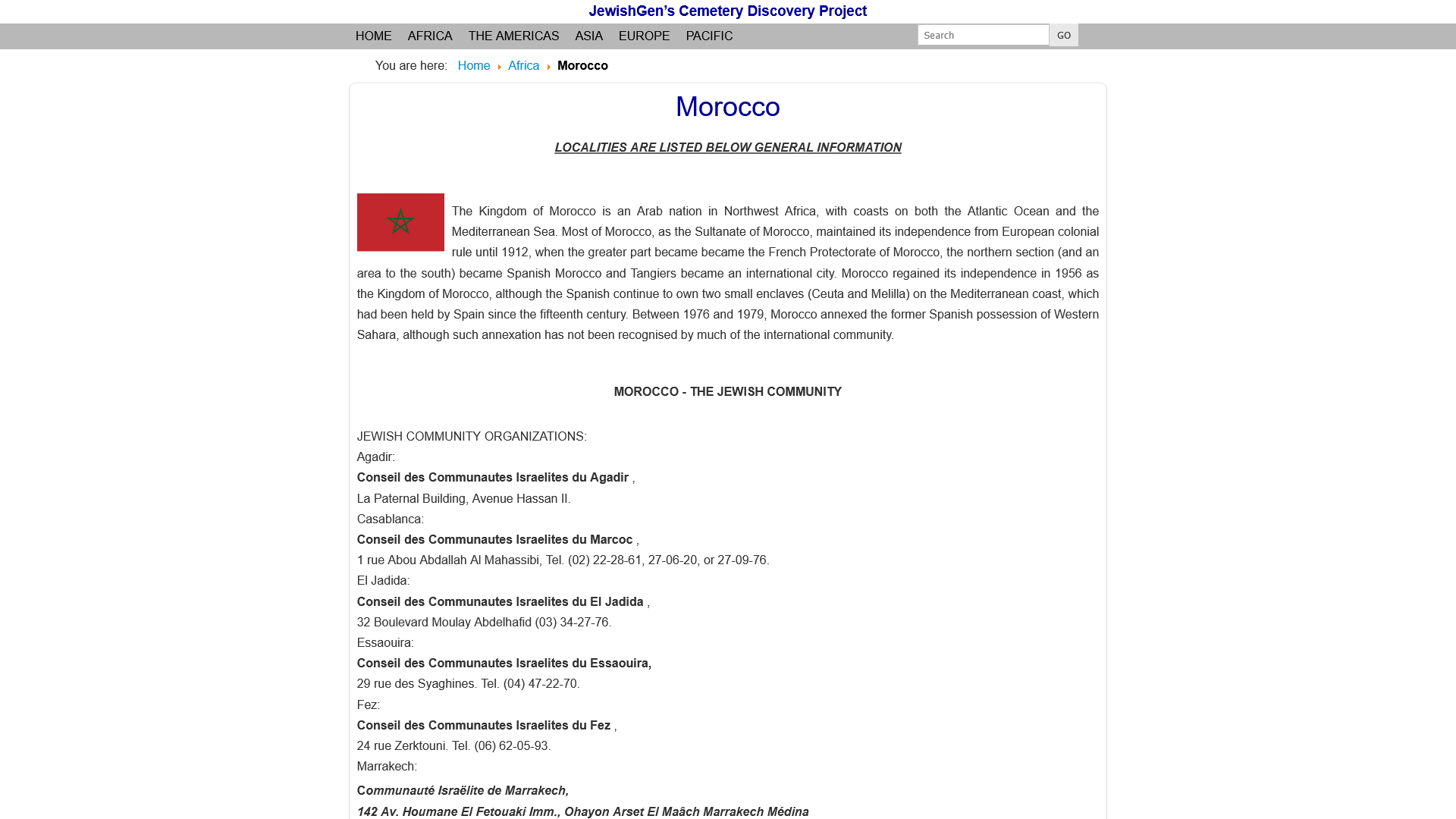
This webpage is part of the International Association of Jewish Genealogical Societies' cemetery database, specifically documenting Jewish burial sites and community information across Morocco. The page serves as a comprehensive resource for genealogical researchers, Jewish heritage enthusiasts, and those tracing family histories connected to Morocco's once-thriving Jewish population.
The content provides essential historical context, explaining that Morocco is an Arab nation in Northwest Africa that maintained relative independence until becoming French and Spanish protectorates in 1912, regaining independence in 1956. More significantly for Jewish genealogy, the page documents the dramatic demographic shift of Moroccan Jewry: from approximately 250,000-280,000 Jews in the mid-20th century to fewer than 7,000 by 2009. The largest remaining community is concentrated in Casablanca (5,000), with smaller populations in cities like Rabat (400), Marrakesh (250), and Meknes (250). The page notes that Moroccan Jews constitute "an ancient community" and highlights important pilgrimage sites including tombs of revered rabbis such as Rabbi Yehouda Benatar in Fez and Rabbi Chaim Pinto in Mogador.
A particularly valuable feature is the detailed listing of Jewish community organizations (Conseil des Communautes Israelites) across major Moroccan cities, complete with addresses and phone numbers from the early 2000s. This contact information would be crucial for researchers seeking local assistance with cemetery access or community records. The page also mentions a fascinating cultural adaptation: "The Jewish community hired Muslim families to live in the cemeteries as caretakers," and notes that many sites host annual Hilula ceremonies (commemorative gatherings for great rabbis) that help maintain the burial grounds.
The webpage functions as an index for cemetery locations, with a filterable database showing burial sites from Agadir to El Jadida, spanning multiple pages of entries. This systematic approach to cataloging Jewish burial sites across Morocco represents an important preservation effort, given the community's dramatic population decline and the potential for historical records to be lost. The page draws from multiple sources including Virtual Jerusalem and personal accounts from visitors, demonstrating the collaborative nature of Jewish genealogical research and the urgency of documenting these disappearing cultural landmarks.
Cette page web constitue une ressource documentaire spécialisée dédiée aux cimetières et à l'héritage juif au Maroc, dans le cadre du projet international IAJGS Cemetery. Son objectif principal est de répertorier et préserver la mémoire des sites funéraires juifs marocains, tout en fournissant des informations pratiques sur les communautés juives encore présentes dans le royaume. La page présente une approche méthodique combinant données historiques, coordonnées contemporaines des organisations communautaires, et localisation géographique des cimetières à travers le territoire marocain.
Le contenu révèle l'ampleur dramatique de l'exode de la communauté juive marocaine : d'environ 250 000 personnes en 1948, il ne restait plus que 7 000 Juifs dans le pays en 2009. Les principales communautés survivantes se concentrent désormais à Casablanca (5 000 personnes), suivie de communautés beaucoup plus réduites à Rabat (400), Marrakech et Meknès (250 chacune), puis Tanger, Fès et Tétouan (entre 100 et 150 personnes). La page documente également l'organisation administrative de ces communautés à travers leurs "Conseils des Communautés Israélites" dans chaque ville, avec coordonnées complètes et contacts téléphoniques, témoignant d'une structure communautaire encore active malgré sa taille réduite.
Un aspect particulièrement remarquable concerne la préservation des cimetières juifs par des familles musulmanes employées comme gardiens, illustrant la coexistence historique entre les communautés. La page mentionne les pèlerinages annuels appelés "Hilula" organisés sur les tombes de grands rabbins, notamment celles de Rabbi Yehouda Benatar à Fès, Rabbi Chaim Pinto à Mogador, ou Rabbi Amram Ben Diwane à Ouezzane. Cette tradition maintient vivante la mémoire spirituelle juive marocaine et assure l'entretien des sites funéraires.
La ressource s'adresse manifestement aux généalogistes, historiens et descendants de familles juives marocaines cherchant à retracer leurs origines ou à localiser des sépultures ancestrales. Elle propose un système de filtrage par localités (Agadir, Casablanca, El Jadida, etc.) et intègre des témoignages personnels, comme celui de "Baruch" qui visita plusieurs cimetières en 1991. Cette approche collaborative, enrichie de liens vers des cartes détaillées et des mises à jour régulières, fait de cette page un outil de référence unique pour l'étude du patrimoine judéo-marocain et la préservation de cette mémoire diasporique.
דף זה הוא חלק מאתר ה-IAJGS (האגודה הבינלאומית לאגודות גנאלוגיה יהודיות) המוקדש לתיעוד בתי קברות יהודיים, ובמקרה זה מתמקד במרוקו והקהילה היהודית שלה. המטרה העיקרית של הדף היא לספק מידע היסטורי ומידע יצירת קשר עכשווי לחוקרי גנאלוגיה יהודית המעוניינים בבתי קברות ובקהילות יהודיות במרוקו. הדף משלב מידע על ההיסטוריה הפוליטית של מרוקו - מהסולטנות המרוקאית דרך התקופה הקולוניאלית הצרפתית והספרדית ועד לעצמאות ב-1956 - עם פרטים מפורטים על המבנה הארגוני של הקהילה היהודית בת ימינו.
החלק המרכזי של הדף מציג רשימה מקיפה של ארגוני הקהילה היהודית בערים השונות במרוקו, כולל פרטי יצירת קשר מלאים. מהמידע עולה כי הקהילה היהודית המרוקאית עברה דעיכה דרמטית - מכרבע מיליון יהודים ב-1948 לכ-7,000 בלבד ב-2009. הקהילה הגדולה ביותר נמצאת בקזבלנקה עם 5,000 יהודים, ואחריה קהילות קטנות יותר ברבאט (400), מרקש (250), מקנס (250), טנג'יר (150), פאס (150) ו-תטואן (100). הדף מדגיש את החשיבות של אתרי עלייה לרגל יהודיים הפזורים ברחבי המדינה, כמו קברי רבי יהודה בנטאר בפאס, רבי חיים פינטו במוגדור, ורבי עמרם בן דיואן בוזאן.
מבחינה תרבותית והיסטורית, הדף מספק הקשר חשוב להבנת המורשת היהודית הצפון-אפריקאית. הוא מתאר כיצד הקהילה היהודית שמרה על זהותה במשך מאות שנים, וכיצד היא מתמודדת כיום עם האתגרים של הצטמקות הקהילה. מעניין במיוחד המידע על כך שמשפחות מוסלמיות מתגוררות בבתי הקברות כשומרים, ועל הפעילויות השנתיות של הילולה (מעין יארצייט לרבנים גדולים) המסייעות לתחזוקת האתרים. הדף כולל גם קישורים למקורות מידע נוספים ומתעדכן באופן שוטף, מה שמעיד על היותו משאב חי ורלוונטי לחוקרים ולאנשים המחפשים מידע גנאלוגי על משפחותיהם המרוקאיות.
تتناول هذه الصفحة الإلكترونية موضوع المقابر اليهودية في المغرب كجزء من مشروع أوسع لتوثيق المقابر اليهودية في أفريقيا. تهدف الصفحة إلى تقديم دليل شامل للمجتمعات اليهودية المغربية ومواقع دفنهم التاريخية، حيث تستعرض الخلفية التاريخية للمملكة المغربية منذ فترة السلطنة المستقلة حتى الحماية الفرنسية والإسبانية عام 1912، وصولاً إلى استقلال المغرب عام 1956. كما تتطرق إلى الوضع الجيوسياسي الحالي بما في ذلك المناطق الإسبانية المتبقية مثل سبتة ومليلية، وضم المغرب للصحراء الغربية في السبعينيات.
يكشف المحتوى عن تراجع كبير في أعداد اليهود المغاربة، حيث انخفض عددهم من حوالي 250 ألف شخص عام 1948 إلى أقل من 7000 شخص بحلول عام 2009. تقدم الصفحة قائمة مفصلة بمنظمات المجتمع اليهودي في مختلف المدن المغربية مثل الدار البيضاء (5000 يهودي)، الرباط (400)، مراكش (250)، مكناس (250)، طنجة (150)، فاس (150)، وتطوان (100). كما تذكر أهمية مواقع الحج اليهودية المرتبطة بقبور الحكماء المقدسين مثل الحاخام يهودا بناتار في فاس والحاخام حاييم بينتو في الصويرة.
تتميز الصفحة بتوثيقها للجهود المبذولة للحفاظ على المقابر اليهودية، حيث تشير إلى أن الجالية اليهودية استأجرت عائلات مسلمة للعيش في المقابر كحراس، وتنظم احتفالات سنوية تُعرف بـ"الهيلولا" (نوع من إحياء ذكرى الحاخامات العظماء) مما يساعد في صيانة هذه المواقع. تستند المعلومات إلى مصادر متنوعة منها شهادات شخصية لزائرين عام 1991 قاموا بزيارة مقابر في الدار البيضاء والجديدة وصفرو والرباط، بالإضافة إلى موارد أكاديمية ومجتمعية. الصفحة مصممة لتخدم الباحثين في التاريخ اليهودي المغربي، وأفراد الجالية اليهودية، والمهتمين بالتراث الثقافي المتعدد في شمال أفريقيا.
Esta página web pertenece a la Asociación Internacional de Sociedades Genealógicas Judías (IAJGS) y se dedica específicamente a documentar los cementerios y comunidades judías de Marruecos. Su propósito principal es servir como un recurso genealógico y histórico para investigadores, descendientes de judíos marroquíes y académicos interesados en preservar la memoria de una de las comunidades judías más antiguas del norte de África. La página combina información histórica general sobre Marruecos con datos específicos sobre la presencia judía en el país, proporcionando un contexto político desde el protectorado francés de 1912 hasta la independencia en 1956.
El contenido revela la dramática transformación demográfica de la comunidad judía marroquí: de aproximadamente 250,000 judíos en 1948 a menos de 7,000 en 2009. La página documenta meticulosamente las organizaciones comunitarias judías activas en ciudades como Casablanca (la comunidad más grande con 5,000 judíos), Rabat (400), Marrakech (250), Meknes (250), Tánger (150), Fez (150) y Tetuán (100). Cada entrada incluye direcciones específicas, números de teléfono y contactos de los "Conseil des Communautés Israélites" locales, proporcionando información práctica valiosa para visitantes e investigadores genealógicos.
La página destaca aspectos culturales únicos como la tradición de contratar familias musulmanas como cuidadores de cementerios judíos y la celebración anual de "Hiloula" (una especie de Yahrzeit para grandes rabinos) que ayuda al mantenimiento de estos sitios. Se mencionan lugares de peregrinaje importantes como las tumbas de Rabbi Yehouda Benatar (Fez), Rabbi Chaim Pinto (Mogador), Rabbi Amram Ben Diwane (Ouezzan) y Rabbi Yahia Lakhdar (Beni-Ahmed), subrayando la profunda herencia espiritual judía en Marruecos.
Un elemento notable es el sistema de filtros para localizar cementerios específicos, listando localidades como Agadir, Casablanca, Debdou, El Jadida y otras, organizadas alfabéticamente con referencias cruzadas (como "Ceuta - ver bajo África del Norte Española"). La página incorpora testimonios personales, como el de "Baruch" quien visitó cementerios en 1991, y cita fuentes actualizadas hasta 2015, incluyendo proyectos de preservación de cementerios judíos reconocidos internacionalmente. Este recurso digital representa un esfuerzo crucial para documentar y preservar el legado de una comunidad milenaria en vías de desaparición.
Citation (APA Style)
Morocco | AFRICA | International Jewish Cemetery Project. (2025, 11 22).
iajgscemetery.org.
https://iajgscemetery.org/africa/morocco/