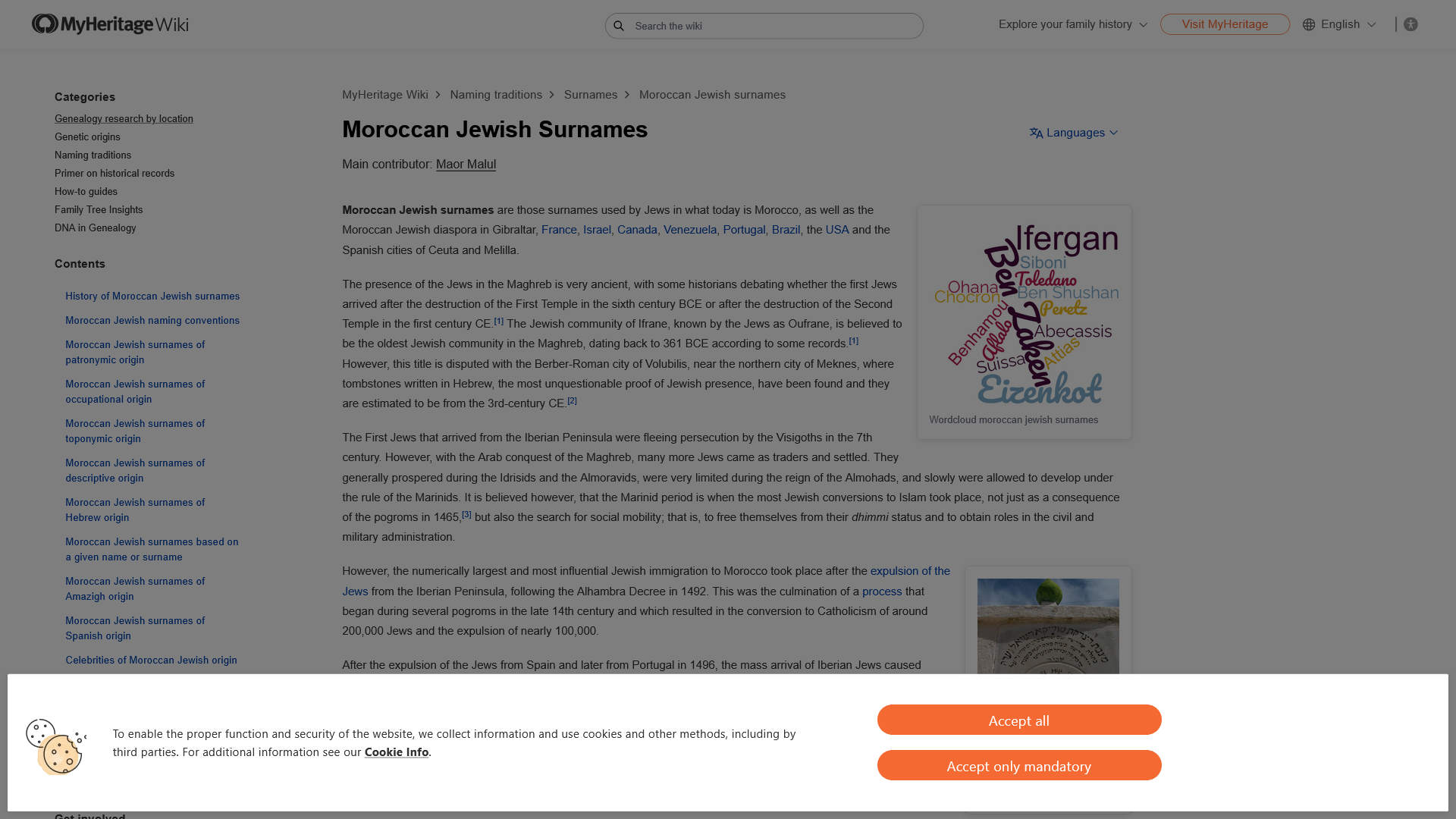
This MyHeritage wiki page serves as a comprehensive guide to Moroccan Jewish surnames, exploring their origins, evolution, and variations across different linguistic and historical contexts. The page is primarily designed for genealogical researchers and those interested in tracing their Moroccan Jewish heritage, providing both historical background and practical research guidance. Contributed by Maor Malul, the resource examines surnames used by Jews in Morocco and the broader Moroccan Jewish diaspora, which has spread across Gibraltar, France, Israel, Canada, Venezuela, Portugal, Brazil, the United States, and the Spanish cities of Ceuta and Melilla.
The page provides extensive historical context, tracing Jewish presence in Morocco back to ancient times, with competing claims for the oldest Jewish communities between Ifrane (possibly dating to 361 BCE) and Volubilis (with 3rd-century CE Hebrew tombstones providing concrete evidence). The content details multiple waves of Jewish migration, from early Iberian Peninsula refugees fleeing Visigoth persecution in the 7th century to the massive influx following the 1492 Alhambra Decree and 1496 Portuguese expulsion. This later migration proved transformative, as the newly arrived and more affluent *rūmiyīn* ("Europeans") displaced local *forasteros* ("foreigners") in community leadership, eventually establishing Spanish religious traditions while maintaining distinctive Maghrebi influences.
A key insight presented is that hereditary surnames were uncommon among Moroccan Jews before the late 15th century Spanish expulsion, with only scattered examples like L'Mdioni and Bahlul dating to the early 12th century. The practice became more widespread with Spanish Jewish settlement and peaked during the 1800s under European influence, particularly through institutions like the Alliance Israélite Universelle. The page addresses a crucial research challenge by explaining how Moroccan Jewish surnames often have multiple spellings due to different official languages (Arabic, French, Spanish, Hebrew) used by various registrars throughout history, providing examples like M'loul/Melloul/Melul/Malul and Botbol/Abitbol/Abutbul/Boutboul.
Notable features include the integration of MyHeritage's genealogical tools, particularly highlighting how their SuperSearch technology accounts for spelling variants to assist researchers. The page also features historical elements like a photograph of Solica Hachuel's 1834 tombstone from Fez, Morocco, and includes promotional elements for DNA testing services. The content begins to explore patronymic surnames with the Ben- prefix (meaning "son of"), though this section appears to be cut off, suggesting the full page contains additional detailed categorization of surname origins and meanings.
Cette page web de MyHeritage, principalement rédigée par Maor Malul, constitue une ressource encyclopédique détaillée consacrée aux noms de famille juifs marocains. Elle explore l'histoire, l'évolution et les caractéristiques des patronymes portés par les communautés juives du Maroc et leur diaspora mondiale, s'étendant de Gibraltar au Canada, en passant par Israël, la France, le Venezuela, le Portugal, le Brésil, les États-Unis et les enclaves espagnoles de Ceuta et Melilla. L'objectif principal est d'offrir aux généalogistes et chercheurs une compréhension approfondie de ces noms de famille dans leur contexte historique et culturel.
Le contenu révèle une histoire millénaire fascinante, commençant par les débats historiques sur l'arrivée des premiers Juifs au Maghreb, possiblement dès la destruction du Premier Temple au VIe siècle avant J.-C. La page documente méticuleusement les vagues migratoires successives : les premiers réfugiés fuyant les persécutions wisigothiques au VIIe siècle, l'installation de commerçants juifs après la conquête arabe, et surtout l'immigration massive consécutive au décret de l'Alhambra de 1492. Cette dernière vague, impliquant près de 100 000 expulsés d'Espagne puis du Portugal en 1496, a profondément transformé la communauté juive marocaine. Les nouveaux arrivants, appelés *rūmiyīn* ("Européens" en arabe), généralement plus aisés, ont pris l'ascendant sur les Juifs locaux établis de longue date, créant des tensions socio-économiques durables.
L'analyse révèle que l'usage des noms de famille héréditaires était rare avant l'arrivée des réfugiés espagnols de la fin du XVe siècle, les premiers exemples documentés remontant au XIIe siècle avec des patronymes comme L'Mdioni et Bahlul. La page examine en détail les conventions de nomenclature complexes résultant de la coexistence de plusieurs langues officielles (arabe, français, espagnol, hébreu), créant jusqu'à quatre orthographes différentes pour un même nom : M'loul/Melloul/Melul/Malul ou Botbol/Abitbol/Abutbul/Boutboul. Cette ressource s'avère particulièrement précieuse pour les généalogistes, d'autant que la technologie SuperSearch de MyHeritage couvre automatiquement ces variantes orthographiques, facilitant considérablement les recherches sur l'héritage séfarade marocain.
דף זה באתר MyHeritage מהווה מקור מידע מקיף על שמות המשפחה היהודיים המרוקאים, הנושא מספק תיעוד היסטורי מפורט על התפתחות מסורות השמות בקהילות יהודיות במרוקו ובתפוצה המרוקאית הרחבה. הדף מתמקד בעיקר בזיהוי והסבר של שמות המשפחה שבהם השתמשו יהודים במרוקו לאורך הדורות, כולל מעקב אחר השימוש בשמות אלה בקרב יהודי המרוקו המפוזרים בגיברלטר, צרפת, ישראל, קנדה, ונצואלה, פורטוגל, ברזיל, ארצות הברית והערים הספרדיות סאוטה ומלייה.
הדף מציג רקע היסטורי עשיר המתחיל מהנוכחות היהודית העתיקה במגרב, כאשר היסטוריונים מתווכחים האם היהודים הראשונים הגיעו לאחר חורבן בית ראשון במאה השישית לפנה"ס או לאחר חורבן בית שני במאה הראשונה לספירה. המחבר מציין כי הקהילה היהודית בעפראן (אופראן ביהודית) נחשבת לוותיקה ביותר במגרב ומתוארכת לשנת 361 לפנה"ס, אך תואר זה שנוי במחלוקת עם העיר הברברית-רומית וולוביליס ליד מקנס, שם נמצאו מצבות בעבריות המתוארכות למאה השלישית לספירה. הדף מדגיש כי ההגירה היהודית הגדולה והמשפיעה ביותר למרוקו התרחשה לאחר גירוש יהודי ספרד ב-1492 וגירוש יהודי פורטוגל ב-1496, כאשר בואם של ה"רומיים" (האירופים) העשירים יותר שינה את מבנה הכוח בקהילה היהודית המקומית.
מבחינה לינגוויסטית ותרבותית, הדף מספק תובנות חשובות על אמנות המינוי היהודית המרוקאית. לפני הגעת הפליטים היהודיים מספרד בסוף המאה ה-15, רק מעט יהודים מרוקאים השתמשו בשמות משפחה תורשתיים, כאשר הדוגמאות המוכרות הן למדיוני (אל מדיוני בספרדית) ובהלול. המחבר מסביר כי מנהג השימוש בשם משפחה תורשתי התפשט בהדרגה עם השפעתם של היהודים הספרדים והגיע לשיאו עם עליית ההשפעה האירופית במאה ה-19, בעיקר דרך מוסדות כמו כי"ח (Alliance Israélite Universelle). הדף מדגיש תופעה מעניינת של כתיב מגוון לאותו שם משפחה בשפות שונות - ערבית, צרפתית, ספרדית או עברית - כמו למשל המשפחה מלול שיכולה להיכתב כ-M'loul/Melloul/Melul/Malul, תופעה הנגרמת על ידי המוסכמות הלשוניות השונות של כל שפה ושפה.
تتناول هذه الصفحة من موقع MyHeritage موضوعاً متخصصاً وغنياً بالتفاصيل التاريخية حول **ألقاب اليهود المغاربة** وتطورها عبر التاريخ. يهدف المحتوى، الذي ساهم في إعداده ماؤور مالول، إلى توثيق وتحليل الأسماء العائلية التي استخدمها اليهود في المغرب والشتات المغربي اليهودي في دول متعددة مثل جبل طارق وفرنسا وإسرائيل وكندا وفنزويلا والبرتغال والبرازيل والولايات المتحدة ومدينتي سبتة ومليلة الإسبانيتين. تقدم الصفحة نافذة فريدة لفهم التركيبة الاجتماعية والثقافية لهذه الجالية التاريخية المهمة.
يكشف المحتوى عن الجذور التاريخية العميقة للوجود اليهودي في المغرب، حيث يناقش الجدل الأكاديمي حول وصول أول اليهود إلى المنطقة - هل كان ذلك بعد تدمير الهيكل الأول في القرن السادس قبل الميلاد أم بعد تدمير الهيكل الثاني في القرن الأول الميلادي. تشير الصفحة إلى أن جالية إفران اليهودية (أوفران) تُعتبر الأقدم في المغرب العربي وتعود لعام 361 قبل الميلاد، رغم أن هذا اللقب متنازع عليه مع مدينة وليلي البربرية-الرومانية قرب مكناس. يتتبع النص التطورات التاريخية المتتالية من الهجرات اليهودية الأولى هرباً من اضطهاد القوط الغربيين في القرن السابع، مروراً بالفتح العربي والعصور المختلفة من الأدارسة والمرابطين والموحدين والمرينيين.
النقطة المحورية في التحليل تركز على **الهجرة اليهودية الكبرى من شبه الجزيرة الإيبيرية** عام 1492 بعد مرسوم الحمراء، والتي غيرت جذرياً التركيبة الاجتماعية للجالية اليهودية المغربية. يوضح المحتوى كيف أن وصول الـ"rūmiyīn" (الأوروبيين الأكثر ثراءً) أدى إلى تغييرات هيكلية عميقة على حساب اليهود المحليين الأفقر المسماة "forasteros". كما يحلل النص تطور استخدام الألقاب الوراثية، مشيراً إلى أن القليل من اليهود المغاربة استخدموا ألقاباً وراثية قبل وصول اللاجئين الإسبان، مع ذكر أمثلة قديمة مثل "L'Mdioni" و"Bahlul" من القرن الثاني عشر.
تتميز الصفحة بتقديم تحليل لغوي متخصص لاصطلاحات التسمية المغربية اليهودية، موضحة كيف تتغير طرق كتابة نفس اللقب بناءً على لغة المسجل (العربية أو الفرنسية أو الإسبانية أو العبرية). يقدم أمثلة عملية مثل M'loul/Melloul/Melul/Malul وBotbol/Abitbol/Abutbul/Boutboul، مما يظهر التعقيد اللغوي لهذا الموضوع. كما تذكر الصفحة الألقاب ذات الأصل الأبوي التي تبدأ بـ"Ben-" بمعنى "ابن" في العربية والعبرية، مما يعكس التأثير الثقافي المشترك. هذا المحتوى المتخصص يستهدف الباحثين في الأنساب والتاريخ اليهودي المغربي، ويقدم قيمة أكاديمية عالية للمهتمين بدراسة الهوية والتراث في شمال أفريقيا.
Esta página web de MyHeritage presenta un exhaustivo análisis sobre los apellidos judíos marroquíes, explorando tanto su evolución histórica como su distribución geográfica actual. El contenido se centra en documentar los apellidos utilizados por las comunidades judías que habitaron Marruecos y su diáspora, que se extiende por Gibraltar, Francia, Israel, Canadá, Venezuela, Portugal, Brasil, Estados Unidos y las ciudades españolas de Ceuta y Melilla. La página funciona como una valiosa herramienta genealógica y recurso académico para investigadores interesados en la historia sefardí y la genealogía judía del Magreb.
El análisis histórico revela que la presencia judía en el Magreb es extraordinariamente antigua, con debates académicos sobre si los primeros judíos llegaron tras la destrucción del Primer Templo en el siglo VI a.C. o después del Segundo Templo en el siglo I d.C. La página destaca que la comunidad judía de Ifrane (conocida como Oufrane) podría ser la más antigua del Magreb, datando del 361 a.C., aunque esta afirmación compite con evidencias encontradas en Volubilis, cerca de Meknes, donde se han hallado lápidas con inscripciones hebreas del siglo III d.C. El contenido enfatiza que la inmigración judía más numerosa e influyente ocurrió tras la expulsión de los judíos de la Península Ibérica en 1492, cuando los recién llegados "rūmiyīn" (europeos) asumieron posiciones de poder en detrimento de los judíos locales, conocidos como "forasteros".
Un aspecto particularmente fascinante que documenta la página es la evolución de las convenciones de nomenclatura. Antes de la llegada de los refugiados judíos españoles a finales del siglo XV, pocos judíos marroquíes utilizaban apellidos hereditarios, siendo L'Mdioni (El Medioni) y Bahlul algunos de los ejemplos más antiguos del siglo XII. La página ilustra cómo los apellidos judíos marroquíes presentan múltiples variantes ortográficas debido a los diferentes idiomas oficiales bajo los que vivieron estas comunidades (árabe, francés, español y hebreo). Por ejemplo, muestra variaciones como M'loul/Melloul/Melul/Malul o Botbol/Abitbol/Abutbul/Boutboul, explicando que esta diversidad refleja las adaptaciones lingüísticas realizadas por diferentes registradores a lo largo de la historia.
La página incluye elementos multimedia como una nube de palabras de apellidos judíos marroquíes y referencias a lápidas históricas, como la de Solica Hachuel en Fez (1834). Además, promociona las herramientas tecnológicas de MyHeritage, particularmente SuperSearch, que puede identificar variantes ortográficas y apellidos de sonido similar, facilitando significativamente la investigación genealógica. El contenido está claramente dirigido tanto a genealogistas familiares como a investigadores académicos interesados en la historia judía del norte de África, ofreciendo un recurso integral que combina rigor histórico con aplicaciones prácticas para la investigación genealógica.
Citation (APA Style)
Moroccan Jewish Surnames - Common Last Names in Moroccan History - MyHeritage Wiki. (2025, 11 21).
www.myheritage.com.
https://www.myheritage.com/wiki/Moroccan_Jewish_surnames