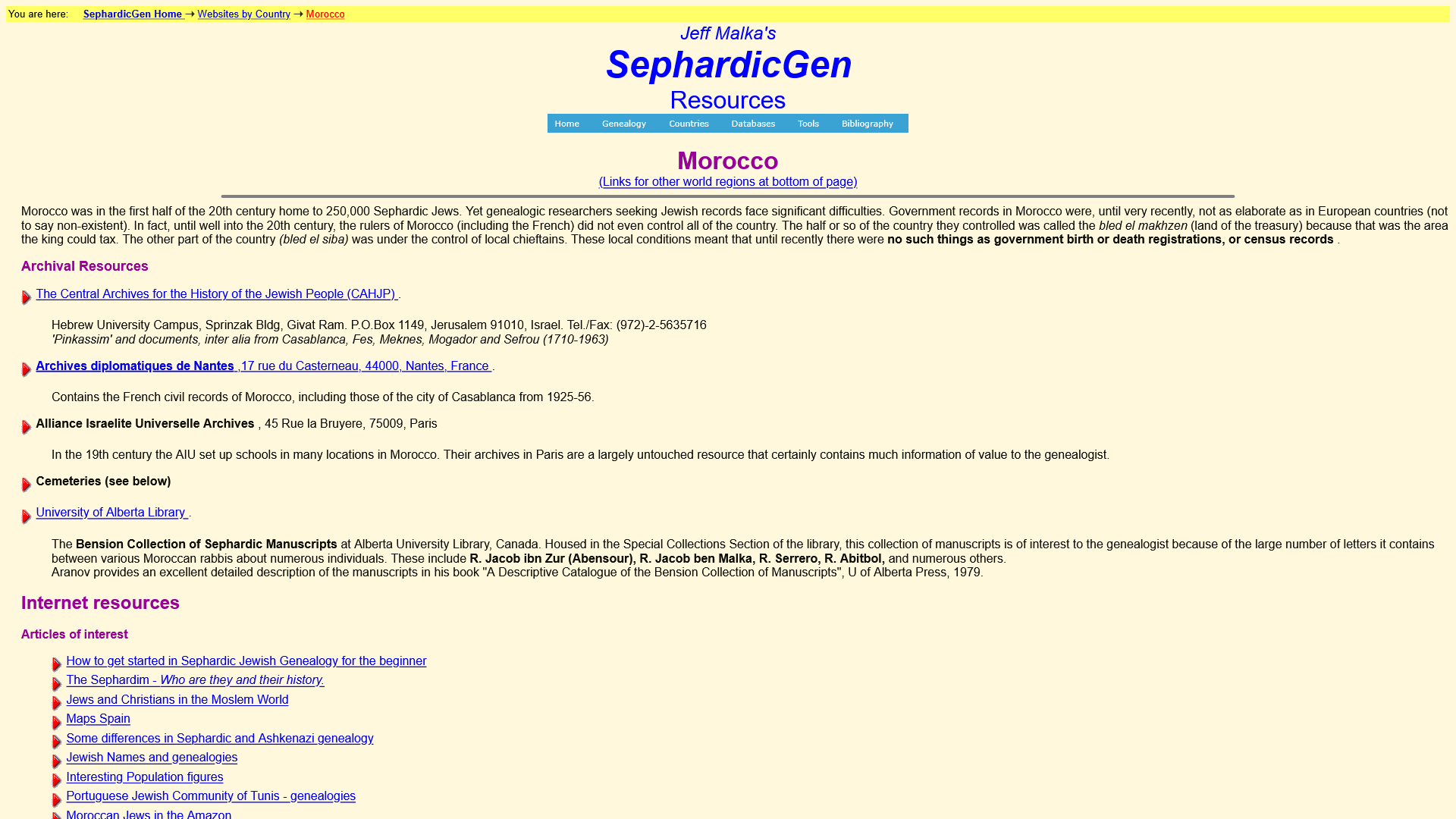
This webpage is a comprehensive genealogical resource dedicated to researching Sephardic Jewish ancestry in Morocco, part of Jeff Malka's larger SephardicGen project. The page serves as a specialized hub for genealogists seeking to trace their Moroccan Jewish heritage, addressing the unique challenges researchers face when investigating families from a region that was home to approximately 250,000 Sephardic Jews in the first half of the 20th century. The site acknowledges the significant difficulties inherent in Moroccan Jewish genealogy, primarily due to the historical absence of systematic government record-keeping that researchers rely on in European contexts.
The page provides crucial historical context explaining why traditional genealogical records are scarce in Morocco. Until well into the 20th century, Moroccan rulers—including French colonial administrators—controlled only about half the country, known as the "bled el makhzen" (land of the treasury), while local chieftains governed the remaining "bled el siba" regions. This fragmented political control meant that standardized birth, death, and census registrations simply didn't exist until very recently, forcing genealogists to seek alternative documentary sources. The site emphasizes how these local conditions created a documentation gap that makes Moroccan Jewish genealogy particularly challenging compared to research in other countries.
To address these research obstacles, the webpage offers an extensive compilation of alternative archival resources and specialized collections. Key repositories highlighted include the Central Archives for the History of the Jewish People in Jerusalem, which houses community records ("Pinkassim") from major Moroccan cities like Casablanca, Fes, Meknes, and Mogador spanning 1710-1963; the Archives diplomatiques de Nantes containing French civil records from Morocco (1925-56); and the Alliance Israelite Universelle Archives in Paris, which maintains records from 19th-century Jewish schools established throughout Morocco. The page also features the University of Alberta's Bension Collection, noted for containing valuable correspondence between Moroccan rabbis discussing various individuals, providing genealogists with unique primary source material.
The webpage functions as both an educational resource and practical research tool, offering multiple databases, family pages, and cemetery records specifically focused on Moroccan Jewish communities. Notable features include searchable databases for Jewish deportees from Morocco during WWII, extensive family tree collections from Meknes containing over 22,000 entries, and digitized cemetery records from cities like Essaouira (Mogador) and Tangier. The site targets both novice and experienced genealogists with its mix of beginner guides explaining Sephardic genealogy basics and advanced archival resources, making it an invaluable starting point for anyone researching Moroccan Jewish ancestry despite the inherent documentation challenges.
Cette page web fait partie du site SephardicGen de Jeff Malka et constitue une ressource généalogique spécialisée dédiée aux Juifs séfarades du Maroc. Le site vise à aider les chercheurs en généalogie à retrouver leurs ancêtres juifs marocains malgré les défis particuliers que présente cette région. La page souligne d'emblée la complexité de ces recherches : bien que le Maroc ait abrité 250 000 Juifs séfarades dans la première moitié du XXe siècle, les archives gouvernementales étaient quasi inexistantes jusqu'à récemment, contrairement aux pays européens. Cette situation s'explique par le fait que les dirigeants marocains ne contrôlaient qu'une partie du territoire appelée "bled el makhzen" (terre du trésor), laissant l'autre moitié, le "bled el siba", sous contrôle de chefs locaux.
La page présente une compilation exhaustive de ressources archivistiques internationales essentielles pour la recherche généalogique juive marocaine. Parmi les sources principales figurent les Archives centrales pour l'histoire du peuple juif (CAHJP) à l'Université hébraïque de Jérusalem, qui conservent des "Pinkassim" et documents de Casablanca, Fès, Meknès, Mogador et Sefrou datant de 1710 à 1963. Les Archives diplomatiques de Nantes détiennent les registres civils français du Maroc, notamment ceux de Casablanca de 1925 à 1956, tandis que les Archives de l'Alliance Israélite Universelle à Paris constituent "une ressource largement inexploitée" contenant des informations précieuses sur les écoles établies au Maroc au XIXe siècle.
Le contenu s'enrichit de bases de données spécialisées et de ressources numériques uniques, notamment la collection Bension de manuscrits séfarades de l'Université de l'Alberta au Canada, qui contient de nombreuses correspondances entre rabbins marocains mentionnant des individus spécifiques. La page référence également des bases de données comme l'index des Juifs du Maroc déportés de France pendant la Seconde Guerre mondiale, la collection de 22 000+ arbres généalogiques de Meknès de Raphaël et Georgette Cohen, et des index de ketubot (contrats de mariage) enluminés de Mogador. Cette ressource s'adresse clairement aux généalogistes, historiens et descendants de familles juives marocaines cherchant à reconstituer leur histoire familiale à travers une approche méthodique combinant archives traditionnelles et outils numériques modernes.
דף זה מאתר SephardicGen עוסק בגנאלוגיה יהודית-ספרדית במרוקו, ומהווה מקור מידע מקיף לחוקרים המעוניינים לחקור את שושלות המשפחה שלהם במדינה זו. הדף מתמקד במורכבויות הייחודיות של מחקר גנאלוגי במרוקו, תוך הדגשת העובדה שבמחצית הראשונה של המאה ה-20 חיו במרוקו כ-250,000 יהודים ספרדים, אך חוקרי הגנאלוגיה מתמודדים עם קשיים משמעותיים בשל היעדר תיעוד ממשלתי מסודר.
הדף מסביר את האתגרים ההיסטוריים במחקר גנאלוגי מרוקאי: עד למאה ה-20 המתקדמת, שליטי מרוקו (כולל הצרפתים) לא שלטו על כל המדינה. החלק שבשליטתם נקרא "בלד אל-מחזן" (ארץ האוצר) כיוון שזה היה האזור שהמלך יכול היה לגבות ממנו מיסים, בעוד החלק האחר ("בלד אל-סיבה") היה תחת שליטת מנהיגים מקומיים. מצב זה הוביל להיעדר מוחלט של רישומי לידה ופטירה ממשלתיים או רישומי מפקד אוכלוסין עד לתקופות מאוחרות יחסית.
למרות האתגרים, הדף מציע מגוון רחב של משאבים וכלים למחקר: הארכיון המרכזי לתולדות העם היהודי בירושלים השומר על "פנקסים" ומסמכים מערים מרוקאיות מ-1710-1963, הארכיון הדיפלומטי בנאנט הכולל רישומים אזרחיים צרפתיים של מרוקו מ-1925-1956, וארכיון כי"ח בפריז המכיל מידע על בתי הספר שהקים הארגון במרוקו במאה ה-19. בנוסף, הדף מפנה לאוסף כתבי היד הספרדיים של בנסיון באוניברסיטת אלברטה שכולל מכתבים רבים בין רבנים מרוקאיים על אישים שונים.
הדף כולל גם קישורים למאגרי מידע ייחודיים כמו רשימת יהודים ממרוקו שגורשו מצרפת במלחמת העולם השנייה, אוסף אילנות יוחסין של משפחות ממקנס (מעל 22,000 רשומות), מדדי קברות מאסווירה וטנג'יר, ומקורות נוספים הכוללים עיתון יהודי היסטורי "קול הקהילות" ואתרי משפחות ספציפיים. הדף מיועד לחוקרי גנאלוגיה, היסטוריונים וכל מי שמעוניין לחקור את מורשתו היהודית-מרוקאית.
تُعد هذه الصفحة جزءاً من موقع "SephardicGen" المتخصص في علم الأنساب السفاردي، وتركز تحديداً على توثيق تاريخ وأنساب اليهود السفارديم في المغرب. يقدم الموقع موارد شاملة للباحثين في علم الأنساب الذين يسعون لتتبع أصولهم اليهودية المغربية، مع التركيز على الفترة التي كان فيها المغرب موطناً لحوالي 250,000 يهودي سفاردي في النصف الأول من القرن العشرين. الصفحة تُعتبر دليلاً مرجعياً مهماً للباحثين والمهتمين بالتراث اليهودي المغربي والدراسات الجينية.
يُسلط الموقع الضوء على التحديات الكبيرة التي يواجهها الباحثون في علم الأنساب اليهودية المغربية، حيث يوضح أن السجلات الحكومية في المغرب لم تكن متطورة كما هو الحال في الدول الأوروبية، بل كانت في كثير من الأحيان غير موجودة. ويشرح كيف أن حكام المغرب (بما في ذلك الفرنسيون) لم يسيطروا على كامل البلاد حتى وقت متأخر من القرن العشرين، حيث كانت البلاد مقسمة إلى "بلد المخزن" (الأراضي الخاضعة للملك) و"بلد السيبة" (الأراضي تحت سيطرة الزعماء المحليين). هذه الظروف المحلية أدت إلى عدم وجود سجلات ولادة أو وفاة أو تعداد سكاني حكومية منتظمة.
تقدم الصفحة مجموعة قيمة من المصادر الأرشيفية والموارد البحثية، بما في ذلك الأرشيف المركزي لتاريخ الشعب اليهودي في الجامعة العبرية بالقدس، والأرشيف الدبلوماسي في نانت بفرنسا الذي يحتوي على السجلات المدنية الفرنسية للمغرب، وأرشيف التحالف الإسرائيلي العالمي في باريس. كما تتضمن الصفحة مراجع لمقابر يهودية مهمة في مدن مثل الصويرة (موغادور) وطنجة، ومجموعات مخطوطات نادرة مثل مجموعة بنسيون في جامعة ألبرتا الكندية التي تحتوي على رسائل بين حاخامات مغاربة مختلفين.
من العناصر المميزة في هذه الصفحة وجود قواعد بيانات قابلة للبحث تضم أكثر من 22,000 شجرة عائلة من مكناس، وفهارس للحاخامات المغاربة، ومعلومات مفصلة عن المقابر اليهودية في مختلف المدن المغربية. كما تشمل الصفحة روابط لمواقع خارجية ومقالات تاريخية وأدوات جينية متخصصة مثل أدوات تحويل التقويم ونماذج البحث الجيني. هذه الموارد تجعل من الصفحة مرجعاً لا غنى عنه للباحثين الأكاديميين والأشخاص الذين يبحثون عن تاريخ عائلاتهم اليهودية المغربية، خاصة في ضوء الهجرة الكبيرة لليهود المغاربة في القرن العشرين.
Esta página web forma parte de SephardicGen, un recurso genealógico especializado creado por Jeff Malka que se enfoca específicamente en la investigación genealógica de los judíos sefardíes de Marruecos. La página aborda los desafíos únicos que enfrentan los investigadores al rastrear ancestros judíos marroquíes, explicando que a pesar de que Marruecos albergó aproximadamente 250,000 judíos sefardíes en la primera mitad del siglo XX, la investigación genealógica presenta dificultades significativas debido a la ausencia histórica de registros gubernamentales elaborados, similares a los que existían en países europeos.
El contenido destaca un contexto histórico fascinante: hasta bien entrado el siglo XX, los gobernantes marroquíes (incluyendo los franceses) no controlaban todo el territorio nacional. El país estaba dividido entre el "bled el makhzen" (tierra del tesoro), donde el rey podía recaudar impuestos, y el "bled el siba", controlado por jefes locales. Esta fragmentación administrativa resultó en la virtual inexistencia de registros de nacimiento, defunción o censos gubernamentales hasta épocas muy recientes, lo que complica enormemente la investigación genealógica tradicional.
La página compensa estas limitaciones ofreciendo una extensa colección de recursos alternativos y especializados. Entre los más destacados se encuentran los Archivos Centrales para la Historia del Pueblo Judío en Jerusalén, que contienen 'Pinkassim' (registros comunitarios) y documentos de ciudades como Casablanca, Fez, Meknes, Mogador y Sefrou desde 1710 hasta 1963. También menciona los archivos de la Alliance Israélite Universelle en París, describidos como "un recurso prácticamente intacto" que contiene información valiosa de las escuelas que esta organización estableció en Marruecos durante el siglo XIX. La Colección Bension de la Universidad de Alberta es particularmente notable por sus manuscritos que incluyen correspondencia entre rabinos marroquíes, proporcionando información genealógica sobre figuras como R. Jacob ibn Zur, R. Jacob ben Malka y otros eruditos prominentes.
Lo que distingue a esta página es su enfoque integral que combina recursos archivísticos tradicionales con herramientas digitales modernas. Incluye bases de datos específicas como "Judíos de Marruecos deportados desde Francia en la Segunda Guerra Mundial", la "Colección de árboles genealógicos de Meknes" con más de 22,000 entradas, e índices de cementerios de Essaouira y Tánger con funciones de búsqueda. La página también proporciona enlaces a sitios web especializados, artículos académicos sobre temas como "El descubrimiento de los judíos bereberes" y recursos sobre familias específicas como Serfaty, Gabbai, Toledano y Aboaf, convirtiéndola en un punto de acceso central para cualquier persona interesada en la rica herencia sefardí de Marruecos.
Citation (APA Style)
Sephardic Genealogy in Morocco. (2025, 11 22).
www.sephardicgen.com.
https://www.sephardicgen.com/morocco.htm