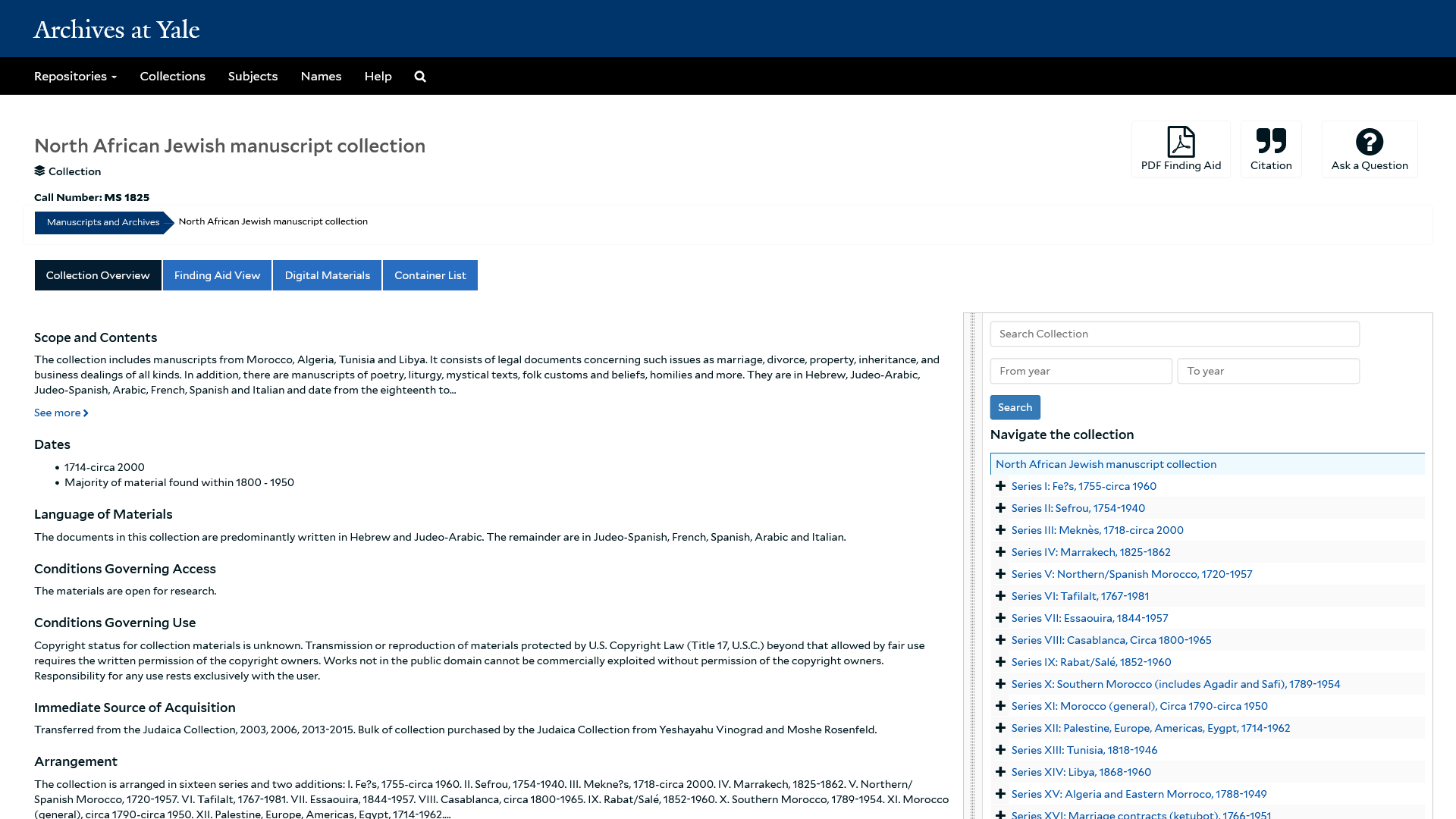
This webpage presents the finding aid for Yale University's North African Jewish Manuscript Collection (MS 1825), a significant archival resource documenting the rich history of Jewish communities across Morocco, Algeria, Tunisia, and Libya from the 18th to mid-20th centuries. The collection serves as a comprehensive repository of legal, religious, and cultural documents that illuminate the daily lives, traditions, and social structures of North African Jewish communities during a crucial period of transition and eventual diaspora.
The collection's 27.58 linear feet of materials span nearly three centuries (1714-circa 2000, with the majority from 1800-1950) and encompass an impressive linguistic diversity, featuring documents in Hebrew, Judeo-Arabic, Judeo-Spanish, Arabic, French, Spanish, and Italian. The manuscripts include legal documents covering marriage, divorce, property rights, inheritance, and business transactions, alongside religious and cultural materials such as poetry, liturgical texts, mystical writings, folk customs documentation, and homilies. Particularly notable is the collection's focus on Moroccan Jewish communities, which historically represented the largest and most influential Jewish population in the region, with materials originating from major cities like Casablanca, Fès, Marrakech, and Tangier, as well as smaller towns and villages.
The collection holds exceptional academic and cultural value for scholars of Jewish history, North African studies, and diaspora communities. It documents the complex social fabric of Jewish life in Muslim-majority countries, capturing both the indigenous Jewish populations and the Sephardic communities who fled Spain and Portugal during the Inquisition. The materials were expertly organized with the assistance of Professor Moshe Bar-Asher, a leading authority on North African Jewish communities and President of the National Academy of the Hebrew Language, who helped arrange the documents geographically into sixteen series covering specific regions and cities.
What makes this collection particularly significant is its meticulous preservation of documents from communities that have largely disappeared or drastically diminished since the mid-20th century. The finding aid reveals the collection's acquisition from notable sources including Yeshayahu Vinograd and Moshe Rosenfeld, transferred from Yale's Judaica Collection between 2003-2015. The materials are fully accessible to researchers, though copyright status remains unknown for many items, making this an invaluable primary source for understanding the social, legal, and religious practices of North African Jewish communities before their mass emigration to Israel, France, and other countries in the post-colonial period.
Cette page web présente la collection de manuscrits juifs nord-africains (MS 1825) conservée aux archives de Yale University, constituant un trésor documentaire exceptionnel couvrant principalement la période du XVIIIe au milieu du XXe siècle. Cette collection remarquable rassemble des manuscrits provenant du Maroc, d'Algérie, de Tunisie et de Libye, témoignant de la richesse et de la diversité des communautés juives d'Afrique du Nord sur près de trois siècles. Le cœur de la collection se concentre sur les Juifs du Maroc, qui représentaient la communauté la plus importante et influente de la région, avec une histoire remontant à l'époque gréco-romaine et comprenant des groupes autochtones ainsi que des immigrants venus d'Espagne et du Portugal.
Le contenu de cette collection de 27,58 pieds linéaires (45 boîtes) est d'une diversité remarquable, englobant des documents juridiques traitant de mariages, divorces, propriétés, héritages et transactions commerciales, mais aussi des manuscrits de poésie, de liturgie, de textes mystiques, de coutumes populaires, de croyances et d'homélies. Les documents sont rédigés en hébreu, judéo-arabe, judéo-espagnol, arabe, français, espagnol et italien, reflétant le multilinguisme caractéristique de ces communautés. La collection couvre géographiquement les principales villes marocaines comme Casablanca, Fès, Marrakech, Essaouira, Meknès, Rabat, Sefrou, Tétouan et Tanger, ainsi que des localités plus petites et moins connues, offrant ainsi un panorama complet de la vie juive nord-africaine.
L'organisation scientifique de cette collection témoigne de son importance académique exceptionnelle. Le professeur Moshe Bar-Asher, président de l'Académie nationale de la langue hébraïque et professeur émérite à l'Université hébraïque de Jérusalem, a collaboré à son organisation et à la traduction des documents. La collection est structurée en seize séries géographiques plus deux ajouts, permettant une approche méthodique par régions et communautés. Cette ressource, acquise principalement auprès de Yeshayahu Vinograd et Moshe Rosenfeld, représente une source inestimable pour les chercheurs en histoire juive, études orientales, anthropologie culturelle et linguistique, particulièrement précieuse compte tenu de la quasi-disparition de la vie juive dans la plupart des pays musulmans, à l'exception notable du Maroc qui conserve encore une petite communauté juive.
**אוסף כתבי יד יהודי צפון אפריקה באוניברסיטת ייל**
דף זה מציג את אוסף כתבי היד היהודי הצפון-אפריקאי הנרחב של ארכיון ייל (MS 1825), המכיל מסמכים היסטוריים מרוקו, אלג'יריה, תוניסיה ולוב מהמאות ה-18 עד אמצע המאה ה-20. האוסף כולל מגוון רחב של חומרים: מסמכים משפטיים העוסקים בנישואין, גירושין, רכוש, ירושה ועסקאות מסחריות, לצד כתבי יד של שירה, ליטורגיה, טקסטים מיסטיים, מנהגים עממיים, דרשות ועוד. המסמכים כתובים בשפות מרובות - עברית, יהודית-ערבית, יהודית-ספרדית, ערבית, צרפתית, ספרדית ואיטלקית, המשקפים את הרב-תרבותיות של הקהילות היהודיות באזור.
ליבת האוסף מתמקדת ביהודי מרוקו, הקהילה הגדולה והמשפיעה ביותר באזור, עם חומרים מערים מרכזיות כמו קזבלנקה, פאס, מרקש, מקנס, רבט, ספרו, טטואן וטנג'יר, וכן מעיירות קטנות יותר. האוסף מתועד על פני 27.58 רגל ליניאריות (45 קופסאות) ומאורגן ב-16 סדרות גאוגרפיות בליווי שתי תוספות. המסמכים נרכשו בעיקר מאספני כתבי יד ישעיהו וינוגרד ומשה רוזנפלד, והועברו מאוסף היודאיקה של הספרייה בין השנים 2003-2015.
מבחינה אקדמית, האוסף מהווה משאב חשוב ביותר לחקר ההיסטוריה היהודית בצפון אפריקה, תחום שזוכה לעניין הולך וגובר בקרב חוקרים. עיבוד האוסף בוצע בסיועו של פרופ' משה בר-אשר, נשיא האקדמיה ללשון העברית ופרופסור אמריטוס באוניברסיטה העברית, המוכר כמומחה מוביל בתחום זה. הארגון הגאוגרafi של האוסף מאפשר למחקרים ממוקדים על קהילות ספציפיות, בעוד שהמגוון הנושאי של המסמכים - החל מחוזי כתובות (1766-1951) ועד טקסטים מיסטיים וחומרים עממיים - מספק תמונה מקיפה של החיים היהודיים באזור על פני למעלה ממאתיים שנה.
تُعرض هذه الصفحة مجموعة المخطوطات اليهودية لشمال أفريقيا المحفوظة في أرشيف جامعة ييل، وهي مجموعة استثنائية تحمل رقم MS 1825 وتمثل كنزاً تاريخياً ثقافياً يوثّق حياة الجماعات اليهودية في شمال أفريقيا عبر أكثر من قرنين ونصف. تشمل المجموعة مخطوطات من المغرب والجزائر وتونس وليبيا، وتركز بشكل خاص على يهود المغرب باعتبارهم أكبر وأكثر الجماعات تأثيراً في المنطقة. تضم هذه الوثائق قانونية تتعلق بالزواج والطلاق والملكية والميراث والمعاملات التجارية، بالإضافة إلى مخطوطات شعرية وطقوس دينية ونصوص صوفية وعادات شعبية ومعتقدات وخطب دينية.
المجموعة الرقمية تمتد زمنياً من عام 1714 حتى حوالي عام 2000، مع تركيز معظم المواد في الفترة بين 1800-1950. المخطوطات مكتوبة بلغات متعددة تعكس التنوع الثقافي للجماعات اليهودية في شمال أفريقيا، وتشمل العبرية والعربية اليهودية والإسبانية اليهودية والعربية والفرنسية والإسبانية والإيطالية. تغطي المجموعة مدناً مغربية كبرى مثل الدار البيضاء وفاس ومراكش والصويرة ومكناس والرباط وصفرو وتطوان وطنجة، بالإضافة إلى بلدات وقرى أصغر، مما يوفر لمحة شاملة عن الحياة اليهودية المغربية في مختلف المناطق.
تكتسب هذه المجموعة أهمية خاصة من الناحية التاريخية والأكاديمية لأنها توثق لحضارة يهودية عريقة في المغرب تعود جذورها إلى العصر اليوناني-الروماني، وقد أنجبت عبر القرون علماء وحاخامات وشعراء ورجال تجارة ودولة مؤثرين. المجموعة منظمة في ستة عشر سلسلة جغرافية تمت بمساعدة البروفيسور موشيه بار آشير، الخبير العالمي في هذا المجال والرئيس السابق لأكاديمية اللغة العبرية. تصل المجموعة الكاملة إلى 27.58 قدماً خطياً محفوظة في 45 صندوقاً، وهي متاحة للبحث الأكاديمي، مما يجعلها مصدراً لا يقدر بثمن لدراسة تاريخ وثقافة يهود شمال أفريقيا في فترة حاسمة من تاريخهم.
Esta página web presenta la **Colección de Manuscritos Judíos del Norte de África** (MS 1825) conservada en los Archivos de la Universidad de Yale, constituyendo uno de los repositorios documentales más importantes sobre la vida judía en el Magreb entre los siglos XVIII y XX. La colección abarca manuscritos procedentes de Marruecos, Argelia, Túnez y Libia, con un énfasis particular en las comunidades judías marroquíes, que fueron las más grandes e influyentes de la región. El acervo documumental incluye una extraordinaria diversidad de materiales: desde documentos legales sobre matrimonio, divorcio, herencias y transacciones comerciales, hasta textos de poesía, liturgia, misticismo, costumbres populares y homilías religiosas.
El corazón de la colección reside en los **27.58 pies lineales de documentos** (45 cajas) que testimonian la rica historia judía de Marruecos, cuyo poblamiento se remonta a la época grecorromana. Los manuscritos provienen de las principales ciudades marroquíes como Casablanca, Fez, Marrakech, Esauira (antigua Mogador), Meknes, Rabat, Sefrou, Tetuán y Tánger, así como de pueblos menores. La documentación, fechada entre 1714 y aproximadamente 2000 (con la mayoría del material concentrado entre 1800-1950), está redactada en **múltiples lenguas**: hebreo, judeoárabe, judeospañol, árabe, francés, español e italiano, reflejando la naturaleza cosmopolita y multilingüe de estas comunidades sefardíes y mizrahíes.
La organización académica de la colección fue supervisada por el **profesor Moshe Bar-Asher**, eminente especialista nacido en Marruecos y presidente de la Academia Nacional de la Lengua Hebrea, quien estructuró los documentos en dieciséis series geográficas que incluyen desde contratos matrimoniales (ketubot) hasta correspondencia con comunidades judías de Palestina, Europa y América. Esta colección posee un valor historiográfico excepcional al documentar la vida cotidiana, las prácticas religiosas y las estructuras sociales de comunidades judías que prácticamente han desaparecido del mundo musulmán, convirtiéndose en una fuente primaria indispensable para investigadores de estudios judaicos, historia del Magreb y relaciones judeo-musulmanas.
La página incluye referencias a **figuras históricas prominentes** como Jacob ben Masoud Abi-Ḥasira (1808-1880), Judah ben Jacob ibn Attar (1655-1733) y otros rabinos y eruditos, además de material sobre amuletos judaicos norteafricanos y tradiciones místicas. Los materiales están disponibles para investigación académica, aunque su estado de derechos de autor permanece incierto, lo que requiere permisos especiales para reproducciones comerciales. Esta colección representa un testimonio invaluable de la diversidad cultural del judaísmo sefardí y mizrahí en el Norte de África antes de las grandes migraciones del siglo XX.
Citation (APA Style)
Collection: North African Jewish manuscript collection | Archives at Yale. (2025, 11 23).
archives.yale.edu.
https://archives.yale.edu/repositories/12/resources/4864