This comprehensive website serves as a specialized genealogical resource dedicated to helping people research and trace their Sephardic Jewish ancestry—descendants of Jews who originated from the Iberian Peninsula (Spain and Portugal), known in Hebrew as Sefarad. The site's primary purpose is to provide educational resources and guidance for navigating the complex history of Sephardic Jewish diasporas while maintaining rigorous genealogical standards. The website emphasizes the importance of following proper research methodology, including adherence to the Genealogical Proof Standard and the ethical codes of international Jewish genealogical societies.
The content provides detailed explanations of three distinct Sephardic diasporas that formed after the expulsions and forced conversions of the late 15th and early 16th centuries. The **Megorashim** ("Exiles") settled primarily in Morocco and Algeria, speaking a Spanish dialect called Haketia. **Eastern Sephardim** established communities throughout the Ottoman Empire, including Turkey, Greece, the Balkans, and Middle East, preserving their heritage through the Ladino language. **Western Sephardim**, also called Portuguese Jews, were descendants of those forcibly converted to Christianity in Portugal in 1497 who later established Jewish communities across the Atlantic world, including the Netherlands, England, France, Italy, and Jamaica, speaking Portuguese and Castilian Spanish. The site also acknowledges proven communities of Iberian Jewish ancestry, such as those in Belmonte, Portugal, the Chuetas of Majorca, and the Dönmeh community in Turkey.
The website addresses the growing confusion around the term "Sephardic," which is sometimes incorrectly used as a catch-all for non-Ashkenazi Jews or communities that simply follow Sephardic prayer traditions. The author warns against the proliferation of unsubstantiated claims about Sephardic ancestry, particularly those based on surnames or speculative "crypto-Jewish" connections, emphasizing that such claims are often "unprovable and often improbable." This reflects the site's commitment to evidence-based genealogical research rather than wishful thinking or romanticized family legends.
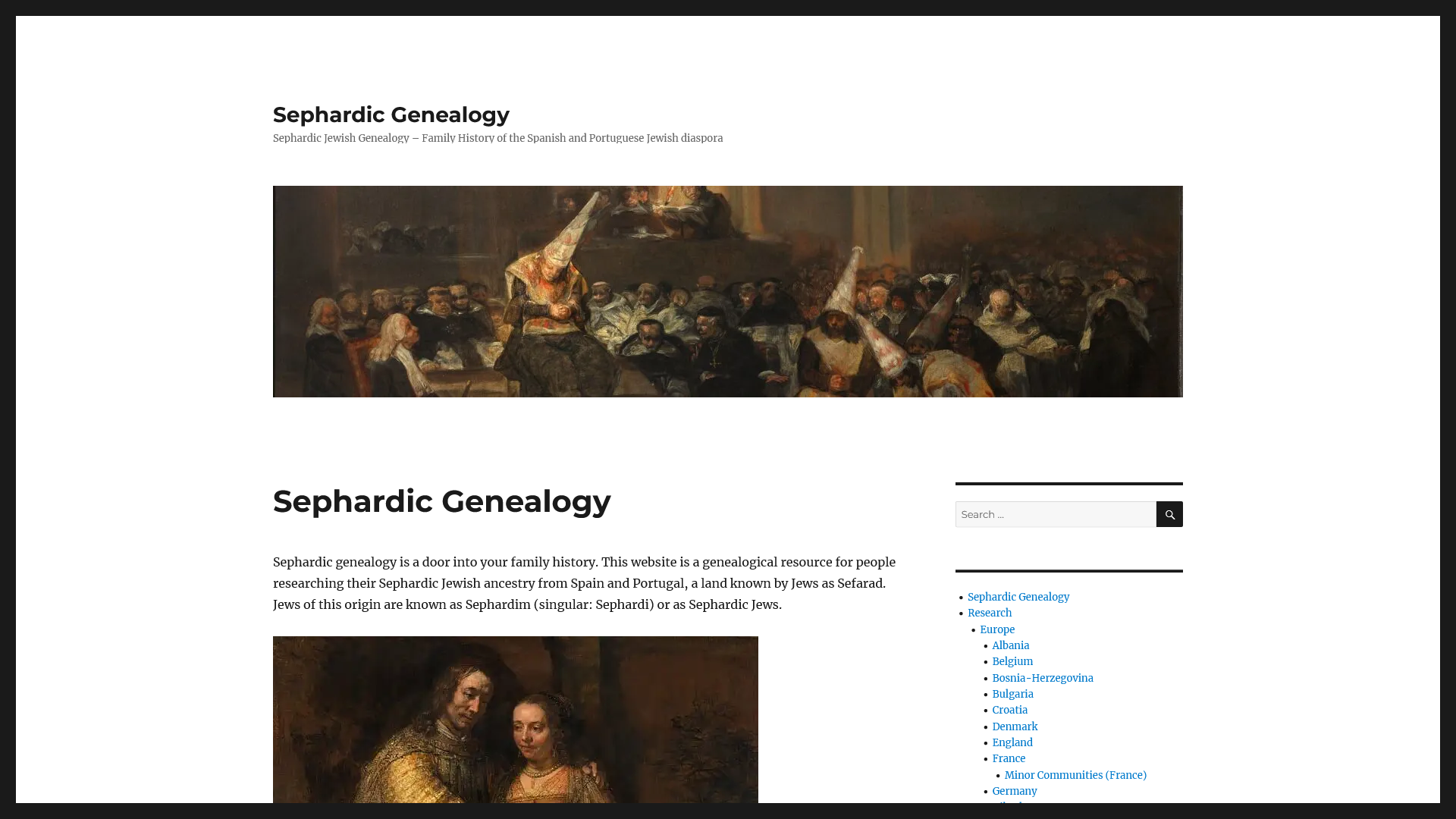
Notable features include practical information about Portuguese and Spanish nationality programs for people of Sephardic descent (noting that Spain's program has closed while Portugal's remains under review), professional genealogical services, and an extensive social media presence across multiple platforms. The site encourages users to join the Sephardic Genealogical Society's mailing list and maintains a scholarly approach while remaining accessible to amateur genealogists. The inclusion of Rembrandt's "The Jewish Bride" as accompanying artwork suggests an appreciation for the cultural and artistic legacy of Sephardic communities throughout history.
**Analyse du site web : Sephardic Genealogy - Ressource généalogique spécialisée**
Ce site web constitue une ressource généalogique spécialisée dédiée à la recherche des origines juives séfarades, ces descendants des communautés juives d'Espagne et du Portugal expulsées à partir de 1492. Le site définit clairement son objectif : servir de "porte d'entrée vers l'histoire familiale" pour les personnes cherchant à retracer leur ascendance séfarade depuis Sefarad, nom donné par les Juifs à la péninsule ibérique. La plateforme se positionne comme un guide méthodologique rigoureux, encourageant explicitement le respect du "Genealogical Proof Standard" et des codes de conduite des associations internationales de généalogie juive.
Le contenu révèle une approche académique sophistiquée en cartographiant trois diasporas séfarades distinctes mais interconnectées. Les **Megorashim** (les "Exilés" en hébreu) s'établirent principalement au Maroc et en Algérie, développant le dialecte Haketia. Les **Séfarades orientaux** prospérèrent dans l'Empire ottoman, parlant le ladino et peuplant la Turquie occidentale, la Grèce et les Balkans. Les **Séfarades occidentaux**, également appelés "Juifs portugais", descendants de convertis forcés de 1497 ayant subi l'Inquisition, créèrent des communautés atlantiques aux Pays-Bas, en Angleterre, en France, en Italie et en Jamaïque, conservant le portugais et l'espagnol castillan. Le site mentionne également des communautés documentées comme celle de Belmonte au Portugal, les Chuetas de Majorque et les Dönmeh de Turquie.
L'approche du site se distingue par sa rigueur critique face aux revendications d'ascendance séfarade non fondées. Il met en garde contre "un nombre croissant de personnes croyant avoir une ascendance séfarade, souvent grâce à des informations incorrectes en ligne", incluant certains Juifs ashkénazes et des personnes se réclamant d'ancêtres "crypto-juifs" basés sur des patronymes supposément juifs. Cette dimension critique témoigne d'une démarche scientifique exigeante, particulièrement pertinente dans le contexte des récentes lois espagnole et portugaise accordant la nationalité aux descendants séfarades.
Le site propose des services professionnels de recherche généalogique et maintient une présence active sur les réseaux sociaux (Facebook, YouTube, Twitter, Instagram, Pinterest, LinkedIn), démontrant son engagement dans la vulgarisation scientifique. Il constitue ainsi une ressource précieuse tant pour les chercheurs académiques que pour les particuliers souhaitant explorer leur héritage familial séfarade, tout en promouvant une approche méthodologique rigoureuse dans un domaine souvent sujet aux approximations historiques.
**אתר "גנאלוגיה ספרדית" - מקור מקיף לחקר שושלת יהודי ספרד ופורטוגל**
אתר זה מהווה משאב גנאלוגי מקיף המיועד לאנשים החוקרים את מוצאם הספרדי-יהודי מספרד ופורטוגל - ארץ הידועה ליהודים כ"ספרד". האתר מתמחה בחקר הדיאספורות הספרדיות השונות ומציע מידע מפורט על שלושת הזרמים העיקריים: המגורשים (בעיקר במרוקו ואלג'יריה, דוברי "חקטיה"), הספרדים המזרחיים (באימפריה העותומנית, דוברי לאדינו), והספרדים המערביים או "יהודי פורטוגל" (שהתפזרו בעיקר סביב האוקיינוס האטלנטי לאחר האינקוויזיציה, דוברי פורטוגזית וספרדית קסטיליאנית). האתר מדגיש כי זהו "שער להיסטוריה המשפחתית" של המבקרים.
האתר מציג מידע היסטורי עשיר על קהילות בעלות מוצא יהודי-איברי מוכח, כמו עיירת בלמונטה בפורטוגל, קהילת הצ'ואטאס באי מיורקה הספרדי, וקהילת הדונמה בטורקיה של היום. עם זאת, האתר מזהיר מפני טענות שגויות לגבי מוצא ספרדי המתבססות על מידע שגוי ברשת, במיוחד האמונה השגויה ששמות משפחה מעידים בהכרח על מוצא יהודי. היוצרים מעודדים מחקר עצמאי בהתאם ל"תקן הוכחה גנאלוגי" ולקודי האתיקה של האגודות הבינלאומיות לגנאלוגיה יהודית.
הקהל היעד כולל בעיקר אנשים המחפשים לחקור את שורשיהם הספרדיים-יהודיים, אך האתר מתייחס גם לבלבול המושגי סביב המונח "ספרדי" - שלעתים מתייחס לקהילות יהודיות הנוהגות לפי סידור התפילה הספרדי או כביטוי כללי ל"לא-אשכנזי". האתר מציע גם מידע מעודכן על אפשרויות קבלת אזרחות פורטוגזית לבעלי מוצא ספרדי (בעוד שהאופציה הספרדית נסגרה), תוך הדגשה שיש לפנות לייעוץ משפטי מוסמך. האתר כולל נוכחות פעילה ברשתות החברתיות וקישורים לחברה הגנאלוגית הספרדית, ומציע שירותי מחקר מקצועיים לחקר עצי יוחסין ספרדיים.
يُعدّ موقع "علم الأنساب السفارديّ" (Sephardic Genealogy) بوابة شاملة ومتخصصة لاستكشاف التاريخ العائليّ للأشخاص الذين يبحثون عن جذورهم اليهودية السفاردية المنحدرة من إسبانيا والبرتغال، والتي كانت تُعرف لدى اليهود باسم "سفراد". يهدف الموقع إلى توفير موارد بحثية احترافية للمهتمين بتتبع أصولهم السفاردية، مع التركيز على المعايير الأكاديمية الصارمة في البحث الأنساب وضرورة اتباع الأدلة الموثقة بدلاً من الاعتماد على المعلومات المغلوطة المنتشرة على الإنترنت.
يقدم الموقع شرحاً مفصلاً للشتات اليهوديّ السفارديّ الذي انقسم إلى ثلاث مجموعات رئيسية متداخلة ومترابطة: أولاً، "المجوراشيم" (المنفيون) الذين استقروا في المغرب والجزائر وتحدثوا بلهجة إسبانية تُسمى "حكيتيا". ثانياً، السفارديم الشرقيون الذين عاشوا في الإمبراطورية العثمانية بما في ذلك تركيا واليونان والبلقان والشرق الأوسط وتحدثوا بلغة "اللادينو". وثالثاً، السفارديم الغربيون المعروفون أيضاً بـ"اليهود البرتغاليين" الذين أُجبروا على التحوّل للمسيحية عام 1497 وواجهوا محاكم التفتيش، ثم أسسوا لاحقاً مجتمعات يهودية في هولندا وإنجلترا وفرنسا وإيطاليا وجامايكا وأماكن أخرى حول المحيط الأطلسي.
يحذر الموقع من الاستخدامات المغلوطة لمصطلح "سفاردي" الذي يُطلق أحياناً خطأً على جميع اليهود غير الأشكناز، أو على المجتمعات التي تتبع كتاب الصلاة السفاردي دون أن تكون منحدرة فعلياً من أيبيريا. كما ينتقد الموقع الادعاءات المتزايدة حول الأصول السفاردية المبنية على معلومات خاطئة، خاصة تلك المرتبطة بأسماء العائلات أو بمفهوم "اليهود الخفيين"، مؤكداً على ضرورة اتباع معايير الإثبات الأنسابية والأخلاقيات المهنية للجمعيات الأنسابية اليهودية الدولية.
يتميز الموقع بتقديم معلومات عملية حول الجنسية البرتغالية للأشخاص من أصول سفاردية، مع التنبيه إلى ضرورة استشارة محامين مرخصين في هذا الشأن، كما يوفر خدمات بحث احترافية لمن يرغب في استكشاف تاريخ عائلته السفاردية. بالإضافة إلى ذلك، يحتفظ الموقع بحضور نشط على وسائل التواصل الاجتماعي المختلفة مثل فيسبوك ويوتيوب وتويتر، مما يجعله مركزاً حيوياً لمجتمع الباحثين في الأنساب السفاردية حول العالم.
## Análisis del Portal de Genealogía Sefardí
Esta página web constituye un recurso genealógico integral especializado en la investigación de la ascendencia judía sefardí, específicamente para personas cuyos antepasados provienen de España y Portugal, territorio conocido históricamente por los judíos como Sefarad. El sitio funciona como una "puerta de entrada" a la historia familiar sefardí, dirigiéndose tanto a investigadores genealógicos profesionales como a individuos interesados en rastrear sus raíces judías ibéricas. La plataforma se posiciona como una autoridad en el tema, ofreciendo orientación metodológica basada en estándares genealógicos reconocidos y códigos de ética de organizaciones internacionales especializadas.
El contenido principal del sitio presenta una taxonomía detallada de las tres diásporas sefardíes principales que se formaron tras las expulsiones históricas. Los **Megorashim** (exiliados en hebreo) se establecieron principalmente en Marruecos y Argelia, donde coexistieron con judíos locales llamados Toshavim y desarrollaron el dialecto español conocido como Haketia. Los **Sefardíes Orientales** se asentaron en el Imperio Otomano, abarcando el oeste de Turquía, Grecia, los Balcanes meridionales y gran parte del Medio Oriente, preservando el ladino como su lengua distintiva. Los **Sefardíes Occidentales**, también denominados "judíos portugueses", descienden de ancestros convertidos forzosamente al cristianismo en Portugal en 1497 y que posteriormente experimentaron la Inquisición, estableciendo comunidades judías en los Países Bajos, Inglaterra, Francia, Italia y Jamaica, manteniendo el portugués y el español castellano como idiomas principales.
La página aborda críticamente el uso contemporáneo del término "sefardí", alertando sobre interpretaciones erróneas que han proliferado en línea. Específicamente, advierte contra la tendencia creciente de personas que afirman tener ascendencia sefardí basándose en información incorrecta, incluyendo algunos judíos ashkenazíes y individuos que creen tener ancestros "cripto-judíos" o "bnei anusim" fundamentándose erróneamente en apellidos. El sitio también proporciona información actualizada sobre las oportunidades de nacionalidad portuguesa y española para personas con ascendencia sefardí comprobada, mencionando que mientras la opción española está cerrada, la portuguesa podría seguir disponible aunque sujeta a revisión parlamentaria y judicial.
Como elementos distintivos, el portal mantiene una presencia activa en múltiples plataformas de redes sociales (Facebook, YouTube, Twitter, Instagram, Pinterest y LinkedIn) y está afiliado con la Sociedad Genealógica Sefardí, ofreciendo servicios profesionales de investigación genealógica. La página incluye referencias a comunidades comprobadas de ascendencia judía ibérica como Belmonte en Portugal, los Chuetas en Mallorca y la comunidad Dönmeh en Turquía, estableciendo un marco académico riguroso que combina investigación genética y archivística para validar conexiones genealógicas auténticas.