This webpage provides a comprehensive examination of Moroccan Jewish immigration to North America, with a particular focus on the Canadian experience from the 1960s through the present day. The page serves as both a historical record and demographic analysis of how Moroccan Jews established themselves as a prominent community within Canada's broader Sephardic Jewish population. Unlike many other Middle Eastern and North African Jewish communities who were forced to flee their countries, Moroccan Jews emigrated voluntarily to Canada, often bringing significant assets and education with them.
The content reveals fascinating demographic insights about this immigration pattern. Between 1960 and 2011, approximately 8,600 Jews moved from Morocco to Canada, with the vast majority settling in francophone Quebec, particularly Montreal. By 2011, Montreal housed 22,225 Sephardic Jews out of Canada's total Sephardic population of 36,040, with many having Moroccan heritage. The page details how these immigrants were drawn to Quebec's bilingual environment, having been educated in Alliance Israélite Universelle schools in Morocco where they learned French and adopted republican, secular values. Interestingly, while 62.3% of Montreal Sephardim primarily spoke French in 2011, 30.7% had adopted English as their primary language, demonstrating successful integration into Canada's bilingual culture.
The historical context presented shows how both Canadian immigration policy and Quebec's specific cultural needs created favorable conditions for Moroccan Jewish settlement. The Canadian government actively sought immigrants to build a multicultural society, while anglophone Jewish institutions in Quebec encouraged francophone Jewish immigration to strengthen their community and gain political support from Quebec's francophone leadership in the 1970s. The page documents how these immigrants quickly adapted economically, with Moroccan Jews achieving middle and upper-middle class status and maintaining lower poverty rates (18.4%) than the Ashkenazi Jewish population (20.5%) by 2011.
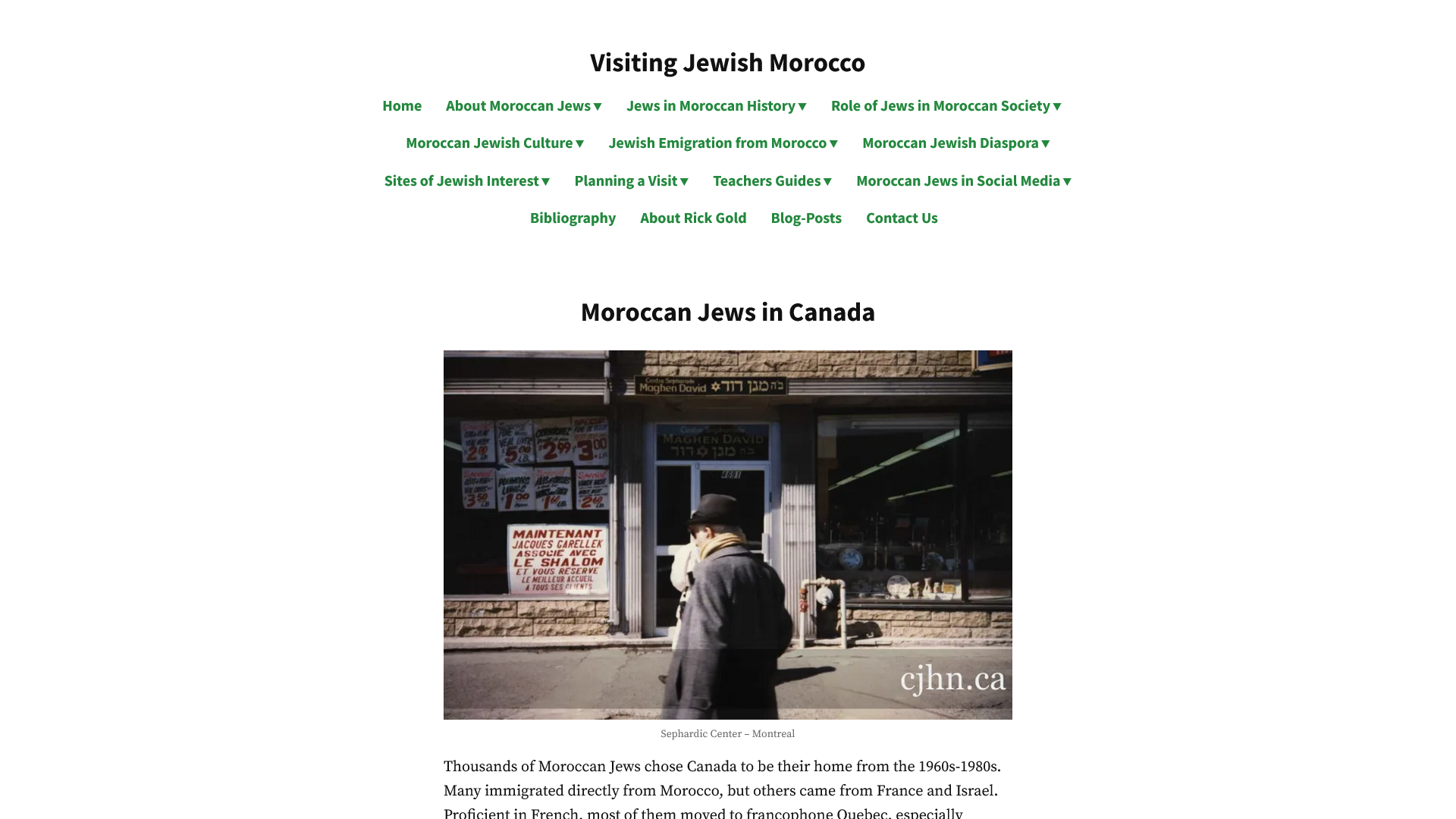
The webpage includes notable visual elements such as historical photographs showing Moroccan Jewish immigrants arriving at Montreal's Dorval Airport in 1972, images of the Sephardic Center in Montreal, and contemporary photos of community organizations like the United Sephardic Community of Quebec staff. These multimedia elements help illustrate the evolution from individual immigrant stories to established institutional presence. The page appears to be part of a larger digital archive documenting Moroccan Jewish diaspora experiences, serving researchers, community members, and anyone interested in North American Jewish immigration patterns and the preservation of Sephardic culture in the New World.
Cette page web offre une analyse approfondie de la diaspora juive marocaine en Amérique du Nord, avec un focus particulier sur l'immigration vers le Canada entre les années 1960 et 1980. Le site examine comment des milliers de Juifs marocains ont choisi le Canada comme nouvelle patrie, s'installant principalement au Québec francophone et à Montréal en raison de leur maîtrise du français acquise dans les écoles de l'Alliance Israélite Universelle au Maroc. Contrairement aux vagues d'immigration précédentes vers Israël dans les années 1940-1950, ces immigrants arrivaient avec davantage d'actifs, d'éducation et de moyens financiers, leur permettant de financer leur propre voyage et de s'intégrer rapidement dans la classe moyenne canadienne.
La page présente des données démographiques détaillées révélant qu'environ 8 600 Juifs ont immigré du Maroc vers le Canada entre 1960 et 2011, contribuant significativement aux 36 040 Séfarades vivant au Canada en 2011. À Montréal, sur une population juive totale de 90 780 personnes, 6 280 étaient nées au Maroc, auxquelles s'ajoutent de nombreux immigrants séfarades venus de France et d'Israël avec des origines marocaines. L'analyse linguistique montre que 62,3% des Séfarades montréalais parlent principalement français, tandis que 30,7% utilisent l'anglais comme langue principale, témoignant de l'évolution intergénérationnelle vers le bilinguisme complet chez les deuxième et troisième générations.
Le contenu met en lumière les facteurs d'attraction du Canada, notamment l'accueil favorable du gouvernement canadien et des organisations juives, ainsi que l'environnement politique, linguistique et culturel du Québec qui rappelait celui de la France. La page souligne que ces immigrants, contrairement à d'autres communautés juives du Moyen-Orient et d'Afrique du Nord, ont émigré volontairement et non par contrainte. Leur intégration économique s'est avérée remarquablement réussie, avec un taux de pauvreté de 18,4% parmi les Séfarades montréalais en 2011, inférieur à celui des Juifs ashkénazes (20,5%). La page documente également l'établissement d'institutions communautaires comme la Communauté Séfarade Unie du Québec (CSUQ) et leur rôle dans la préservation de la culture séfarade tout en maintenant un soutien ferme à Israël.
**תיאור מקיף של הדף: יהודי מרוקו בצפון אמריקה**
דף זה מתמקד בתיעוד ההיסטוריה והמצב הנוכחי של הקהילה היהודית המרוקאית בקנדה, ובמיוחד במחוז קוויבק ובעיר מונטריאול. הדף משמש כחלק מארכיון דיגיטלי המתעד את הפזורה היהודית המרוקאית ברחבי העולם, ומציג תמונה מקיפה של אחת מקהילות היהודים הספרדיות המצליחות ביותר בצפון אמריקה. המטרה המרכזית היא לשמר ולתעד את המורשת התרבותית והחברתית של קהילה זו.
התוכן מציג נתונים דמוגרפיים מפורטים ומרתקים: כ-8,600 יהודים עלו ממרוקו לקנדה בין 1960-2011, רובם בשנים 1960-1989. בשונה מיהודי מרוקו שעלו לישראל בשנות ה-40 וה-50, אלה שהגיעו לקנדה היו בעלי השכלה גבוהה יותר ונכסים רבים יותר, מה שאפשר להם להשתלב במהירות במעמד הבינוני והבינוני-גבוה. בשנת 2011, מתוך 90,780 יהודים במונטריאול, 6,280 נולדו במרוקו, ורבים נוספים מצאצאיהם. הדף מדגיש כי 62.3% מהספרדים במונטריאול דוברים צרפתית כשפה עיקרית, ו-30.7% דוברים אנגלית, מה שמעיד על השתלבות מוצלחת בחברה הדו-לשונית הקנדית.
מבחינה היסטורית-תרבותית, הדף מציג תופעה מעניינת של הגירה וולונטרית, בניגוד לקהילות יהודיות אחרות מצפון אפריקה שנאלצו לברוח. רבים מהמהגרים היו בוגרי בתי ספר של כי"ח (Alliance Israélite Universelle) במרוקו, שם רכשו שפה צרפתית וערכים רפובליקניים וחילוניים. החברה הקנדית והממשלה קיבלו אותם בברכה, ובתוך שלוש שנים רובם קיבלו אזרחות. חלק מהמהגרים הגיע דרך ישראל או צרפת, לאחר שחוו קשיים בהשתלבות או אפליה.
הדף כולל תמונות היסטוריות נדירות של מהגרים יהודים מרוקאיים הנוחתים בשדה התעופה דורוואל במונטריאול ב-1972, וכן תמונות של נציגי הקהילה במבקר במרוקו ושל צוות הקהילה הספרדית המאוחדת של קוויבק (CSUQ). הדף מציין כי הקהילה הקימה מוסדות חדשים תוך חיזוק הקיימים, ומהווה כיום כרבע מיהודי מונטריאול. בטורונטו פועל "הקהילה היהודית המרוקאית" עם שבעה ארגונים קשורים, המייצגת 7,000-8,000 יהודים ממוצא מרוקאי.
هذه الصفحة تتناول موضوعاً مهماً في تاريخ الشتات اليهودي المغربي، وتحديداً هجرة اليهود المغاربة إلى كندا وتأسيسهم لمجتمع سفاردي مزدهر في أمريكا الشمالية. تركز الصفحة بشكل أساسي على الفترة الممتدة من الستينيات إلى الثمانينيات من القرن العشرين، حين اختار آلاف اليهود المغاربة كندا كوطن جديد لهم، سواء بالهجرة المباشرة من المغرب أو عبر فرنسا وإسرائيل. ويُبرز المحتوى كيف أن إتقانهم للغة الفرنسية جعل مقاطعة كيبيك الناطقة بالفرنسية، وخاصة مونتريال، الوجهة المفضلة لهم.
تقدم الصفحة بيانات ديموغرافية مفصلة تكشف أن حوالي 8,600 يهودي انتقلوا من المغرب إلى كندا بين عامي 1960 و2011، معظمهم في الفترة بين 1960-1989. وبحلول عام 2011، كان هناك 36,040 سفاردي يعيشون في كندا، منهم 22,225 في مونتريال و9,425 في تورونتو. المحتوى يميز هؤلاء المهاجرين عن اليهود المغاربة الذين هاجروا إلى إسرائيل في الأربعينيات، مشيراً إلى أنهم وصلوا إلى كندا بأصول وتعليم أكبر، وأن 6,280 من سكان مونتريال اليهود في عام 2011 وُلدوا في المغرب. كما تشير الإحصائيات إلى أن 62.3% من السفارديم في مونتريال يتحدثون الفرنسية كلغة أساسية، بينما 30.7% يتحدثون الإنجليزية.
من الناحية التاريخية والثقافية، تسلط الصفحة الضوء على الطبيعة الطوعية لهذه الهجرة، موضحة أن اليهود المغاربة لم يُجبروا على الفرار كما حدث مع يهود بلدان أخرى في شمال أفريقيا والشرق الأوسط. وتشير إلى أن مئات من اليهود المغاربة الناطقين بالفرنسية انتقلوا إلى كندا بسبب التمييز الذي واجهوه في إسرائيل أو صعوبات الحصول على الجنسية الفرنسية. الصفحة تؤكد على دور التعليم في مدارس "الأليانس إسرائيليت يونيفرسل" في المغرب في إعداد هؤلاء المهاجرين ثقافياً ولغوياً للاندماج في البيئة الكندية-الكيبيكية.
تبرز الصفحة عناصر مميزة مثل الصور التاريخية لمهاجرين يهود مغاربة في مطار مونتريال دورفال عام 1972، وصورة لموظفي المجتمع السفاردي المتحد في كيبيك. كما تناقش النجاح الاقتصادي للمجتمع، مشيرة إلى أن معدل الفقر بين السفارديم في مونتريال (18.4%) كان أقل من معدله بين الأشكناز (20.5%). الصفحة تختتم بالحديث عن تأسيس المجتمع السفاردي المتحد في كيبيك كمؤسسة رئيسية تهدف لحفظ الثقافة السفاردية ودعم المجتمع، مما يعكس نجاح هذا المجتمع في بناء هوية مميزة تجمع بين التراث المغربي-اليهودي والاندماج في النسيج الكندي المتعدد الثقافات.
Esta página web se centra específicamente en la comunidad judía marroquí establecida en Norteamérica, con un enfoque particular en Canadá y especialmente en Montreal. Su propósito principal es documentar y analizar la migración voluntaria de miles de judíos marroquíes que eligieron Canadá como su nuevo hogar entre las décadas de 1960 y 1980. A diferencia de otros grupos de judíos norteafricanos que se vieron forzados a emigrar, los judíos marroquíes que llegaron a Canadá lo hicieron por elección propia, llegando con mayores recursos económicos y educativos que aquellos que habían emigrado a Israel en décadas anteriores. La página destaca cómo estos inmigrantes, debido a su dominio del francés, se asentaron principalmente en Quebec francófono, donde encontraron un ambiente político, lingüístico y cultural similar al de Francia que les resultó familiar y atractivo.
El contenido presenta datos demográficos detallados y reveladores sobre esta comunidad. Según la información proporcionada, aproximadamente 8,600 judíos se trasladaron de Marruecos a Canadá entre 1960 y 2011, constituyendo el grupo principal dentro de la comunidad sefardí canadiense. En 2011, de los 36,040 sefardíes que vivían en Canadá, 22,225 residían en Montreal y 9,425 en Toronto. La página revela que en Montreal, 6,280 judíos habían nacido en Marruecos, y muchos de los 1,690 inmigrantes sefardíes de Francia y 1,415 de Israel también tenían herencia marroquí. Un dato particularmente interesante es que, aunque la primera generación hablaba principalmente francés, las generaciones posteriores se volvieron completamente bilingües, con el 62.3% de los sefardíes de Montreal manteniendo el francés como idioma principal y el 30.7% adoptando el inglés.
La página proporciona un contexto histórico valioso sobre las condiciones que facilitaron esta migración exitosa. El gobierno canadiense buscaba activamente inmigrantes para construir una sociedad multicultural, mientras que las instituciones judías anglófonas de Quebec promovían la inmigración de judíos francófonos para revitalizar la comunidad. Los judíos marroquíes llegaron con ventajas significativas: muchos habían asistido a escuelas de la Alianza Israelita Universal en Marruecos, donde aprendieron francés y valores republicanos seculares. Este trasfondo educativo les permitió adaptarse rápidamente a la cultura quebequense y aprovechar las oportunidades laborales y educativas canadienses, ascendiendo rápidamente a la clase media y media-alta.
Entre los elementos notables de la página se encuentra información sobre el éxito económico de esta comunidad, evidenciado por una tasa de pobreza del 18.4% entre los sefardíes de Montreal en 2011, inferior al 20.5% de la población ashkenazí. La página también documenta la creación de la Comunidad Sefardí Unida de Quebec (CSUQ) y otras organizaciones comunitarias, como la Comunidad Judía Marroquí de Toronto con sus siete organizaciones afiliadas. Se incluyen fotografías históricas de inmigrantes judíos marroquíes llegando al aeropuerto Dorval de Montreal en 1972 y del personal de la CSUQ en 2019, así como imágenes del Centro Sefardí de Montreal, proporcionando un testimonio visual valioso de esta experiencia migratoria y del establecimiento exitoso de una vibrante comunidad sefardí en Canadá.