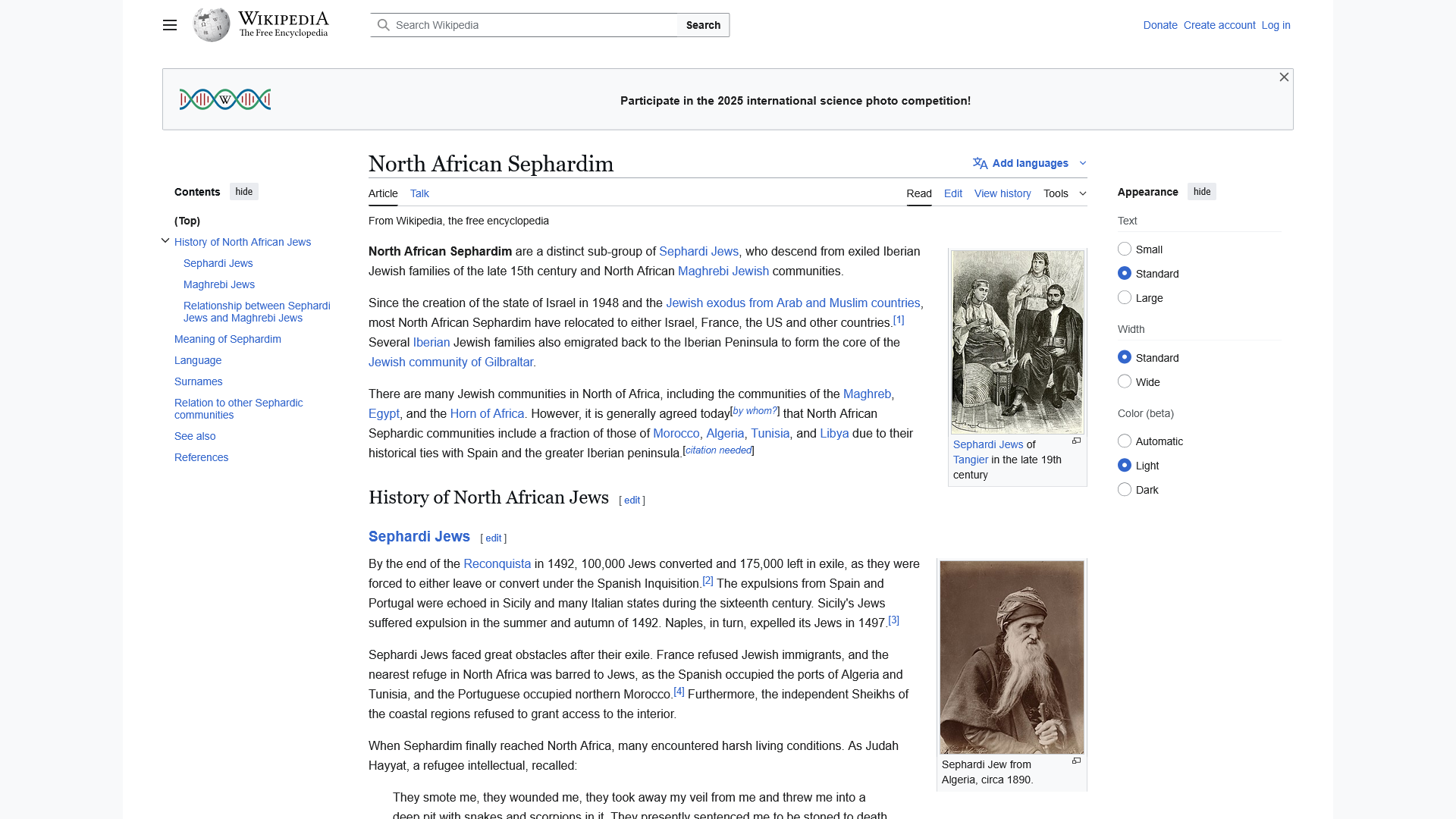
This Wikipedia page provides a comprehensive examination of North African Sephardim, a distinct Jewish ethnic subdivision that emerged from the fusion of exiled Iberian Jews and indigenous North African Jewish communities following the Spanish expulsion of 1492. The article's primary focus is to document the historical origins, migration patterns, and cultural evolution of this unique Sephardic subgroup, while exploring how two separate Jewish populations - the expelled Spanish and Portuguese Jews (Sephardim) and the existing Maghrebi Jewish communities - eventually merged to create a distinct North African Sephardic identity across Morocco, Algeria, Tunisia, and Libya.
The page details the traumatic circumstances surrounding the 1492 expulsion, noting that approximately 175,000 Jews left Spain in exile while 100,000 converted to Christianity. The article emphasizes the severe challenges faced by these refugees, as France refused Jewish immigrants and Spanish-occupied North African ports initially barred their entry. A particularly powerful firsthand account from refugee intellectual Judah Hayyat illustrates the harsh conditions: "They smote me, they wounded me...threw me into a deep pit with snakes and scorpions in it." Despite initial mutual suspicion - with Maghrebi Jews calling the newcomers "rumiyyin" (Europeans) and Sephardim referring to locals as "forasteros" (foreigners) - the indigenous Jewish communities ultimately provided crucial assistance, paying ransoms and supplying food and clothing to the refugees, even during cholera outbreaks.
The article demonstrates significant scholarly value by analyzing the complex cultural assimilation process that occurred over four centuries. While Maghrebi Jews initially challenged Sephardic customs, the sheer number of Sephardic refugees eventually led to the adoption of Sephardic practices throughout the region, including new methods of Ketouba (marriage contracts) and ritual animal slaughter. The page notes that most North African Sephardim have since emigrated to Israel, France, and the United States following the 1948 creation of Israel and subsequent Jewish exodus from Arab countries. The article serves as an important historical resource for understanding Jewish diaspora patterns, cultural preservation, and the formation of hybrid Jewish identities in North Africa, though it includes editorial notes requesting additional citations and clarification on certain claims.
Cette page Wikipedia explore en détail l'histoire et l'identité des Séfarades nord-africains, un sous-groupe distinct des Juifs séfarades qui descendent à la fois des familles juives ibériques exilées à la fin du XVe siècle et des communautés juives maghrébines autochtones. L'article se concentre principalement sur les conséquences de l'Inquisition espagnole de 1492, qui força 100 000 Juifs à se convertir et poussa 175 000 autres à l'exil, dont une partie significative trouva refuge au Maghreb malgré des conditions d'accueil initialement très difficiles.
Le contenu révèle la complexité des relations intercommunautaires lors de l'arrivée des Séfarades en Afrique du Nord. Les Juifs maghrébins locaux appelaient les nouveaux arrivants "rumiyyin" (Européens en arabe) ou "megorashim" (expulsés en hébreu), tandis que les Séfarades les désignaient comme "forasteros" (étrangers en espagnol) ou "toshavim" (communauté locale en hébreu). Malgré cette méfiance mutuelle initiale, l'article documente comment les communautés maghrébines accueillirent généreusement les réfugiés séfarades, payant leurs rançons et leur fournissant nourriture et vêtements. Le roi berbère de Fès, Mulai Muhammed esh-Sheikh, permit notamment à 20 000 réfugiés de s'installer aux portes de la ville.
L'analyse historique met en lumière un processus d'assimilation culturelle complexe qui s'étendit sur quatre siècles. Bien que les Juifs maghrébins aient initialement résisté aux coutumes séfarades, l'afflux massif de réfugiés ibériques finit par transformer durablement les pratiques religieuses locales. Les Séfarades introduisirent de nouvelles méthodes pour la Ketubah (contrat de mariage juif) et l'abattage rituel, et selon le chercheur Schroeter cité dans l'article, beaucoup de Juifs maghrébins s'assimilèrent finalement à la communauté séfarade, expliquant la prédominance actuelle des coutumes séfarades dans la région.
L'article s'adresse manifestement à un public académique et général intéressé par l'histoire juive méditerranéenne, en proposant des liens vers les histoires spécifiques des communautés juives du Maroc, d'Algérie, de Tunisie et de Libye. Il inclut des témoignages historiques poignants, comme celui de l'intellectuel réfugié Judah Hayyat décrivant les persécutions subies, et des photographies d'époque montrant des Juifs séfarades de Tanger et du Maroc. Toutefois, l'article semble incomplet et comporte des sections nécessitant des sources supplémentaires, notamment concernant la définition contemporaine des communautés séfarades nord-africaines.
דף הוויקיפדיה מתמקד בקבוצת המשנה המיוחדת של יהודי צפון אפריקה הספרדים, שהם צאצאים של משפחות יהודיות איבריות שגורשו בסוף המאה ה-15 וקהילות יהודיות מאגרביות מקומיות. העמוד מציג מחקר מקיף על הקהילות הללו, המפוזרות היום ברחבי העולם - בעיקר בישראל, צרפת וארצות הברית - לאחר ההגירה הגדולה מארצות ערב ומוסלמיות שהחלה עם הקמת מדינת ישראל ב-1948. המטרה הראשית היא לנתח את המורכבות ההיסטורית והתרבותית של קבוצה זו, הכוללת יהודים ממרוקו, אלג'יריה, תוניסיה ולוב.
העמוד מפרט את האירועים הטראומטיים של גירוש ספרד ב-1492, שבעקבותיו 100,000 יהודים התנצרו בכפייה ו-175,000 יצאו לגלות. הספרדים הגולים נתקלו במכשולים קשים - צרפת סירבה לקלוט פליטים יהודיים, והנמלים בצפון אפריקה היו חסומים בידי הספרדים והפורטוגלים. הטקסט מביא עדות מזעזעת של יהודה חייאט, אינטלקטואל פליט, המתאר את הקשיים הקיצוניים שעמדו בפני הפליטים. כשהספרדים הגיעו סוף סוף למאגרב, היהודים המקומיים (המאגרבים) כינו אותם "rumiyyin" (אירופאים בערבית) או "מגורשים" בעברית, בעוד הספרדים התייחסו למקומיים כ"forasteros" (זרים בספרדית).
למרות המתחים הראשוניים, המאגרבים סייעו לספרדים בצורה יוצאת דופן. המלך הברברי מולאי מוחמד א-שייח' הסכים לאפשר לספרדים להתיישב מחוץ לחומות פאס, ומשך 20,000 פליטים לעיר. היהודים המקומיים שילמו כופרים, סיפקו מזון ובגדים ואפילו טיפלו בפליטים שהגיעו חולי כולרה. המפגש הזה יצר חילופי תרבות עמוקים - הספרדים הביאו עמם מנהגים חדשים כמו דרכי כתיבת כתובה וטקסי שחיטה, ולמרות התנגדות ראשונית, המספר הגדול של הספרדים הוביל לכך שרבים מהמאגרבים הטמיעו לבסוף את המנהגים הספרדיים. העמוד מדגיש שמונח "ספרדי" נגזר מ"ספרד" המקראי, המזוהה עם חצי האי האיברי, אך חוקרים מציינים שהשימוש במונח זה יכול להטעות בהקשרים מסוימים.
تتناول هذه الصفحة من ويكيبيديا موضوع **اليهود السفارديم في شمال أفريقيا**، وهي مجموعة فرعية متميزة من اليهود السفارديم تنحدر من العائلات اليهودية الإيبيرية التي نُفيت في أواخر القرن الخامس عشر، بالإضافة إلى الجماعات اليهودية المغاربية الأصلية في شمال أفريقيا. تركز الصفحة على تاريخ هذه المجتمعات وتطورها، خاصة بعد طردهم من إسبانيا عام 1492 تحت وطأة محاكم التفتيش الإسبانية، حين اضطر 175,000 يهودي للنفي بينما تحول 100,000 آخرون إلى المسيحية قسرياً. منذ إنشاء دولة إسرائيل عام 1948 والنزوح اليهودي من البلدان العربية والإسلامية، انتقل معظم هؤلاء السفارديم إلى إسرائيل وفرنسا والولايات المتحدة وبلدان أخرى.
تستعرض الصفحة بالتفصيل **التحديات القاسية** التي واجهها اليهود السفارديم بعد نفيهم، حيث رفضت فرنسا استقبال المهاجرين اليهود، كما أن أقرب ملجأ في شمال أفريقيا كان محظوراً عليهم لأن الإسبان احتلوا موانئ الجزائر وتونس، بينما احتل البرتغاليون شمال المغرب. تتضمن الصفحة شاهداً مؤثراً من يهودا حيات، وهو مثقف لاجئ، يصف معاناته: *"ضربوني، جرحوني، أخذوا حجابي مني وألقوني في حفرة عميقة مع الثعابين والعقارب... وحكموا علي بالموت رجماً، لكنهم وعدوا بأنهم سيجعلونني قائداً عليهم إذا غيرت ديني"*. رغم هذه الصعوبات، ساعد اليهود المغاربة المحليون إخوانهم السفارديم الوافدين، حيث دفعوا فدياتهم ووفروا لهم الطعام والكسوة.
تناقش الصفحة أيضاً **العلاقة المعقدة بين المجموعتين**: اليهود السفارديم والمغاربة، حيث أطلق المغاربة على السفارديم لقب "روميين" (أوروبيين) أو "مجورشيم" (المطرودين)، بينما أطلق السفارديم على المغاربة "فوراستيروس" (الأجانب) أو "توشافيم" (المجتمع المحلي). مع مرور الوقت، أدى التدفق الكبير للسفارديم إلى المغرب العربي إلى اندماج العديد من اليهود المغاربة في المجتمع السفاردي، مما يفسر انتشار العادات السفاردية في المنطقة اليوم. تشمل الصفحة أيضاً **مراجع تاريخية مفصلة** حول تاريخ اليهود في كل من المغرب والجزائر وتونس وليبيا، وتحتوي على صور تاريخية نادرة لليهود السفارديم من طنجة في أواخر القرن التاسع عشر والجزائر حوالي عام 1890، مما يجعلها مرجعاً أكاديمياً قيماً للباحثين في التاريخ اليهودي وتاريخ شمال أفريقيا.
Esta página de Wikipedia se enfoca en los **sefardíes norteafricanos**, un subgrupo distintivo de judíos sefardíes que desciende de las familias judías ibéricas exiliadas a finales del siglo XV y las comunidades judías magrebíes del norte de África. El artículo examina la compleja historia de este grupo étnico-religioso, desde su formación tras la expulsión de España en 1492 hasta su dispersión moderna hacia Israel, Francia, Estados Unidos y otros países tras el éxodo judío de tierras árabes y musulmanas después de 1948.
El contenido presenta un análisis detallado de las dificultades que enfrentaron los judíos sefardíes tras su exilio, revelando que Francia les negó la entrada y que los puertos del norte de África inicialmente estaban bloqueados por ocupaciones españolas y portuguesas. El artículo incluye testimonios históricos impactantes, como el del intelectual refugiado Judah Hayyat, quien describió vívidamente las persecuciones sufridas: *"Me golpearon, me hirieron, me quitaron el velo y me arrojaron a un pozo profundo con serpientes y escorpiones"*. A pesar de estos obstáculos iniciales, el texto documenta cómo las comunidades judías magrebíes eventualmente acogieron a los refugiados sefardíes, particularmente en ciudades como Fez, donde el rey bereber permitió el asentamiento de 20,000 refugiados.
Una sección particularmente rica del artículo explora la **relación entre judíos sefardíes y magrebíes**, detallando cómo inicialmente se referían unos a otros como extranjeros (*rumiyyin* en árabe, *forasteros* en español), pero gradualmente desarrollaron una simbiosis cultural. Los sefardíes introdujeron nuevas prácticas como métodos renovados de Ketubá y sacrificio ritual de animales, mientras que muchos judíos magrebíes se asimilaron a la comunidad sefardí durante cuatro siglos de coexistencia. El artículo está dirigido tanto a académicos como al público general interesado en historia judía y migración, aunque presenta algunas limitaciones típicas de Wikipedia, incluyendo solicitudes de citas adicionales y clarificaciones sobre ciertos consensos académicos mencionados.
Citation (APA Style)
North African Sephardim - Wikipedia. (2025, 11 23).
en.wikipedia.org.
https://en.wikipedia.org/wiki/North_African_Sephardim