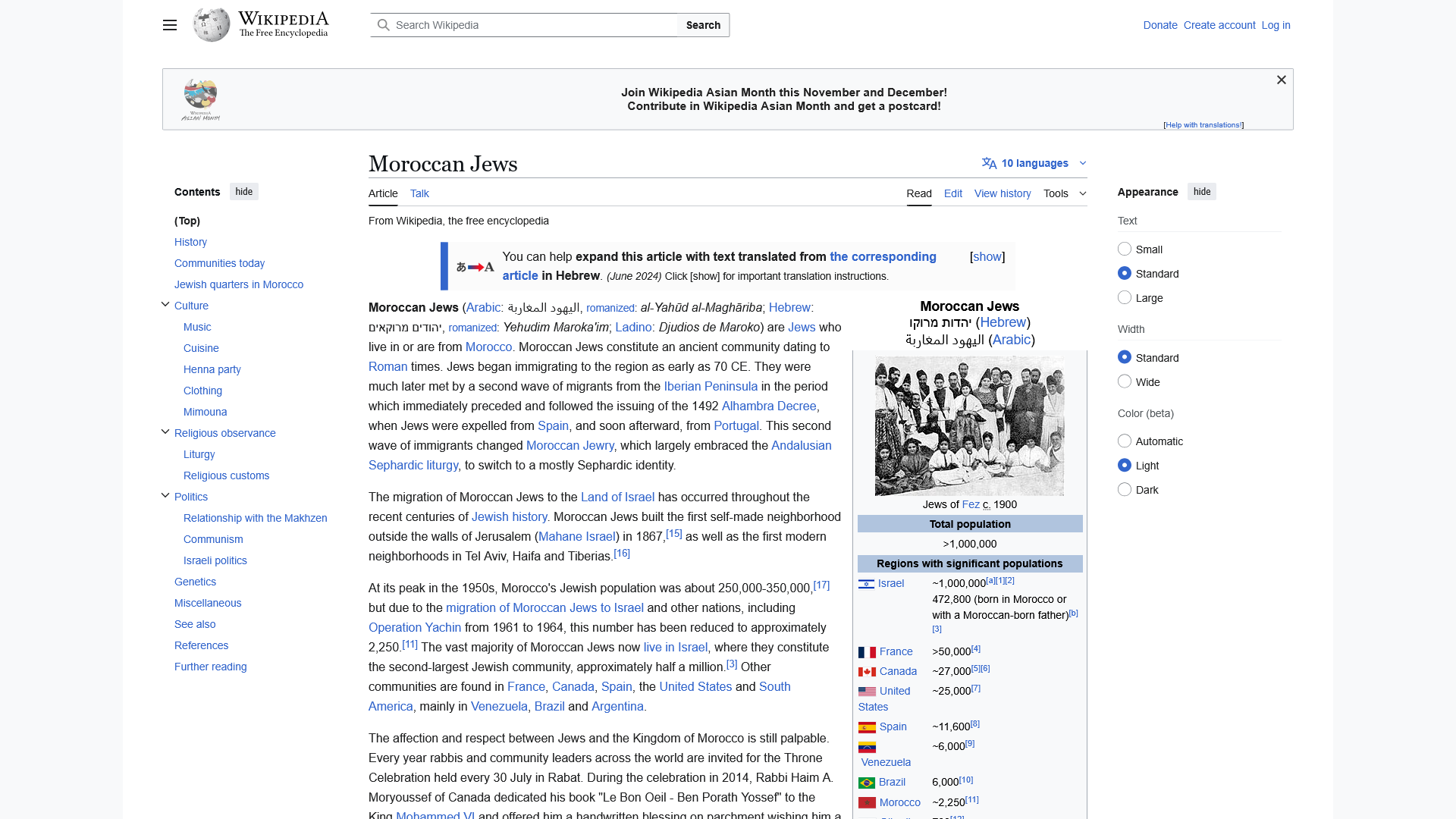
This Wikipedia page provides a comprehensive overview of Moroccan Jews, an ancient Jewish ethnic group with deep historical roots in Morocco dating back to Roman times. The page serves as an authoritative reference on this significant Jewish diaspora community, documenting their origins, demographic distribution, and cultural identity. The article focuses on both the historical development of Moroccan Jewry and their contemporary global presence, making it valuable for researchers, students, and anyone interested in Jewish history and North African studies.
The page reveals fascinating demographic and historical insights about Moroccan Jews. At their peak in the 1950s, Morocco housed between 250,000-350,000 Jews, but massive emigration—including Operation Yachin from 1961-1964—reduced this population to approximately 2,250 today. The vast majority now live in Israel (around 1 million, making them the second-largest Jewish community there), with significant populations in France (50,000+), Canada (27,000), and the United States (25,000). The article traces two major waves of Jewish settlement: the initial migration beginning around 70 CE during Roman times, and a second wave following the 1492 Alhambra Decree when Jews were expelled from Spain and Portugal. This second wave of Sephardic refugees fundamentally transformed Moroccan Jewish identity, leading the community to largely adopt Andalusian Sephardic liturgical practices.
The page emphasizes the remarkable historical contributions of Moroccan Jews to modern Israel, noting they built the first self-made neighborhood outside Jerusalem's walls (Mahane Israel) in 1867 and established the first modern neighborhoods in Tel Aviv, Haifa, and Tiberias. The article also documents the unique linguistic diversity of this community, including Hebrew, Judeo-Moroccan Arabic, Haketia, and Judeo-Berber languages. Notably, the page highlights the continued positive relationship between Moroccan Jews worldwide and the Kingdom of Morocco, exemplified by annual invitations to rabbis for the Throne Celebration in Rabat, demonstrating an unusual level of ongoing cultural and diplomatic connection between a diaspora community and their country of origin.
Cette page Wikipédia présente une analyse complète de la communauté des Juifs marocains, un groupe ethnique juif avec une histoire millénaire au Maroc. L'article examine cette communauté ancienne qui trouve ses origines dès l'époque romaine, avec les premières migrations juives vers la région dès 70 de notre ère. La page met particulièrement l'accent sur la transformation majeure de cette communauté suite à l'arrivée d'une seconde vague de migrants juifs sépharades fuyant la péninsule ibérique après le décret de l'Alhambra de 1492, qui expulsa les Juifs d'Espagne puis du Portugal. Cette migration a profondément modifié l'identité de la judaïcité marocaine, qui a largement adopté la liturgie séfarade andalouse.
L'article fournit des données démographiques détaillées révélant l'ampleur de la diaspora marocaine-juive moderne. Alors qu'au pic des années 1950, la population juive du Maroc comptait environ 250 000 à 350 000 personnes, elle a drastiquement diminué à approximativement 2 250 individus aujourd'hui, principalement en raison de l'émigration massive vers Israël et d'autres nations, notamment à travers l'Opération Yachin (1961-1964). Actuellement, plus d'un million de Juifs marocains vivent en diaspora, avec la plus grande concentration en Israël (environ 1 million), suivi de la France (plus de 50 000), du Canada (27 000), des États-Unis (25 000), et de diverses communautés en Amérique du Sud et en Europe.
La page souligne l'importance historique des Juifs marocains dans le développement de la Palestine moderne, notant qu'ils ont construit le premier quartier auto-construit hors des murs de Jérusalem (Mahane Israel) en 1867, ainsi que les premiers quartiers modernes de Tel Aviv, Haïfa et Tibériade. L'article documente également la diversité linguistique de cette communauté, qui maîtrise l'hébreu, l'arabe judéo-marocain, l'arabe marocain, le haketia, le judéo-berbère, le français et l'espagnol. Enfin, la page met en évidence les relations continues positives entre les Juifs marocains et le Royaume du Maroc, illustrées par des invitations annuelles de rabbins et dirigeants communautaires aux célébrations du Trône à Rabat, témoignant d'un respect mutuel persistant malgré l'émigration massive de cette communauté historique.
עמוד הוויקיפדיה מוקדש ליהדות מרוקו - קהילה יהודית עתיקה בעלת מורשת היסטורית עשירה המשתרעת על פני כמעט 2,000 שנה. הדף מספק סקירה מקיפה על הקהילה היהודית המרוקאית, החל מהתיישבותה הראשונית בתקופה הרומית (החל מ-70 לספירה) ועד למצבה בימינו. העמוד מציג נתונים דמוגרפיים עדכניים המראים כי מתוך יותר ממיליון יהודים מרוקאים ברחבי העולם, כמיליון חיים כיום בישראל, מה שהופך אותם לקהילה היהודית השנייה בגודלה במדינה, בעוד במרוקו עצמה נותרו כ-2,250 יהודים בלבד.
הדף מתמקד בהיסטוריה המורכבת של הקהילה, תוך הדגשת שתי גלי ההגירה המרכזיים שעיצבו את פניה. הגל הראשון מגיע לתקופה הרומית עם ראיות ארכיאולוגיות כמו כתובות עבריות ומנורות מעוטרות בעיר הרומית וולוביליס, ושרידי בית כנסת מהמאה השלישית. הגל השני והמשמעותי יותר הגיע לאחר גירוש ספרד ב-1492 (צו אלהמברה), כאשר יהודים ספרדיים וברברטוגזיים פליטים השתלבו בקהילה המקומית. המהגרים החדשים, הנקראים "מגורשים", השפיעו באופן דרמטי על הקהילה המקומית (ה"תושבים") ועיצבו את זהותה הספרדית-מרוקאית הייחודית, כולל אימוץ הליטורגיה הספרדית האנדלוסית.
הדף מדגיש את התרומה החלוצית של היהודים המרוקאים לבניין ארץ ישראל, כולל הקמת השכונה העצמאית הראשונה מחוץ לחומות ירושלים (מחנה ישראל) ב-1867, וכן את השכונות המודרניות הראשונות בתל אביב, חיפה וטבריה. העמוד מתעד את ההגירה ההמונית בשנות ה-50 וה-60, כולל מבצע יכין (1961-1964), שהביאה לירידה דרמטית במספר היהודים במרוקו מ-250,000-350,000 ב-1950 למספר הנוכחי. יוצא דופן הוא התיאור של היחסים החמים הנמשכים בין הקהילה היהודית והמלכות המרוקאית, כולל הזמנות שנתיות של רבנים וראשי קהילות לחגיגות כס המלכות ברבאט, מה שמעיד על יחסים דיפלומטיים ותרבותיים מיוחדים הנמשכים עד היום.
تتناول هذه الصفحة من ويكيبيديا الإنجليزية موضوع **اليهود المغاربة** كمجموعة عرقية يهودية لها تاريخ عريق وحضور مؤثر في المنطقة المغاربية. تركز الصفحة على تتبع تاريخ هذه الجالية منذ العصور القديمة حتى الوقت الحاضر، مع التطرق إلى أصولها التاريخية وهجراتها المتعاقبة وانتشارها الجغرافي الحالي. الصفحة تقدم معلومات شاملة حول جالية يهودية تشكل ثاني أكبر مجتمع يهودي في إسرائيل اليوم، مما يعكس أهميتها التاريخية والثقافية في المنطقة.
تكشف الصفحة عن معطيات تاريخية وديموغرافية مهمة، حيث تشير إلى أن اليهود المغاربة يشكلون جالية عريقة تعود جذورها إلى العصر الروماني منذ عام 70 ميلادية. واجهت هذه الجالية موجة هجرة ثانية كبرى من شبه الجزيرة الإيبيرية عقب مرسوم الحمراء عام 1492 الذي قضى بطرد اليهود من إسبانيا والبرتغال، مما أدى إلى تغيير الهوية الثقافية للجالية اليهودية المغربية التي تبنت إلى حد كبير الطقوس السفاردية الأندلسية. تقدم الصفحة إحصائيات دقيقة تظهر أن عدد اليهود في المغرب بلغ ذروته في الخمسينيات بحوالي 250,000-350,000 نسمة، لكنه انخفض اليوم إلى حوالي 2,250 شخص فقط بسبب الهجرة الجماعية إلى إسرائيل ودول أخرى، خاصة خلال عملية "ياخين" من 1961 إلى 1964.
من الناحية الثقافية والتاريخية، تسلط الصفحة الضوء على الإسهامات المهمة لليهود المغاربة في تطوير فلسطين/إسرائيل، حيث بنوا أول حي خارج أسوار القدس (محنه إسرائيل) في عام 1867، بالإضافة إلى الأحياء الحديثة الأولى في تل أبيب وحيفا وطبريا. كما تتناول الصفحة الوضع القانوني المتميز الذي تمتع به اليهود المغاربة في إطار النظام القانوني الإسلامي، حيث كانت لهم محاكم منفصلة للأحوال الشخصية وفقاً للشريعة اليهودية (الهلاخا). تشير الصفحة أيضاً إلى التمييز بين مجموعتين: "المجورشيم" (المطردون من الأندلس) و"التوشافيم" (اليهود المقيمون أصلاً في المغرب).
تتميز الصفحة بتضمينها معلومات حديثة حول العلاقات الدبلوماسية والثقافية المستمرة، مثل دعوة الحاخامات وقادة المجتمعات اليهودية سنوياً لحضور احتفالات عيد العرش في 30 يوليو في الرباط، مما يعكس استمرار الروابط بين المملكة المغربية والجاليات اليهودية المغربية في العالم. كما تقدم خريطة توزيع جغرافي مفصلة تظهر أن إسرائيل تضم حوالي مليون من أصل مغربي، تليها فرنسا وكندا والولايات المتحدة، مما يوضح النطاق العالمي لهذه الجالية التاريخية.
Esta página de Wikipedia se centra en la comunidad judía marroquí, un grupo étnico judío con una historia milenaria que constituye una de las comunidades judías más antiguas del norte de África. El artículo presenta un análisis exhaustivo de esta población, que actualmente supera el millón de personas distribuidas principalmente en Israel, Francia, Canadá, Estados Unidos y otros países, mientras que en el propio Marruecos apenas permanecen unas 2.250 personas. La página documenta tanto los orígenes históricos de esta comunidad como su dramática transformación demográfica durante el siglo XX, cuando la gran mayoría emigró de Marruecos hacia otros destinos.
El contenido revela aspectos fascinantes sobre la evolución histórica de los judíos marroquíes, comenzando con evidencias concretas de su presencia desde la época romana (siglo III d.C.) en ciudades como Volubilis, donde se han encontrado epitafios en hebreo y lámparas decoradas con menorahs. Un punto crucial en su desarrollo fue la llegada de una segunda ola migratoria tras la expulsión de los judíos de España en 1492 (Decreto de la Alhambra), cuando los refugiados sefardíes conocidos como "Megorashim" se unieron a los judíos ya establecidos llamados "Toshavim". Esta fusión transformó profundamente la identidad de la comunidad, que adoptó en gran medida la liturgia sefardí andalusí y desarrolló una rica cultura híbrida que incluía lenguas como el árabe judeo-marroquí, el haketía y el judeo-bereber.
La información demográfica presentada ilustra una de las migraciones judías más significativas del siglo XX: en los años 1950, la población judía de Marruecos alcanzaba entre 250.000 y 350.000 personas, pero las migraciones masivas hacia Israel y otros países, incluyendo la Operación Yachin (1961-1964), redujeron drásticamente estos números. Actualmente, Israel alberga aproximadamente un millón de judíos marroquíes, constituyendo la segunda comunidad judía más grande del país, mientras que Francia cuenta con más de 50.000. Es notable que el artículo destaque la contribución histórica de los judíos marroquíes al desarrollo de Israel, siendo los constructores del primer barrio autofinanciado fuera de las murallas de Jerusalén (Mahane Israel) en 1867 y de los primeros barrios modernos en Tel Aviv, Haifa y Tiberias.
Un elemento particularmente interesante es la descripción de las relaciones contemporáneas entre la comunidad judía mundial y el Reino de Marruecos, que se mantienen cordiales y respetuosas. El artículo menciona la invitación anual a rabinos y líderes comunitarios de todo el mundo para la Celebración del Trono cada 30 de julio en Rabat, ejemplificando esta relación con el gesto del rabino canadiense Haim A. Moryoussef en 2014, quien dedicó su libro al rey Mohammed VI. La página incluye también elementos visuales históricos como grabados de hogares judíos en Mogador del siglo XIX y fotografías de judíos de Fez circa 1900, además de proporcionar información sobre las diversas lenguas habladas por la comunidad y su sistema legal separado bajo el marco islámico tradicional.