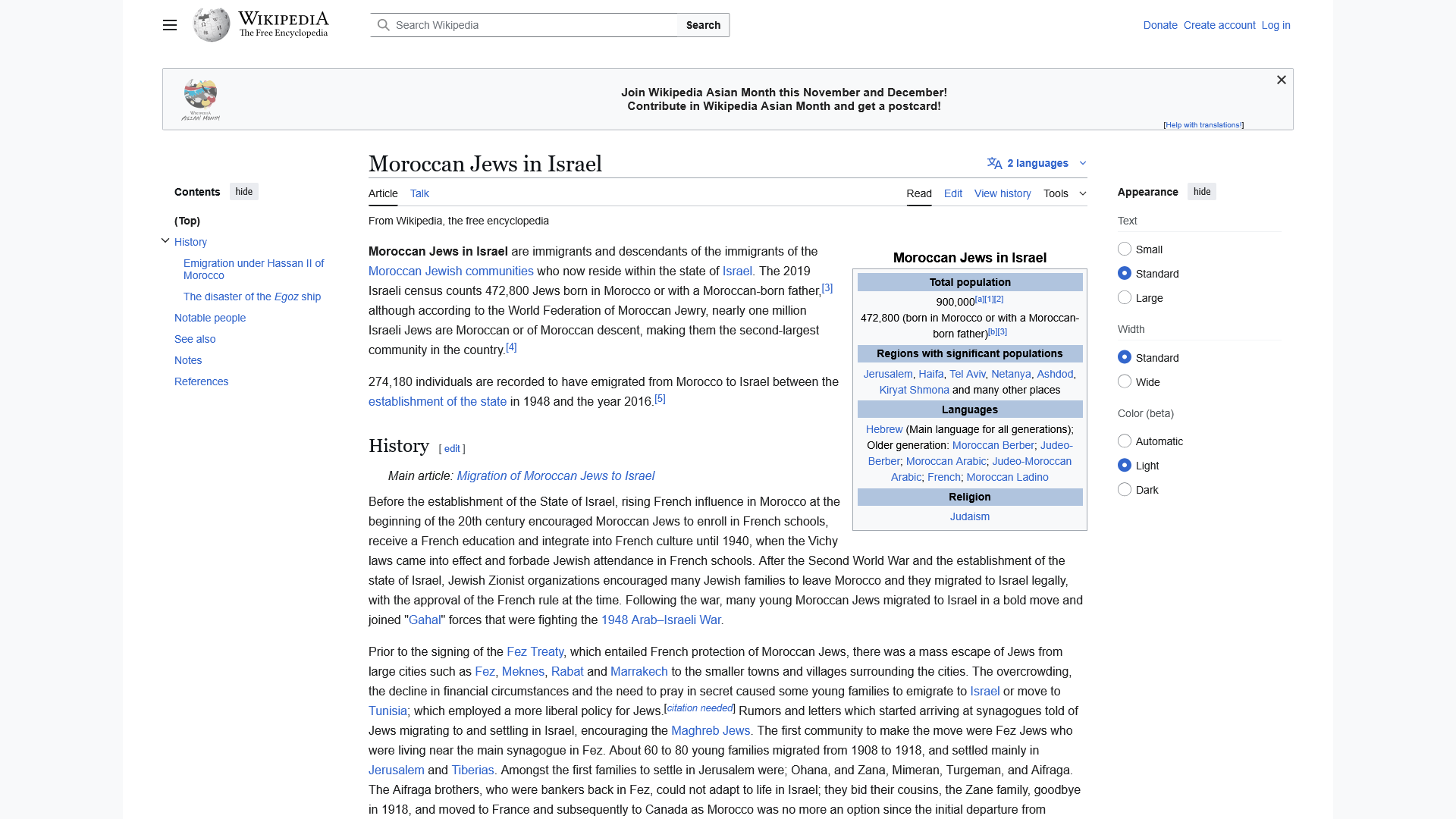
This Wikipedia page provides a comprehensive overview of Moroccan Jews in Israel, documenting one of the country's largest ethnic communities and their significant migration from Morocco to Israel throughout the 20th century. The article serves as both a demographic study and historical chronicle, focusing on a population that numbers approximately 900,000 to nearly one million people according to different estimates, making them the second-largest Jewish community in Israel. The page combines statistical data with detailed historical narratives to paint a complete picture of this substantial demographic group.
The article presents compelling migration data, revealing that 274,180 individuals emigrated from Morocco to Israel between 1948 and 2016, with the 2019 Israeli census recording 472,800 Jews born in Morocco or with Moroccan-born fathers. The content traces the historical progression of this migration, beginning with early 20th-century movements influenced by French colonial policies in Morocco. A particularly fascinating aspect is the detailed account of the first wave of migration from 1908-1918, when 60-80 young families from Fez, including the Ohana, Zana, Mimeran, Turgeman, and Aifraga families, settled primarily in Jerusalem and Tiberias. The article includes a touching personal story about Moshe Vezana, born aboard a ship during the journey to Israel in 1911, whose birth certificate alternately listed him as Tunisian or Israeli native, illustrating the complex identity issues faced by these migrants.
The historical context reveals how various political and social factors drove successive waves of emigration, from the impact of Vichy laws during World War II that excluded Jewish children from French schools, to the tensions following each Arab-Israeli conflict. The page explains how young Moroccan Jews joined "Gahal" forces during the 1948 Arab-Israeli War, and how domestic strife in Morocco during the 1950s accelerated emigration. By the Yom Kippur War in 1973, the majority of Morocco's Jewish population—once the largest Jewish community in the Muslim world—had relocated to Israel, fundamentally transforming both Moroccan and Israeli Jewish demographics.
The article demonstrates Wikipedia's strength in synthesizing demographic data with personal narratives and historical analysis. It cites multiple sources including Israeli census data and the World Federation of Moroccan Jewry, though some sections are marked as needing citations. The page effectively captures the linguistic diversity of this community, noting that while Hebrew serves as the main language for all generations, older generations maintain connections to Moroccan Berber, Judeo-Berber, Moroccan Arabic, Judeo-Moroccan Arabic, French, and Moroccan Ladino. This comprehensive approach makes the article valuable for researchers studying Middle Eastern demographics, Jewish diaspora communities, and 20th-century migration patterns.
Cette page Wikipédia présente une analyse démographique et historique approfondie des Juifs marocains en Israël, constituant l'un des groupes ethniques les plus importants du pays. L'article se concentre sur cette communauté qui représente aujourd'hui près d'un million d'Israéliens selon la Fédération mondiale de la judaïcité marocaine, en faisant la deuxième plus grande communauté d'Israël. Les données officielles du recensement israélien de 2019 comptabilisent 472 800 Juifs nés au Maroc ou ayant un père né au Maroc, tandis que 274 180 individus ont officiellement émigré du Maroc vers Israël entre 1948 et 2016. Cette communauté s'est établie principalement dans les grandes villes israéliennes comme Jérusalem, Haïfa, Tel Aviv, Netanya et Ashdod.
L'article détaille minutieusement l'évolution historique de cette migration, en commençant par les premières vagues migratoires du début du XXe siècle. Il explique comment l'influence française croissante au Maroc a d'abord encouragé l'intégration des Juifs marocains dans la culture française jusqu'en 1940, quand les lois de Vichy ont interdit leur accès aux écoles françaises. La narration historique devient particulièrement riche avec des exemples concrets de familles pionnières comme les Ohana, Zana, Mimeran, Turgeman et Aifraga, qui furent parmi les premières à s'installer à Jérusalem et Tibériade entre 1908 et 1918. L'article relate même l'histoire touchante de Moshe Vezana, né en 1911 à bord d'un navire durant le voyage vers Israël, illustrant les conditions difficiles de ces premières migrations.
Le contexte culturel et linguistique est également soigneusement documenté, montrant la diversité linguistique de cette communauté qui parle hébreu comme langue principale, mais conserve parmi les générations plus âgées le berbère marocain, l'arabe judéo-marocain, le français et même le ladino marocain. L'article explique les motivations variées de cette émigration : raisons religieuses, crainte de persécutions, recherche de meilleures opportunités économiques, et tensions accrues lors de chaque guerre arabo-israélienne. Il souligne particulièrement que le Maroc représentait autrefois la plus grande communauté juive du monde musulmin, mais qu'à partir de la création d'Israël jusqu'aux années 1970, et surtout après la guerre du Kippour de 1973, la majorité de cette population avait émigré vers Israël, marquant la fin d'une présence millénaire.
הדף בוויקיפדיה עוסק ביהודי מרוקו בישראל - קבוצה אתנית משמעותית המהווה את הקהילה השנייה בגודלה במדינת ישראל. לפי המפקד הישראלי לשנת 2019, מספר היהודים שנולדו במרוקו או שאביהם נולד במרוקו מגיע ל-472,800, אולם הפדרציה העולמית של יהדות מרוקו מעריכה כי קרוב למיליון יהודים ישראלים הם ממוצא מרוקאי. בין השנים 1948-2016 היגרו לישראל 274,180 יהודים ממרוקו, והם מתגוררים היום בעיקר בירושלים, חיפה, תל אביב, נתניה, אשדוד וקרית שמונה.
הדף מציג סקירה היסטורית מפורטת של גלי ההגירה השונים, החל מתחילת המאה ה-20 כאשר ההשפעה הצרפתית במרוקו עודדה יהודים מקומיים להשתלב בתרבות הצרפתית, דרך חוקי וישי שאסרו על יהודים ללמוד בבתי ספר צרפתיים, ועד להגירה המסיבית לאחר קום המדינה. הטקסט מתאר בפירוט את הקהילות הראשונות שהיגרו, כגון יהודי פאס שהתיישבו בירושלים וטבריה בין השנים 1908-1918, וכולל שמות משפחות ספציפיות כמו אוחנה, זנה, מימראן, טורגמן ואיפרגא. מוזכר גם סיפור מעניין על התינוק משה וזאנה שנולד על הספינה בדרך לישראל בקיץ 1911.
החומר מדגיש את המגוון בסיבות להגירה - חלק היגרו מסיבות דתיות וציוניות, חלק חששו מרדיפות, ואחרים חיפשו הזדמנויות כלכליות טובות יותר ממה שהציע מרוקו הפוסט-קולוניאלי. עם כל מלחמה ערבית-ישראלית גברו המתחים בין הערבים המוסלמים ליהודים במרוקו, מה שהוביל לגלי הגירה נוספים. עד למלחמת יום כיפור ב-1973, רוב יהודי מרוקו כבר היגרו לישראל. הדף מציין כי מרוקו ייצגה פעם את הקהילה היהודית הגדולה ביותר בעולם המוסלמי, ומתאר את התהליך הדרמטי של התרוקנות הקהילה החל מאמצע המאה ה-20.
הדף כתוב בסגנון אנציקלופדי אקדמי ומיועד לקוראים המעוניינים בהיסטוריה יהודית, חברה ישראלית ויחסי יהדות-איסלאם. הוא כולל קישורים למאמרים קשורים, הערות שוליים ומקורות, ומאורגן בסדרים כרונולוגי עם מידע דמוגרפי עדכני. המידע מוצג באופן עובדתי ומאוזן, תוך מתן דגש על השפעתם של יהודי מרוקו על החברה הישראלית.
تتناول هذه الصفحة من ويكيبيديا موضوع اليهود المغاربة في إسرائيل، وهي مجموعة عرقية تشكل ثاني أكبر جالية في إسرائيل حسب الاتحاد العالمي لليهود المغاربة. تركز الصفحة على تاريخ وأسباب هجرة اليهود من المغرب إلى إسرائيل، حيث تشير الإحصائيات إلى وجود حوالي مليون إسرائيلي من أصول مغربية، بينما يبلغ عدد المولودين في المغرب أو من آباء مغاربة 472,800 شخص حسب إحصاء 2019. هاجر 274,180 فرد من المغرب إلى إسرائيل بين عام 1948 و2016، مما يجعلهم جزءاً مهماً من النسيج الديموغرافي الإسرائيلي.
تقدم الصفحة تحليلاً تاريخياً مفصلاً لموجات الهجرة اليهودية من المغرب، بدءاً من أوائل القرن العشرين عندما شجع النفوذ الفرنسي المتزايد اليهود المغاربة على الالتحاق بالمدارس الفرنسية والاندماج في الثقافة الفرنسية حتى عام 1940. تسلط الضوء على كيف أن قوانين فيشي منعت اليهود من حضور المدارس الفرنسية، وكيف شجعت المنظمات الصهيونية العائلات اليهودية على الهجرة إلى إسرائيل بعد إقامة الدولة. تذكر الصفحة أن أول مجتمع قام بالهجرة كان من يهود فاس الذين يسكنون بالقرب من الكنيس الرئيسي، حيث هاجرت 60-80 عائلة شابة بين 1908 و1918 واستقرت بشكل أساسي في القدس وطبريا.
من الناحية الثقافية والأكاديمية، تقدم هذه الصفحة نظرة شاملة على تجربة مهمة في تاريخ اليهود في شمال أفريقيا والهجرة إلى إسرائيل. تتضمن تفاصيل دقيقة حول أسماء العائلات الأولى التي استقرت في القدس مثل عائلات أوهانا، وزانا، وميميران، وتورغمان، وعيفراغا، مما يضفي طابعاً شخصياً على السرد التاريخي. تشرح الصفحة كيف أن العوامل المتنوعة دفعت لهذه الهجرة، بما في ذلك الأسباب الدينية، والخوف من الاضطهاد، والبحث عن فرص اقتصادية أفضل، مشيرة إلى أن التوترات ازدادت مع كل حرب عربية-إسرائيلية.
تتميز الصفحة بتوثيقها التفصيلي لقصص فردية مثل قصة الطفل موشيه فيزانا الذي وُلد على متن السفينة أثناء رحلة عائلته من تونس إلى إسرائيل عام 1911، والذي سُجل أحياناً كتونسي وأحياناً أخرى كإسرائيلي. تتضمن أيضاً معلومات ديموغرافية ولغوية مهمة، موضحة أن الجيل الأكبر سناً لا يزال يتحدث البربرية المغربية واليهودية-البربرية والعربية المغربية والفرنسية واللادينو المغربي، بينما تستخدم جميع الأجيال العبرية كلغة رئيسية. تشير إلى أن المغرب كان يمثل أكبر جالية يهودية في العالم الإسلامي قبل هذه الهجرة الجماعية التي استمرت حتى منتصف السبعينيات.
Esta página de Wikipedia se enfoca en documentar la historia y características demográficas de los **judíos marroquíes en Israel**, constituyendo un recurso enciclopédico sobre una de las comunidades étnicas más significativas del estado israelí. La página presenta datos demográficos precisos, indicando que según el censo israelí de 2019, existen 472,800 judíos nacidos en Marruecos o con padre nacido en Marruecos, aunque la Federación Mundial de Judíos Marroquíes estima que cerca de un millón de israelíes son de origen marroquí, convirtiéndolos en la segunda comunidad más grande del país. El artículo documenta que entre 1948 y 2016, un total de 274,180 individuos emigraron desde Marruecos hacia Israel.
El contenido histórico revela un proceso migratorio complejo que comenzó mucho antes del establecimiento del estado de Israel. La página detalla cómo la influencia francesa en Marruecos a principios del siglo XX inicialmente benefició a los judíos marroquíes, permitiéndoles acceder a educación francesa hasta 1940, cuando las leyes de Vichy prohibieron su asistencia a escuelas francesas. Un aspecto particularmente interesante es la documentación de las primeras migraciones desde 1908-1918, donde entre 60 y 80 familias jóvenes de Fez emigraron principalmente a Jerusalén y Tiberíades. El artículo incluye detalles específicos como los nombres de las primeras familias asentadas (Ohana, Zana, Mimeran, Turgeman y Aifraga) y anécdotas personales, como el caso del bebé Moshe Vezana, nacido en 1911 a bordo de un barco durante el viaje a Israel.
La página proporciona contexto histórico crucial sobre las diversas oleadas migratorias, explicando que las razones para la emigración incluyeron motivaciones religiosas, temor a la persecución y búsqueda de mejores oportunidades económicas en el Marruecos post-colonial. El artículo nota que con cada guerra árabe-israelí, las tensiones entre árabes musulmanes y judíos aumentaron, provocando más emigración judía marroquí. Para la Guerra de Yom Kippur en 1973, la mayoría de la población judía de Marruecos había emigrado a Israel. Como elemento notable, la página menciona que Marruecos una vez representó la comunidad judía más grande del mundo musulmán, estableciendo la importancia histórica de esta migración masiva que transformó tanto a la sociedad israelí como a la marroquí desde mediados del siglo XX hasta los años 1970.
Citation (APA Style)
Moroccan Jews in Israel - Wikipedia. (2025, 11 23).
en.wikipedia.org.
https://en.wikipedia.org/wiki/Moroccan_Jews_in_Israel