This web page from the Jewish Women's Archive presents a comprehensive scholarly article by Frances Malino examining the teachers of the Alliance Israélite Universelle, a pioneering French Jewish educational organization founded in 1860. The article focuses on the remarkable story of how six French Jewish intellectuals established an international network of schools aimed at "regenerating" Jewish communities worldwide through Western education and Enlightenment ideals. By World War I, the Alliance had grown to encompass 183 schools across regions from Morocco to Iran, serving over 43,700 students with French as the primary language of instruction.
The article reveals fascinating details about the Alliance's innovative and pragmatic approach to staffing their schools. When few French Jews proved willing to relocate to remote villages in North Africa and the Middle East, the organization made the radical decision to bring the brightest "Oriental" students to Paris for teacher training. These young people, including women starting in 1872, underwent rigorous four-year programs at specialized schools like the École Normale Israélite for men and the École Bischoffsheim for women. The curriculum was comprehensive, covering everything from sciences and literature to Hebrew, Jewish history, and practical skills like gymnastics and garment cutting. Despite the demanding requirements—these students had two fewer years of preparation than their Parisian counterparts yet took the same examinations—they maintained deep devotion to the Alliance, as evidenced by touching correspondence expressing gratitude for the organization's care and protection.
A particularly significant aspect of Malino's analysis is her focus on the experiences and contributions of female Alliance teachers, who not only fulfilled the organization's educational mission but also challenged and transformed French Jewish emancipationist ideology. These women teachers faced unique hardships, working in under-resourced schools with poor living conditions, yet they persevered and often criticized the patronizing attitudes of Alliance leadership. The article illustrates their struggles through specific examples, such as Lucie Ovadia from Salonika, highlighting how these educators had to demonstrate remarkable independence and self-confidence in establishing themselves in unfamiliar environments with minimal funding. The scholarly work positions these teachers, particularly the women, as agents of broader social change who helped reshape educational approaches to better serve young Jewish women's needs across diverse cultural contexts.
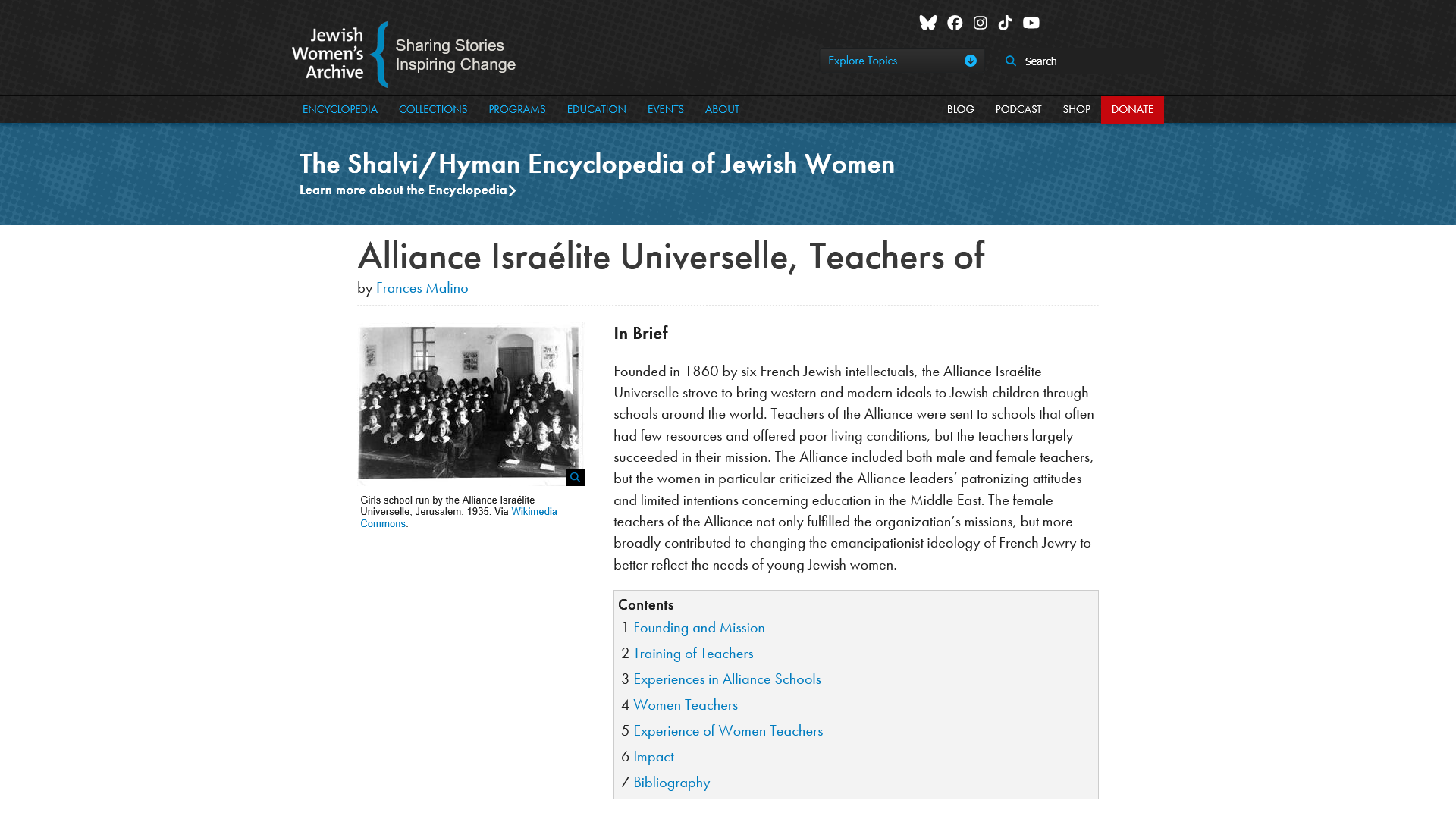
The page appears to be part of a larger academic encyclopedia, featuring structured sections including founding and mission, teacher training, school experiences, and specific focus on women teachers' contributions. It includes historical imagery, such as a 1935 photograph of an Alliance girls' school in Jerusalem, and provides bibliographic references, making it a valuable resource for researchers studying Jewish educational history, women's roles in education, and the intersection of Western and Eastern Jewish communities during the late 19th and early 20th centuries.
Cette page web présente un article encyclopédique détaillé sur les enseignants de l'Alliance Israélite Universelle, rédigé par Frances Malino et publié sur le site de la Jewish Women's Archive. L'article explore l'histoire et l'impact de cette organisation éducative fondamentale, créée en 1860 par six intellectuels juifs français dans l'esprit des idéaux des Lumières. L'Alliance avait pour mission ambitieuse de "régénérer" les communautés juives du monde entier sur les plans professionnel, linguistique, moral et spirituel, en établissant un vaste réseau d'écoles modernes s'étendant du Maroc à l'Iran. À la veille de la Première Guerre mondiale, l'organisation comptait plus de 30 000 membres et gérait 183 écoles accueillant 43 700 élèves, où l'enseignement se dispensait entièrement en français selon un curriculum occidental comprenant sciences, histoire, géographie et langues locales.
L'article révèle des aspects particulièrement novateurs de cette entreprise éducative, notamment le recrutement et la formation des enseignants. Face au manque de volontaires français pour enseigner dans les régions éloignées d'Afrique du Nord et du Moyen-Orient, l'Alliance adopta une stratégie révolutionnaire : envoyer les plus brillants étudiants "orientaux" étudier à Paris pendant quatre ans avant de les renvoyer dans leurs pays d'origine. À partir de 1872, des femmes furent également intégrées au corps enseignant, recevant leur formation dans des institutions spécialisées comme l'École Bischoffsheim ou les écoles privées de Madame Weill-Kahn et Madame Isaac. Ces établissements offraient une éducation rigoureuse incluant sciences physiques et naturelles, littérature ancienne, langues, ainsi que des matières spécifiquement juives comme l'hébreu et l'histoire biblique.
L'analyse de Malino met particulièrement en lumière l'expérience et les contributions des femmes enseignantes, qui constituent le cœur de cette recherche académique. Ces femmes, souvent isolées dans des conditions précaires avec peu de ressources, non seulement remplirent leur mission éducative mais critiquèrent également les attitudes paternalistes des dirigeants parisiens de l'Alliance. L'article documente leurs défis quotidiens à travers des témoignages personnels et des correspondances, révélant comment elles durent faire preuve d'une indépendance et d'une confiance en soi remarquables pour s'adapter à leurs nouveaux environnements. Plus significativement encore, l'auteure démontre que ces enseignantes contribuèrent à transformer l'idéologie émancipatrice du judaïsme français pour mieux répondre aux besoins spécifiques des jeunes femmes juives, marquant ainsi une évolution importante dans la pensée éducative et féministe de l'époque.
Cet article encyclopédique s'adresse principalement aux chercheurs en histoire juive, en études de genre et en histoire de l'éducation. Il s'appuie sur une recherche archivistique approfondie et s'inscrit dans une démarche académique rigoureuse, comme en témoigne sa structure organisée en sections thématiques (fondation, formation, expériences, impact) et sa bibliographie spécialisée. La page comprend également une photographie historique d'une école de filles dirigée par l'Alliance à Jérusalem en 1935, illustrant concrètement l'héritage visuel de cette institution éducative qui marqua profondément l'évolution des communautés juives méditerranéennes et moyen-orientales au tournant du XXe siècle.
דף האינטרנט מוקדש לתולדות ופעילות המורים של "כל ישראל חברים" (Alliance Israélite Universelle), הארגון החינוכי הבינלאומי שהוקם בפריז ב-1860 על ידי שישה אינטלקטואלים יהודים צרפתים. המאמר, שנכתב על ידי הסטוריונית פרנסס מלינו, מתמקד במיוחד בחוויותיהם של המורים שנשלחו להוראה בבתי ספר של הארגון ברחבי צפון אפריקה והמזרח התיכון, כאשר דגש מיוחד מוקדש לתרומתן הייחודית של המורות. המטרה המרכזית של הארגון הייתה להביא רעיונות מערביים ומודרניים לילדים יהודים באמצעות רשת של בתי ספר שהתפשטה מטטואן במרוקו ועד טהרן באיראן, עם למעלה מ-43,700 תלמידים ב-183 בתי ספר עד לפרוץ מלחמת העולם הראשונה.
המאמר חושף כיצד הארגון פיתח אסטרטגיה חדשנית בהכשרת מורים כאשר מעט יהודים צרפתים היו מוכנים לעבור להוראה בכפרים ובעיירות של צפון אפריקה והמזרח התיכון. הפתרון החדשני היה שליחת הכשרונות הצעירים מ"המזרח" ללמוד בפריז, שם הם קיבלו תארי הוראה צרפתיים ועברו בחינות בעברית ובהיסטוריה יהודית במהלך ארבע שנות לימוד. המורים הגברים הוכשרו ב-École Normale Israélite, בעוד המורות נשלחו לבתי ספר מתמחים כמו École Bischoffsheim או בתי הספר הפרטיים של מאדאם וייל-קאהן ומאדאם יצחק. התוכנית הלימודים כללה מדעי הטבע והפיזיקה, היסטוריה עתיקה וספרות עתיקה, גיאוגרפיה, חשבון, צרפתית ואנגלית, וכן עברית, תנ"ך והיסטוריה יהודית.
המאמר מדגיש במיוחד את התרומה הייחודית של המורות, שלא רק מילאו את משימות הארגון אלא גם תרמו לשינוי האידיאולוגיה האמנציפציונית של יהדות צרפת כדי לשקף טוב יותר את הצרכים של נשים יהודיות צעירות. המורות מתוארות כמבקרות את העמדות הפטרנליסטיות של מנהיגי הארגון ואת כוונותיהם המוגבלות בנוגע לחינוך במזרח התיכון. המאמר מספק הצצה לחוויותיהן האישיות של מורות כמו לוסי אובדיה שהגיעה לפריז ב-1896 מסלוניקי, וכולל ציטוטים מהתכתבויות שמראות את מסירותן לארגון למרות הקשיים הרבים בתנאי מחיה ועבודה קשים.
הדף מהווה חלק מאנציקלופדיה דיגיטלית המוקדשת לנשים יהודיות ולתולדותיהן, ומכיל קישורים לנושאים קשורים, ביבליוגרפיה מקיפה וחומר חזותי כולל תמונה היסטורית של בית ספר לבנות שהופעל על ידי הארגון בירושלים ב-1935. המאמר מספק תובנות חשובות על תפקידם של מורי Alliance בתהליכי המודרניזציה והמערוב של קהילות יהודיות מסורתיות, תוך הדגשת הממד המגדרי והאתגרים הייחודיים שעמדו בפני נשים במקצוע החינוך באותה תקופה.
تتناول هذه الصفحة تاريخ وأثر معلمي منظمة "الاتحاد الإسرائيلي العالمي" (Alliance Israélite Universelle)، وهي منظمة تأسست عام 1860 على يد ستة مثقفين يهود فرنسيين بهدف نشر القيم الغربية والحديثة بين الأطفال اليهود من خلال إنشاء شبكة مدارس حول العالم. المقال، الذي كتبته فرانسيس مالينو، يركز بشكل خاص على دور المعلمات النساء وتجاربهن في هذه المنظمة، مسلطًا الضوء على كيفية مساهمتهن في تغيير الأيديولوجيا التحررية لليهود الفرنسيين لتلبي احتياجات النساء اليهوديات الشابات بشكل أفضل.
يقدم المقال تفاصيل غنية حول النمو المذهل للمنظمة، حيث وصل عدد أعضائها إلى أكثر من 30,000 عضو بحلول الحرب العالمية الأولى، وأنشأت 183 مدرسة امتدت من تطوان في المغرب إلى طهران في إيران، بعدد طلاب وصل إلى 43,700 طالب. كانت الفرنسية لغة التدريس في جميع هذه المدارس، والمنهج شمل التاريخ التوراتي وما بعد التوراتي، والتعليم الديني، والعبرية، والفرنسية، والحساب، والجغرافيا، والعلوم الطبيعية، واللغة المحلية. يبرز المقال التحدي الذي واجهته المنظمة عندما وجدت أن قلة من اليهود الفرنسيين كانوا مستعدين للعيش في قرى ومدن شمال أفريقيا والشرق الأوسط، مما دفعها لتبني استراتيجية جذرية بإرسال ألمع "الشرقيين" للدراسة في باريس.
يحتوي المقال على قيمة أكاديمية عالية كونه جزءًا من أرشيف النساء اليهوديات (Jewish Women's Archive)، ويستهدف الباحثين والمهتمين بتاريخ التعليم اليهودي والدراسات النسوية. يتضمن المقال اقتباسات تاريخية مؤثرة، مثل رسالة طالبات مدرسة مدام إسحاق في باريس عام 1908 التي عبرن فيها عن امتنانهن للتحالف قائلات: "رغم انفصالنا عن والدينا، بفضل حمايتكم لا نشعر بالوحدة الشديدة". كما يسلط الضوء على التحديات الشخصية والمهنية التي واجهها المعلمون، خاصة النساء، في بيئات غالبًا ما كانت تفتقر للموارد وظروف المعيشة الصعبة، وكيف نجحوا رغم ذلك في تحقيق مهمتهم التعليمية والحضارية.
يتميز المقال بتنظيمه الواضح في أقسام محددة تشمل التأسيس والرسالة، وتدريب المعلمين، والتجارب في مدارس التحالف، مع تركيز خاص على المعلمات النساء وتجاربهن وأثرهن. يتضمن أيضًا صورة تاريخية لمدرسة بنات تديرها المنظمة في القدس عام 1935، مما يضفي بعدًا بصريًا على السرد التاريخي. المقال يقدم مساهمة مهمة في فهم دور المرأة في التعليم اليهودي الحديث وكيف تحدت المعلمات مواقف القيادة الأبوية ومحدودية النوايا التعليمية في الشرق الأوسط.
Esta página web presenta un artículo académico exhaustivo sobre los maestros de la Alliance Israélite Universelle, una organización educativa judía fundada en 1860 por seis intelectuales judíos franceses. El artículo, escrito por Frances Malino, se enfoca específicamente en la experiencia y contribuciones de los educadores que trabajaron para esta institución internacional, con especial atención a las maestras mujeres y su papel pionero en la transformación de la educación judía moderna. La Alliance tenía como misión "regenerar" a los judíos del mundo a través de la educación occidental moderna, estableciendo escuelas desde Tetuán en Marruecos hasta Teherán en Irán.
El contenido revela datos fascinantes sobre la expansión y metodología de la Alliance: para vísperas de la Primera Guerra Mundial, la organización había atraído más de 30,000 miembros y operaba 183 escuelas con una población estudiantil de 43,700 alumnos. Ante la dificultad de reclutar maestros franceses dispuestos a vivir en pueblos y ciudades del norte de África y Oriente Medio, la Alliance adoptó una estrategia radical: enviar a los estudiantes más brillantes de estas regiones "orientales" a estudiar en París durante cuatro años, para luego regresar como maestros certificados. El artículo documenta cómo las mujeres se incorporaron a la fuerza docente en 1872, recibiendo formación rigurosa en ciencias, historia, geografía, idiomas, hebreo e historia judía en instituciones como la École Bischoffsheim y las escuelas privadas de Madame Weill-Kahn y Madame Isaac.
El análisis académico destaca particularmente las experiencias y desafíos únicos que enfrentaron las maestras de la Alliance, quienes no solo cumplieron con la misión educativa de la organización sino que también contribuyeron a transformar la ideología emancipacionista del judaísmo francés para mejor reflejar las necesidades de las jóvenes judías. El artículo incluye testimonios conmovedores, como una carta de estudiantes de 1908 expresando gratitud a la Alliance, y casos específicos como el de Lucie Ovadia, quien llegó de Salónica a París en 1896. La página está estructurada académicamente con secciones claramente definidas que abarcan desde la fundación y misión hasta el impacto de estos educadores, incluyendo una fotografía histórica de una escuela para niñas dirigida por la Alliance en Jerusalén en 1935, convirtiéndose en un recurso valioso para investigadores de historia judía, educación y estudios de género.