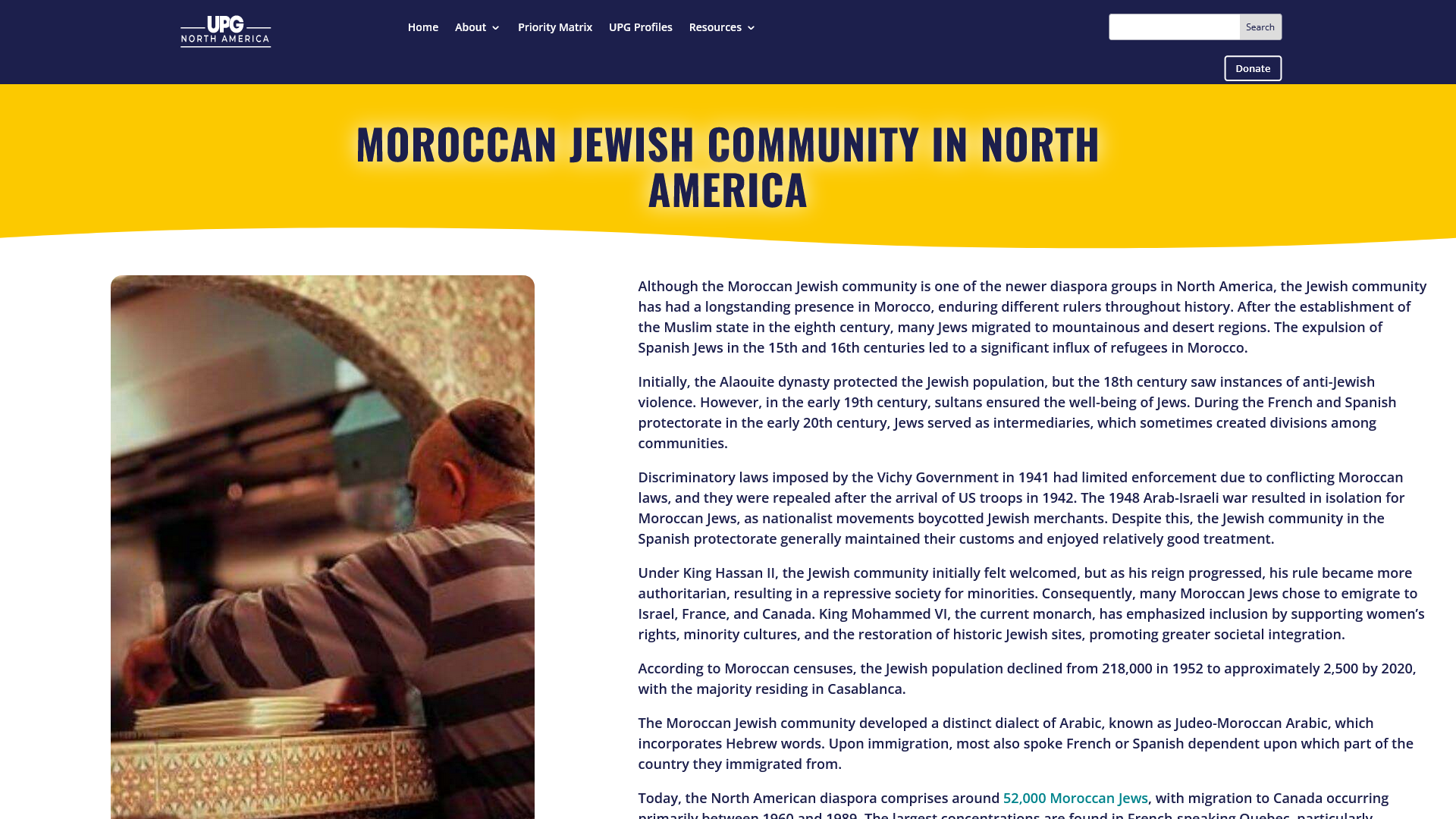
This web page provides a comprehensive overview of the Moroccan Jewish community in North America, documenting both their historical roots in Morocco and their contemporary diaspora experience. The primary focus is on understanding this relatively recent immigrant community within the broader context of Jewish migration patterns, serving as an educational resource that appears to be part of a larger project documenting various ethnic and religious communities in North America.
The page presents a detailed historical narrative tracing the Jewish presence in Morocco from the 8th century through to modern times, highlighting key periods of both protection and persecution. Particularly significant is the documentation of demographic decline, with the Jewish population in Morocco dropping dramatically from 218,000 in 1952 to approximately 2,500 by 2020. The content explains how political changes, including the 1948 Arab-Israeli war and the increasingly authoritarian rule under King Hassan II, prompted mass emigration to Israel, France, and Canada. Today, the North American Moroccan Jewish diaspora comprises around 52,000 people, with Canada receiving the majority of immigrants between 1960-1989, primarily settling in French-speaking Quebec (especially Montreal) and Toronto, while the U.S. community mainly consists of secondary migrants who came via Israel or Latin America after 1973.
The page provides rich cultural and religious insights, explaining how Moroccan Jews developed distinct traditions as Sephardic Jews, including their own dialect (Judeo-Moroccan Arabic), unique Torah reading music, and cultural practices like henna ceremonies at weddings. Interesting cultural details include the celebration of Mimouna festival after Passover and the historical context of mellahs (Jewish quarters built for protection, named after the Arabic word for salt). The content notes an intergenerational shift where first-generation immigrants tended to be secular, while subsequent generations have become more religious and focused on preserving Moroccan Jewish traditions.
A notable feature of the page is its interactive map component designed to show Moroccan Jewish communities across North America, complete with Google Maps integration and filtering options for population size and geographic concentration. The page includes engaging "Did You Know?" sidebars with cultural trivia, and appears to be part of a larger evangelical Christian missionary resource, as evidenced by references to "gospel witness" and priority scoring systems. This suggests the content serves dual purposes: providing legitimate ethnographic information while also functioning as a strategic resource for religious outreach to these communities.
Cette page web présente une analyse approfondie de la communauté juive marocaine en Amérique du Nord, s'inscrivant dans le cadre d'un projet documentaire sur les diasporas. Le site explore l'histoire millénaire des Juifs au Maroc, depuis l'établissement de l'État musulman au VIIIe siècle jusqu'à leur migration moderne vers le Canada et les États-Unis. L'objectif principal semble être de documenter cette communauté diasporique relativement récente en Amérique du Nord, tout en retraçant ses racines historiques profondes au Maghreb.
Le contenu révèle des données démographiques saisissantes : la population juive marocaine est passée de 218 000 personnes en 1952 à seulement 2 500 en 2020 au Maroc, principalement concentrée à Casablanca. Cette dramatique diminution s'explique par les vagues d'émigration successives, particulièrement après la guerre arabo-israélienne de 1948 et sous le règne autoritaire d'Hassan II. Aujourd'hui, environ 52 000 Juifs marocains vivent en Amérique du Nord, principalement au Québec francophone (Montréal) et à Toronto pour le Canada, ainsi qu'à Los Angeles, New York et Miami pour les États-Unis. La page détaille également leur héritage culturel unique, notamment leur dialecte judéo-arabe marocain incorporant des mots hébreux et leurs traditions séfarades distinctes.
L'analyse historique met en lumière les périodes de protection et de persécution alternées, depuis la protection offerte par la dynastie alaouite jusqu'aux discriminations du gouvernement de Vichy, en passant par le rôle d'intermédiaires joué pendant les protectorats français et espagnol. La page souligne particulièrement l'évolution contemporaine sous Mohammed VI, qui promeut l'inclusion des minorités et la restauration de sites juifs historiques. Les aspects culturels et religieux sont également explorés, notamment la célébration de la Mimouna après Pâques, les cérémonies au henné lors des mariages, et l'établissement d'institutions communautaires distinctes comme la Communauté séfarade unie du Québec.
La page intègre des éléments multimédias notables, incluant une carte interactive permettant de localiser les communautés juives marocaines en Amérique du Nord, ainsi que des sections "Le saviez-vous ?" qui apportent des détails fascinants, comme l'origine du terme "mellah" (quartier juif) dérivant du mot arabe pour "sel", référence aux anciennes salines de Fès. Cette ressource s'adresse manifestement aux chercheurs, étudiants et membres de la communauté intéressés par l'histoire des migrations juives et la préservation du patrimoine culturel séfarade-marocain en diaspora.
**תיאור מקיף של דף האינטרנט בעברית:**
הדף עוסק בקהילה היהודית המרוקנית בצפון אמריקה, והוא חלק מפרויקט של ארגון "Unreached People Groups" שמתמקד בקהילות הזקוקות לעדות נוצרית. למרות שמדובר בקהילה יהודית עתיקה בעלת מורשת היסטורית עשירה, הארגון מתייחס אליה כאל "קבוצת אנשים שלא הושגה" מבחינה נוצרית. הדף מספק מידע מקיף על ההיסטוריה של יהודי מרוקו, החל מהתקופה המוסלמית הקלאסית במאה השמינית, דרך גירוש יהודי ספרד במאות ה-15 וה-16 שהביא לגל הגירה משמעותי למרוקו, ועד להיווצרות הקהילה המרוקנית בצפון אמריקה.
הדף מתאר את השינויים הפוליטיים והחברתיים שחוו יהודי מרוקו לאורך ההיסטוריה - החל מההגנה שקיבלו בתקופת השושלת העלאווית, דרך תקופות של אלימות אנטי-יהודית במאה ה-18, הקולוניאליזם הצרפתי-ספרדי שבו שימשו כמתווכים, ועד לבידוד שחוו לאחר מלחמת העצמאות של ישראל ב-1948. הטקסט מציין כי אוכלוסיית היהודים במרוקו ירדה באופן דרמטי מ-218,000 ב-1952 ל-2,500 בלבד ב-2020. כיום, הקהילה המרוקנית בצפון אמריקה מונה כ-52,000 איש, כאשר ההגירה לקנדה התרחשה בעיקר בין 1960 ל-1989, והקהילה מרוכזת במונטריאול וטורונטו. בארצות הברית, הקהילה מורכבת בעיקר מיהודים שהיגרו מישראל או אמריקה הלטינית לאחר 1973.
מבחינה תרבותית ודתית, הדף מתאר את המסורות הייחודיות של יהודי מרוקו, הכוללות חגיגת המימונה לאחר הפסח, טקסי חינה בחתונות (בדומה למוסלמים המרוקנים), ומנהגי תפילה ספרדיים מיוחדים. הטקסט מציין שהיהודים המרוקנים פיתחו דיאלקט ערבי ייחודי הנקרא "ערבית יהודית-מרוקנית" שכולל מילים עבריות. כמו כן, הדף מספק מידע על המלאחים - השכונות היהודיות שנבנו בערים מרוקניות, כאשר הראשון נבנה בפאס על מכרה מלח עתיק (מכאן השם "מלאח" - מלח בערבית). להבדיל מהגטאות באירופה, המלאחים נועדו להגן על היהודים שנמצאו תחת חסות השלטון המרוקני.
הדף כולל גם מפה אינטראקטיבית המציגה את ריכוזי הקהילות היהודיות המרוקניות בצפון אמריקה, ומדרג אותן לפי "ציון עדיפות" למטרות המיסיון הנוצרי. למרות האופי המיסיונרי של האתר, הדף מספק מידע אתנוגרפי והיסטורי מפורט וערכי על קהילה יהודית ייחודית זו, תוך הדגשת המורכבות של זהותה התרבותית והדתית המשולבת בין מורשת ספרדית, מרוקנית וצפון-אמריקאית מודרנית.
تتناول هذه الصفحة الإلكترونية موضوع **الجالية اليهودية المغربية في أمريكا الشمالية** من منظور تبشيري مسيحي، حيث تُعتبر جزءاً من مشروع يهدف إلى رصد الجماعات العرقية والدينية التي تحتاج إلى "شهادة إنجيلية". رغم هذا التوجه التبشيري، تقدم الصفحة معلومات تاريخية وثقافية شاملة حول تطور الوجود اليهودي في المغرب عبر القرون، بدءاً من القرن الثامن مع قيام الدولة الإسلامية، مروراً بتدفق اللاجئين اليهود الإسبان في القرنين الخامس عشر والسادس عشر، وانتهاءً بموجات الهجرة الحديثة إلى كندا والولايات المتحدة.
تكشف الصفحة عن **التحولات الديموغرافية الدراماتيكية** للجالية اليهودية المغربية، حيث انخفض عددها من 218,000 نسمة عام 1952 إلى حوالي 2,500 بحلول عام 2020، بينما تشكلت جالية في أمريكا الشمالية تضم حوالي 52,000 يهودي مغربي. تركز المعلومات على أن معظم الهجرة إلى كندا حدثت بين عامي 1960 و1989، مع تجمعات كبيرة في مونتريال وتورونتو، بينما الجالية في الولايات المتحدة تتكون أساساً من مهاجرين قدموا من إسرائيل أو أمريكا اللاتينية بعد 1973. كما تسلط الضوء على **الخصائص الثقافية المميزة** مثل اللهجة العربية اليهودية المغربية التي تدمج كلمات عبرية، واحتفالات الميمونة التي تُقام بعد عيد الفصح.
من الناحية التاريخية، تعرض الصفحة سرداً مفصلاً لتقلبات أوضاع اليهود تحت حكام مختلفين، من الحماية في عهد الأسرة العلوية المبكر، إلى فترات العنف في القرن الثامن عشر، ثم الاستقرار النسبي تحت الحماية الفرنسية والإسبانية. تُبرز أهمية **الملاحات** (الأحياء اليهودية) التي بُنيت لحماية اليهود وليس لعزلهم كما في أوروبا، مع الإشارة إلى أن أول ملاح بُني في فاس على منجم ملح قديم. تتميز الصفحة بوجود **خريطة تفاعلية** تُظهر توزع الجاليات اليهودية المغربية في أمريكا الشمالية، بالإضافة إلى أقسام منفصلة تتناول الحياة الدينية والتقاليد السفاردية، مما يجعلها مرجعاً شاملاً رغم توجهها التبشيري الواضح.
Esta página web se centra en la comunidad judía marroquí en América del Norte, proporcionando un análisis exhaustivo de su historia, migración y vida contemporánea. El sitio web, perteneciente a UPG North America (Grupos de Pueblos No Alcanzados de América del Norte), presenta esta comunidad desde una perspectiva misionera cristiana, identificándola como una población que necesita "testimonio del evangelio". La página combina información histórica detallada con datos demográficos actuales y características culturales específicas de esta diáspora judía relativamente reciente en el continente norteamericano.
El contenido revela que aunque la comunidad judía marroquí es una de las más nuevas en América del Norte, tiene raíces históricas profundas en Marruecos que se remontan al siglo VIII. La página documenta eventos históricos cruciales como la expulsión de judíos españoles en los siglos XV y XVI, que llevó a una afluencia significativa de refugiados a Marruecos, y los altibajos de la protección real bajo diferentes dinastías. Datos específicos muestran el dramático declive demográfico: de 218,000 judíos en Marruecos en 1952 a aproximadamente 2,500 en 2020, mientras que la diáspora norteamericana comprende alrededor de 52,000 judíos marroquíes, concentrados principalmente en Montreal, Toronto, Los Ángeles, Nueva York y Miami.
La página destaca elementos culturales únicos como el judeo-árabe marroquí (una variante dialectal que incorpora palabras hebreas), la celebración de la Mimouna (festival posterior a la Pascua judía), y las tradiciones sefardíes adaptadas al contexto marroquí, incluyendo ceremonias de henna en bodas similares a las de los musulmanes marroquíes. El sitio incluye datos curiosos históricos, como que el primer mellah (barrio judío) se construyó en Fez sobre una antigua mina de sal, y explica cómo estos barrios, a diferencia de los guetos europeos, fueron creados para proteger a la población judía. La página incorpora un mapa interactivo de Google que permite visualizar las concentraciones geográficas de estas comunidades, complementando la información textual con herramientas multimedia interactivas para una comprensión más completa de la distribución demográfica actual.
Citation (APA Style)
Moroccan Jewish Community in North America - UPG North America. (2025, 11 22).
upgnorthamerica.com.
https://upgnorthamerica.com/project/moroccan-jewish-community-in-north-america/