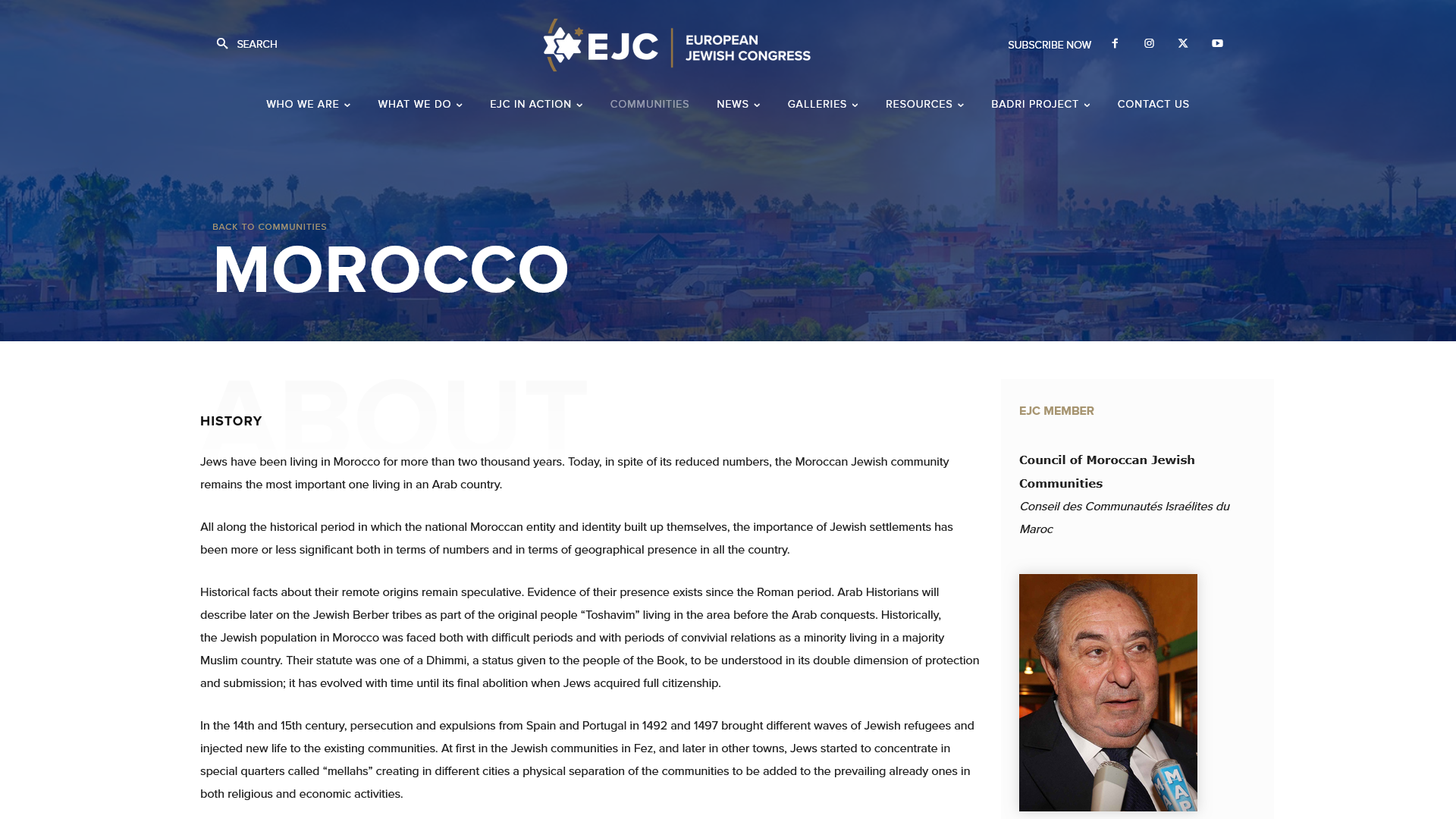
This web page from the European Jewish Congress (EJC) provides a comprehensive historical overview of Morocco's Jewish community, focusing on one of the most significant and enduring Jewish populations in the Arab world. The primary purpose is to document and preserve the rich heritage of Moroccan Jewry, which spans over two millennia, making it an invaluable resource for understanding Jewish-Muslim coexistence in North Africa. Despite significant demographic decline through emigration, Morocco still maintains the largest Jewish community in any Arab country today.
The page presents a detailed chronological narrative of Moroccan Jewish history, beginning with evidence of Jewish presence during the Roman period and the integration of Jewish Berber tribes among the original "Toshavim" inhabitants prior to Arab conquests. A pivotal moment came during the 14th and 15th centuries when persecution and expulsions from Spain and Portugal (1492 and 1497) brought waves of Sephardic Jewish refugees who revitalized existing communities. These newcomers introduced Spanish dialects known as Haketia and brought valuable skills in European commerce, arts, and handicrafts. The community developed a distinctive cultural identity, with Jews initially settling in Fez and later establishing separate quarters called "mellahs" in various cities, creating both physical and economic distinctiveness while maintaining religious separation.
The historical narrative reveals the complex nature of Jewish life under Islamic rule, operating under the dhimmi status—a dual condition of protection and submission granted to "People of the Book" that evolved over time until Jews achieved full citizenship. The page highlights the remarkable cultural contributions of Moroccan Jews, including writers, poets, grammarians, doctors, musicians, and mystics who created an extensive cultural heritage. A particularly significant historical moment occurred during World War II when King Mohammed V courageously prevented the deportation of Moroccan Jews despite Morocco being under French protectorate rule and subject to Vichy government antisemitic policies.
The content emphasizes the dramatic demographic transformation of the 20th century, noting that by 1948 there were approximately 270,000 Jews in Morocco, but the establishment of the French Protectorate in 1912, World War II, decolonization movements, Morocco's 1956 independence, and the creation of Israel all contributed to massive emigration. This comprehensive historical account serves academics, researchers, and anyone interested in Jewish-Arab relations, providing crucial documentation of a community that has maintained continuity while adapting to profound political and social changes across centuries.
Cette page du site du Congrès Juif Européen (EJC) présente une analyse historique approfondie de la communauté juive du Maroc, qui constitue aujourd'hui la plus importante communauté juive vivant dans un pays arabe malgré sa taille réduite. Le contenu se concentre sur l'évolution millénaire de cette présence juive au Maroc, depuis l'époque romaine jusqu'aux bouleversements du XXe siècle, en soulignant l'importance géographique et démographique de ces communautés dans la construction de l'identité marocaine nationale.
La page détaille les différentes phases historiques qui ont façonné cette communauté, notamment l'arrivée des réfugiés juifs d'Espagne et du Portugal aux XIVe et XVe siècles suite aux persécutions et expulsions de 1492 et 1497. Ces vagues migratoires ont revitalisé les communautés existantes, particulièrement à Fès, et ont conduit à la création des "mellahs" - quartiers juifs séparés - dans diverses villes marocaines. Le texte met en lumière le riche héritage culturel produit par les écrivains, poètes, médecins, musiciens et mystiques juifs marocains à travers les siècles, ainsi que l'évolution linguistique avec l'usage de dialectes espagnols comme la Haketia.
L'accent est mis sur les transformations dramatiques des XIXe et XXe siècles, depuis l'établissement du Protectorat français en 1912 jusqu'à l'exode massif de la population juive. La page souligne particulièrement le rôle protecteur du roi Mohammed V pendant la Seconde Guerre mondiale, qui empêcha la déportation des Juifs marocains malgré les politiques antisémites du gouvernement de Vichy. Les données démographiques révèlent qu'en 1948, environ 270 000 Juifs vivaient au Maroc, avant que l'indépendance de 1956 et la création d'Israël ne provoquent un exode majeur. Cette ressource s'adresse manifestement aux chercheurs, étudiants et communautés intéressés par l'histoire du judaïsme maghrébin et constitue une documentation précieuse sur l'une des diasporas juives les plus anciennes et les plus complexes de la région méditerranéenne.
הדף הזה עוסק בקהילה היהודית במרוקו ומהווה חלק מאתר הקונגרס היהודי האירופי (EJC). המטרה העיקרית של הדף היא לספק מידע מקיף על ההיסטוריה הארוכה והעשירה של יהדות מרוקו, החל מתקופות קדומות ועד ימינו. הדף מתמקד בהצגת הקהילה המרוקנית כחשובה ביותר בעולם הערבי בימינו, למרות הקטנתה המספרית הדרמטית שחלה במהלך המאה ה-20.
התוכן ההיסטורי חושף כי יהודים חיים במרוקו כבר יותר מאלפיים שנה, עם עדויות לנוכחותם מהתקופה הרומית. המקור מתאר את המורכבות ההיסטורית של היחסים בין היהודים לרוב המוסלמי, החל ממעמד ה"דהימי" (אנשי הספר) שכלל הן הגנה והן כניעה, ועד לקבלת אזרחות מלאה. נקודת מפנה משמעותית הייתה בתקופת גירוש ספרד (1492-1497), כאשר גלי פליטים יהודים הזריקו דם חדש לקהילות הקיימות והקימו שכונות יהודיות מיוחדות הנקראות "מלאח". השפות שדוברו כללו את שפות המקום בתוספת ספרדית ודיאלקטים כמו "הכטיה".
המאה ה-20 הביאה שינויים דרמטיים לקהילה. הדף מדגיש את תפקידו של המלך מוחמד החמישי שמנע את גירוש יהודי מרוקו בתקופת מלחמת העולם השנייה, למרות השלטון הצרפתי הווישי. עד 1948 חיו במרוקו כ-270,000 יהודים, אך העצמאות ב-1956 והקמת מדינת ישראל הובילו לגל הגירה המוני. הדף מציג את המורשת התרבותית העשירה שיצרו סופרים, משוררים, רופאים ומוזיקאים יהודים מרוקנים לאורך הדורות, ומדגיש את הייחודיות הגיאוגרافית והתרבותית של קהילה זו בהקשר הערבי-מוסלמי הרחב.
هذه الصفحة مخصصة للجالية اليهودية في المغرب، وهي جزء من موقع المؤتمر اليهودي الأوروبي (EJC). تهدف الصفحة إلى توثيق وعرض التاريخ الطويل والثري للوجود اليهودي في المغرب، والذي يمتد لأكثر من ألفي عام. الهدف الرئيسي هو إبراز أهمية هذه الجالية باعتبارها أكبر جالية يهودية تعيش في بلد عربي رغم تناقص أعدادها عبر التاريخ الحديث.
تقدم الصفحة تفاصيل تاريخية شاملة تبدأ من العصر الروماني، حيث تشير إلى أن اليهود كانوا جزءًا من القبائل الأمازيغية الأصلية "التوشافيم" قبل الفتوحات العربية. تتناول المحتوى التطورات التاريخية المختلفة، بما في ذلك فترات الصعوبات والعلاقات الودية مع الأغلبية المسلمة، ووضعهم كـ "أهل ذمة" حتى حصولهم على المواطنة الكاملة. تسلط الضوء على التأثير الكبير لموجات اللجوء اليهودي من إسبانيا والبرتغال في القرنين الـ14 والـ15 (1492 و1497)، والتي أدت إلى إحياء الجاليات الموجودة وإنشاء أحياء خاصة تسمى "الملاح" في مدن مختلفة.
من الناحية الثقافية واللغوية، توثق الصفحة ثراء التراث اليهودي المغربي، حيث احتفظ المهاجرون الجدد بلهجاتهم الإسبانية المعروفة بـ "الحاكيتيا"، إلى جانب لغات البلاد المحلية. تؤكد على المساهمات الثقافية الهائلة للكتاب والشعراء والأطباء والموسيقيين اليهود المغاربة عبر القرون. كما تتناول التغييرات الجذرية في القرنين الـ19 والـ20، بدءًا من الحماية الفرنسية عام 1912، مرورًا بالحرب العالمية الثانية - حيث منع الملك محمد الخامس ترحيل اليهود المغاربة رغم السياسات المعادية للسامية لحكومة فيشي - وصولاً إلى استقلال المغرب عام 1956.
تقدم الصفحة بيانات إحصائية مهمة، مثل وجود حوالي 270,000 يهودي في المغرب بحلول عام 1948، مما يوضح حجم هذه الجالية قبل موجات الهجرة الكبيرة. المحتوى موجه بشكل أساسي للباحثين والمهتمين بالتاريخ اليهودي في شمال أفريقيا، والجاليات اليهودية المعاصرة، إضافة إلى المؤرخين المختصين في العلاقات الإسلامية-اليهودية والتراث الثقافي المغربي متعدد الأعراق.
Esta página web del Congreso Judío Europeo (EJC) está dedicada específicamente a la comunidad judía de Marruecos, ofreciendo una perspectiva histórica integral sobre una de las comunidades judías más antiguas y culturalmente ricas del mundo árabe. El propósito principal es documentar y preservar la historia milenaria de los judíos marroquíes, desde sus orígenes remotos hasta los cambios profundos del siglo XX, destacando su importancia como la comunidad judía más significativa que permanece en un país árabe en la actualidad.
El contenido revela aspectos fascinantes de más de dos mil años de presencia judía en Marruecos. La página detalla cómo los judíos han sido parte integral del tejido social marroquí desde el período romano, con historiadores árabes describiendo posteriormente a las tribus judías bereberes como parte del pueblo original "Toshavim" que habitaba la región antes de las conquistas árabes. Un momento crucial fue la llegada de refugiados judíos tras las expulsiones de España y Portugal en 1492 y 1497, que revitalizaron las comunidades existentes e introdujeron nuevas tradiciones culturales. Estos nuevos inmigrantes se establecieron inicialmente en barrios especiales llamados "mellahs", creando una separación física que se sumó a las diferencias religiosas y económicas ya existentes. La página menciona específicamente que muchos judíos conservaron dialectos españoles conocidos como "Haketia" y que sus habilidades en el comercio europeo, las artes y la artesanía contribuyeron significativamente al desarrollo del país.
La información histórica más reciente se centra en los cambios dramáticos de los siglos XIX y XX, particularmente durante la Segunda Guerra Mundial, cuando el Rey Mohammed V desempeñó un papel crucial al prevenir la deportación de los judíos marroquíes a pesar de las políticas antisemitas del gobierno de Vichy. La página proporciona datos demográficos específicos, señalando que había aproximadamente 270,000 judíos en Marruecos en 1948, pero que la independencia del país en 1956 y la creación del estado de Israel provocaron un éxodo masivo de la población judía. Esta sección está dirigida principalmente a académicos, miembros de la comunidad judía y cualquier persona interesada en la historia del judaísmo en el norte de África.
La página forma parte de una estructura web más amplia del Congreso Judío Europeo que incluye secciones dedicadas a combatir el antisemitismo, preservar la memoria del Holocausto, y proteger las comunidades judías europeas. Aunque el contenido presentado parece estar incompleto (se corta abruptamente en 1956), la página ofrece recursos multimedia y enlaces a galerías de fotos, videos y podcasts, sugiriendo un enfoque multimodal para preservar y compartir esta rica herencia cultural. La inclusión de Marruecos en el sitio web del Congreso Judío Europeo subraya los vínculos históricos y culturales entre las comunidades judías del Mediterráneo y la importancia de mantener estas conexiones transnacionales.
Citation (APA Style)
Morocco - European Jewish Congress. (2025, 11 22).
eurojewcong.org.
https://eurojewcong.org/communities/morocco/