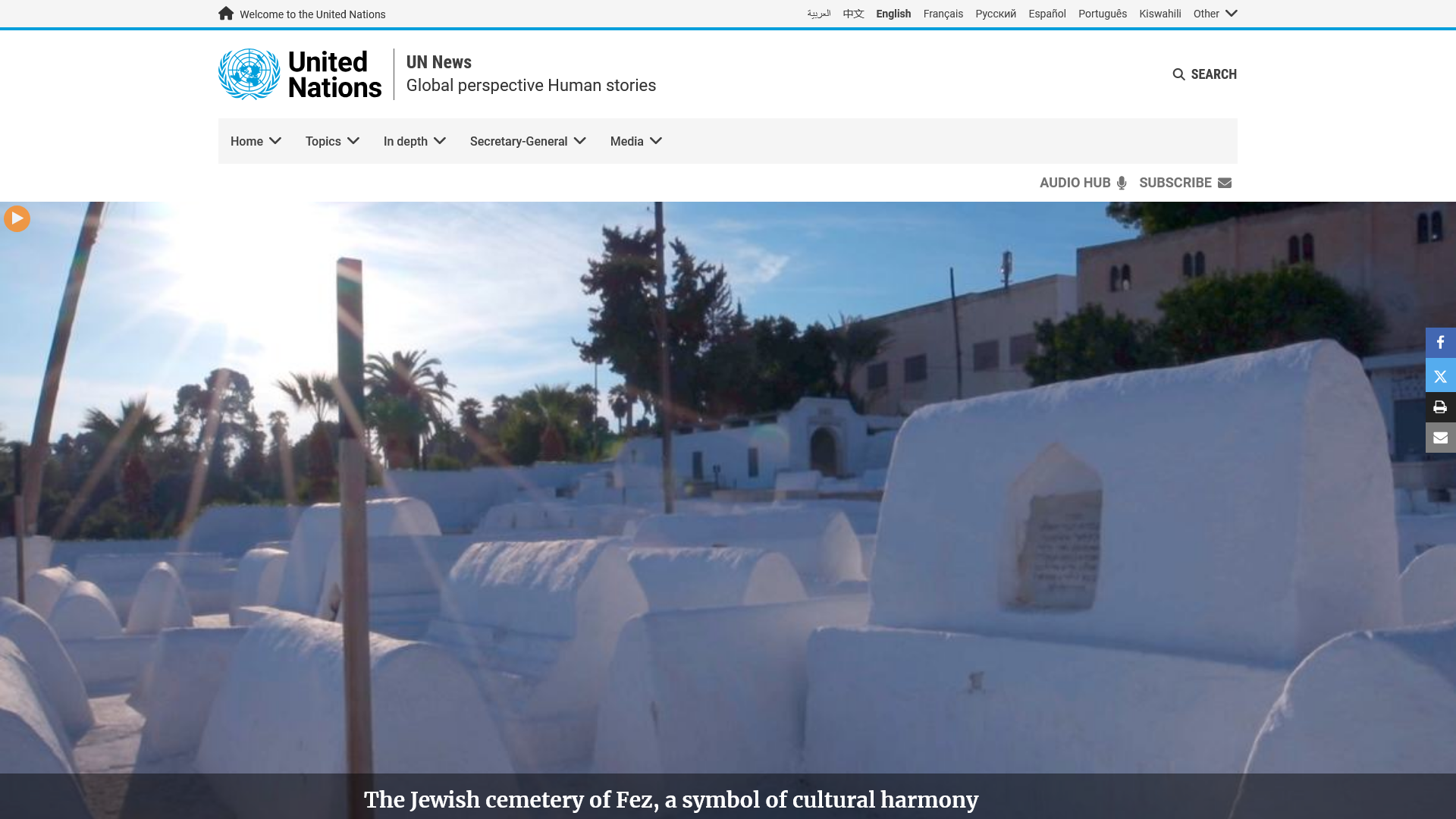
This UN News article explores the rich multicultural heritage of Fez, Morocco, through the lens of its historic Jewish cemetery, highlighting how the city exemplifies centuries of peaceful coexistence between diverse religious and ethnic communities. The piece was published following Fez's hosting of the ninth Global Forum of the United Nations Alliance of Civilizations in November 2022, using this significant event as a springboard to examine the city's unique position as a symbol of interfaith harmony and cultural convergence.
The article centers on the personal story of Johanna Devico Ohana, a Jewish woman born and raised in Fez who now maintains the city's 200-year-old Jewish cemetery—a responsibility inherited from her late father. Her poignant account reveals the depth of cultural integration that historically characterized Fez: "We lived in harmony. There was no tension. We all knew we were Jews, Muslims, or Catholics, and we never had any problems on that side." The cemetery itself, located in the Jewish quarter called 'Mellah' (meaning 'salt'), serves as a tangible symbol of Morocco's once-flourishing Jewish community, with its distinctive semi-cylindrical tombs capturing the history of Jewish life in the region.
The historical context provided illustrates Fez's foundational commitment to diversity, dating back to 809 CE when King Idris II actively encouraged Jewish settlement to benefit from their skills and knowledge. This ancient capital of Morocco developed into what is now recognized as the country's cultural and spiritual center, with its Medina designated as a UNESCO World Heritage Site. The article emphasizes how this historical legacy of inclusion made Fez an ideal location for the UN Alliance of Civilizations forum, which focuses on bridging cultural divides and promoting intercultural dialogue.
The piece gains additional significance through quotes from Andre Azoulay, senior adviser to King Mohammed VI and father of UNESCO Director-General Audrey Azoulay, who described Morocco as built around "a model of openness, harmony and synergy" that represents "the convergence of Arab-Islamic, Amazigh and Saharan-Hassanian confluents" enriched by "African, Andalusian, Hebrew and Mediterranean tributaries." This UN News article effectively uses personal narrative and historical documentation to illustrate how local cultural preservation can serve as a model for global intercultural understanding, making it particularly relevant for international audiences interested in conflict resolution, cultural heritage, and interfaith relations.
## Le cimetière juif de Fès : un symbole de l'harmonie culturelle marocaine
Cette page d'actualité des Nations Unies explore le riche patrimoine multiculturel de Fès à travers le prisme de son cimetière juif bicentenaire, présenté comme un témoignage vivant de la coexistence harmonieuse entre communautés religieuses au Maroc. L'article s'inscrit dans le contexte du 9e Forum mondial de l'Alliance des civilisations des Nations Unies, organisé à Fès en novembre 2022, ville choisie précisément pour son histoire de tolérance et de diversité culturelle.
Le récit s'articule autour du témoignage poignant de Johanna Devico Ohana, gardienne actuelle du cimetière juif, qui honore la promesse faite à son père de préserver ce lieu de mémoire. Ses paroles illustrent parfaitement l'esprit de cohabitation pacifique : « Nous vivions en harmonie. Il n'y avait aucune tension. Nous savions tous que nous étions juifs, musulmans ou catholiques, et nous n'avions jamais de problèmes de ce côté-là ». L'article rappelle les origines historiques de cette diversité, notamment l'encouragement du roi Idris II en 809 pour que les Juifs s'installent à Fès afin de bénéficier de leurs compétences, créant ainsi le quartier de la Mellah (littéralement « sel »), dont les tombes semi-cylindriques caractéristiques témoignent de la prospérité passée de la communauté juive marocaine.
L'article établit un lien pertinent entre ce patrimoine historique et l'actualité diplomatique contemporaine, soulignant que ce mélange séculaire des peuples a fait de Fès un lieu approprié pour accueillir le Forum de l'Alliance des civilisations. La déclaration d'André Azoulay, conseiller du roi Mohammed VI et père de la Directrice générale de l'UNESCO Audrey Azoulay, résume éloquemment cette richesse : le Maroc « est construit autour d'un modèle d'ouverture, d'harmonie et de synergie qui a vu la convergence de confluents arabo-islamiques, amazighs et saharo-hassaniens, et qui a été, en même temps, enrichi par des affluents africains, andalous, hébreux et méditerranéens ». Cette approche narrative permet aux Nations Unies de valoriser un modèle concret de dialogue interculturel, s'adressant tant aux diplomates qu'au grand public intéressé par les questions de diversité religieuse et de patrimoine mondial.
עמוד זה של חדשות האו"ם מציג כתבה מרגשת על בית הקברות היהודי בפאס, מרוקו, כסמל לרב-תרבותיות ולחיים משותפים בעיר העתיקה. הכתבה, שפורסמה בינואר 2023, מתמקדת בסיפורה האישי של ג'והאנה דוויקו אוחנה, שהורתה השמירה על בית הקברות בן 200 השנה לפי בקשתו האחרונה של אביה. האתר משמש כדוגמה חיה לדו-קיום של קהילות יהודיות, מוסלמיות וקתוליות בפאס לאורך מאות שנים, כפי שמתאר אוחנה: "חיינו בהרמוניה. לא היה מתח. כולנו ידענו שאנחנו יהודים, מוסלמים או קתולים, ולא היו לנו בעיות בצד הזה."
הכתבה מספקת הקשר היסטורי עשיר על פאס כמרכז תרבותי וכלכלי חשוב. העיר נוסדה במאה התשיעית ושימשה בירת מרוקו העתיקה במשך מאות שנים. בשנת 809 עודד המלך אידריס השני יהודים להתיישב בפאס כדי שהעיר תוכל ליהנות מכישוריהם. המדינה הפאס, המתוארת לעתים קרובות כמרכז התרבותי והרוחני של מרוקו, רשומה כאתר מורשת עולמי של יונסק"ו. בית הקברות היהודי, הממוקם ברובע היהודי המכונה 'מלאח' (שמשמעותו מלח בערבית), מתאפיין בקברים חצי-גליליים הלוכדים את ההיסטוריה של יהדות מרוקו המשגשגת.
הכתבה מקשרת בין המורשת ההיסטורית לעולם העכשווי באמצעות תיאור הפורום התשיעי של ברית הציביליזציות של האו"ם שהתקיים בפאס בנובמבר 2022. אנדרה אזולאי, היועץ הבכיר של המלך מוחמד השישי ואביה של מנכ"לית יונסק"ו אודריי אזולאי, הדגיש בפתיחת האירוע כי מרוקו "בנויה על מודל של פתיחות, הרמוניה וסינרגיה שהביא להתמזגות של זרמים ערבים-אסלאמים, אמזיגיים וסהרה-חסנים, ושהתעשר במקביל מיובלים אפריקניים, אנדלוסיים, עבריים וים-תיכוניים." אוחנה הביעה גאווה בבחירת פאס לארח את הפורום, בטענה ש"למרוקו זה משקף בדיוק את המציאות של התדמית שלנו, התרבות שלנו."
تتناول هذه الصفحة من موقع أخبار الأمم المتحدة قصة مقبرة فاس اليهودية كرمز للتعايش الحضاري والتنوع الثقافي في المغرب. الهدف الأساسي للمقال هو تسليط الضوء على النموذج المغربي للتعايش بين الأديان والثقافات، وذلك في سياق استضافة مدينة فاس للمنتدى العالمي التاسع لتحالف الحضارات التابع للأمم المتحدة في نوفمبر 2022. المقال يحتفي بفاس كمدينة تجسد التنوع الثقافي والديني عبر التاريخ، مستخدماً المقبرة اليهودية التي يبلغ عمرها مائتي عام كنموذج ملموس لهذا التعايش.
يقدم المقال شهادة شخصية مؤثرة من جوانا ديفيكو أوهانا، التي تولت مسؤولية العناية بالمقبرة اليهودية في فاس تنفيذاً لوصية والدها. تروي أوهانا قصة طفولتها في فاس قائلة: "عشنا في وئام. لم يكن هناك توتر. جميعنا كنا نعرف أننا يهود أو مسلمون أو كاثوليك، ولم تكن لدينا أي مشاكل من هذا الجانب". يوضح المقال السياق التاريخي لهذا التعايش، مشيراً إلى أن الملك إدريس الثاني شجع اليهود على الانتقال إلى فاس عام 809 ميلادية للاستفادة من مهاراتهم، مما أسس لتقليد طويل من التنوع الثقافي في المدينة.
يبرز المقال الأهمية الثقافية والتاريخية لفاس، التي كانت عاصمة المغرب القديمة لمئات السنين وتُعرف اليوم بأنشطتها الدينية والفنية والعلمية والحرفية والتجارية. مدينة فاس القديمة (المدينة) مدرجة في قائمة اليونسكو للتراث العالمي وتضم حي "الملاح" اليهودي، الذي يحتوي على المقبرة اليهودية المتميزة بقبورها نصف الأسطوانية التي تحكي تاريخ الازدهار اليهودي في المغرب. كما يستشهد المقال بأندريه أزولاي، المستشار الكبير للملك محمد السادس، الذي وصف المغرب بأنه "مبني حول نموذج من الانفتاح والانسجام والتناغم شهد تقارب الروافد العربية الإسلامية والأمازيغية والصحراوية الحسانية، وفي الوقت نفسه تم إثراؤه بالروافد الأفريقية والأندلسية والعبرية والمتوسطية".
**Un símbolo de armonía cultural en el corazón de Marruecos**
Esta página de UN News presenta un emotivo reportaje sobre el cementerio judío de Fez, una ciudad marroquí de 1.200 años de antigüedad que recientemente acogió el Foro Mundial de la Alianza de Civilizaciones de las Naciones Unidas. El artículo explora cómo este cementerio bicentenario, ubicado en el barrio judío conocido como "Mellah", simboliza la convivencia secular entre comunidades diversas en una de las ciudades más emblemáticas del norte de África. A través de la historia personal de Johanna Devico Ohana, quien mantiene el cementerio cumpliendo la promesa hecha a su padre fallecido, el reportaje ilustra la profunda conexión emocional y cultural que une a las diferentes comunidades religiosas de Fez.
El contenido revela datos históricos fascinantes, como el hecho de que en el año 809, el rey Idris II invitó activamente a los judíos a establecerse en Fez para beneficiarse de sus habilidades y conocimientos. Ohana, nacida y criada en la ciudad, ofrece un testimonio conmovedor: "Vivíamos en armonía. No había tensión. Todos sabíamos que éramos judíos, musulmanes o católicos, y nunca tuvimos problemas por eso". El artículo contextualiza esta convivencia dentro del marco más amplio de Fez como centro cultural y espiritual de Marruecos, cuya Medina está reconocida como Patrimonio de la Humanidad por la UNESCO, y explica el origen etimológico del término "Mellah" (sal), que ahora designa los barrios judíos en otras ciudades marroquíes.
La pieza adquiere relevancia contemporánea al conectar esta rica herencia multicultural con la celebración del noveno Foro de la Alianza de Civilizaciones de la ONU en noviembre de 2022. Andre Azoulay, consejero del rey Mohammed VI y él mismo de origen judío, describió a Marruecos como un país "construido alrededor de un modelo de apertura, armonía y sinergia" que ha visto "la convergencia de confluentes árabe-islámicos, amazighes y saharo-hassaníes, enriquecidos por tributarios africanos, andalusíes, hebreos y mediterráneos". El cementerio, con sus características tumbas semicilíndricas, se presenta no solo como un sitio histórico, sino como testimonio vivo de la floreciente comunidad judía de Marruecos y un ejemplo tangible de cómo la diversidad religiosa puede coexistir pacíficamente en el mundo islámico contemporáneo.
Citation (APA Style)
The Jewish cemetery of Fez, a symbol of cultural harmony | UN News. (2025, 11 22).
news.un.org.
https://news.un.org/en/story/2023/01/1132412