This comprehensive travel blog post explores Morocco's rich Jewish heritage through an examination of 16 significant synagogues scattered across the country's imperial cities and southern regions. The primary focus is to educate travelers about the deep-rooted Jewish history in Morocco, which spans nearly 2,000 years, and to showcase the architectural and cultural remnants of what was once the largest Jewish community in the Muslim world. The page serves as both a historical primer and a practical guide for those interested in Jewish heritage tourism, highlighting how Morocco's Jewish legacy continues to be preserved and celebrated despite the community's dramatic demographic decline.
The content provides substantial historical context, tracing Jewish presence in Morocco from 70 CE through multiple waves of immigration, including the significant influx of Sephardic refugees following Spain's 1492 Alhambra Decree. The author presents striking statistics, noting that at its peak in the 1940s, approximately 350,000 Jews lived in Morocco, but this number has dwindled to just 2,500 today, primarily due to emigration to Israel after 1948. Despite this dramatic population shift, the blog emphasizes Morocco's continued commitment to religious tolerance, citing King Mohammed VI's constitutional protection of Judaism and his ambitious restoration program launched in 2011, which has successfully restored over 167 cemeteries, 12,600 shrines, and dozens of synagogues under the supervision of Serge Berdugo, the king's Jewish community advisor.
The page targets culturally curious travelers, particularly those with Jewish heritage or interest in interfaith history, by highlighting Morocco's unique position as a Muslim-majority country that actively preserves and promotes its Jewish past. Notable elements include specific details about new museum projects, including a state-run Jewish Museum in Fes set to complement the existing Museum of Moroccan Judaism in Casablanca (the only such institution in the Arab world since 1997), and the revival of local Jewish community representation after 50 years of inactivity. The blog also touches on contemporary Jewish-Moroccan connections, mentioning that nearly 1 million Israeli Jews have Moroccan roots and that approximately 50,000 Israelis visited Morocco in 2017, demonstrating the ongoing cultural bridges between the two peoples despite the lack of official diplomatic recognition between their governments.
Cette page web du blog Morocco Travel Blog présente un article détaillé sur "16 synagogues marocaines : vestiges de la vie juive dans les cités impériales et le Grand Sud". L'article constitue un guide culturel et historique complet explorant l'héritage juif du Maroc, mettant l'accent sur l'architecture religieuse et les traces tangibles d'une communauté millénaire. L'objectif principal est d'informer les voyageurs sur l'importance historique des synagogues marocaines tout en encourageant le tourisme culturel axé sur le patrimoine juif du royaume.
L'auteur retrace l'histoire fascinante de la communauté juive marocaine, depuis l'immigration initiale dès 70 après J.-C. jusqu'aux défis contemporains. L'article souligne des données particulièrement frappantes : à son apogée dans les années 1940, le Maroc abritait environ 350 000 juifs, constituant la plus importante communauté juive du monde musulman jusqu'à la création d'Israël en 1948. Un fait remarquable mentionné est qu'environ un million d'Israéliens ont aujourd'hui des origines marocaines selon un rapport gouvernemental israélien de 2011. L'article met en avant les initiatives progressistes du roi Mohammed VI, notamment son programme de restauration lancé en 2011 visant à rénover 100 synagogues et cimetières, ainsi que la construction d'un musée juif d'État à Fès en 2019.
Le contexte historique révèle deux vagues migratoires importantes : la première dès l'antiquité et la seconde majeure suite au décret de l'Alhambra de 1492, qui donna au Maroc son identité séfarade distinctive. L'article s'adresse manifestement aux voyageurs culturels, aux personnes d'origine juive marocaine et aux amateurs d'histoire religieuse, proposant une approche touristique respectueuse du patrimoine. Il souligne la coexistence pacifique historique entre communautés et le maintien de cette tolérance aujourd'hui, le judaïsme étant même inscrit dans la constitution marocaine.
L'article se distingue par sa richesse documentaire et son approche géographique structurée, promettant de détailler 16 synagogues spécifiques réparties entre les cités impériales, les villes côtières et les régions rurales du Grand Sud. Il mentionne des éléments concrets comme les 167 cimetières et 12 600 sanctuaires déjà restaurés sous la supervision de Serge Berdugo, conseiller royal pour la communauté juive. L'article évoque également l'essor du tourisme israélien au Maroc (50 000 visiteurs en 2017) et les initiatives médiatiques comme l'émission radio "People of the Mellah", témoignant d'une volonté institutionnelle de préserver et valoriser cet héritage multiculturel unique au monde arabe.
דף האינטרנט הזה מוקדש לתיעוד ושימור המורשת היהודית במרוקו, בהתמקדות על 16 בתי כנסת היסטוריים הפזורים ברחבי הערים הקיסריות והדרום הגדול של המדינה. המאמר נפתח בתיאור בית הכנסת "משה נחון" בטנג'יר ומספק מבט כולל על ההיסטוריה היהודית העשירה של מרוקו, החל מהמאה הראשונה לספירה כאשר היהודים הגיעו לאזור, ועד לימינו. המטרה המרכזית היא להציג את השרידים הארכיטקטוניים והתרבותיים של החיים היהודיים במרוקו ולעודד תיירות מורשת יהודית.
המאמר מתאר שלבי גלים היסטוריים של הגירה יהודית למרוקו, בעיקר לאחר גירוש ספרד ב-1492, שהעניק למרוקו את זהותה הספרדית החזקה. בשיא התקופה, בשנות ה-40 של המאה ה-20, חיו במרוקו כ-350,000 יהודים - הקהילה היהודית הגדולה ביותר בעולם המוסלמי. עם הקמת ישראל ב-1948, רוב הקהילה היגרה, ולפי דו"ח ישראלי מ-2011, כמיליון יהודים ישראלים הם בעלי שורשים מרוקאים כלשהם. המאמר מדגיש את המדיניות הסובלנית של מרוקו כלפי המיעוט היהודי, כולל הכללת היהדות בחוקה המרוקאית ב-2011.
ההקשר התרבותי-היסטוري מתרכז ביוזמות השימור של המלך מוחמד השישי, שהשיק ב-2011 תוכנית מורשת יהודית לשיקום 100 בתי כנסת ובתי קברות. עד כה שוקמו למעלה מ-167 בתי קברות, 12,600 מקדשים ועשרות בתי כנסת תחת פיקוחו של סרז' ברדוגו, היועץ האישי של המלך לענייני הקהילה היהודית. המאמר מציין כי ב-2019 החל המלך בבניית מוזיאון יהודי ממלכתי בפס, בנוסף למוזיאון היהדות המרוקאית בקזבלנקה שנפתח ב-1997. הקהל היעד כולל תיירים מעוניינים במורשת יהודית, ישראלים ממוצא מרוקאי, וחוקרי תרבות, כאשר כ-50,000 ישראלים ביקרו במרוקו ב-2017.
تتناول هذه الصفحة موضوع "16 كنيسًا يهوديًا مغربيًا: بقايا الحياة اليهودية في المدن الإمبراطورية والجنوب الكبير"، وهي جزء من مدونة سفر مغربية تهدف إلى استكشاف التراث اليهودي العريق في المغرب. تركز الصفحة على تسليط الضوء على الكنس اليهودية التاريخية المنتشرة عبر المدن المغربية، مع التأكيد على أهمية هذا التراث كجزء لا يتجزأ من الثقافة المغربية المتنوعة. تبدأ المقالة بكنيس موشي ناحون في طنجة كمثال بارز على هذا التراث المعماري والثقافي الفريد.
تقدم المقالة معلومات تاريخية قيمة حول الوجود اليهودي في المغرب، حيث تشير إلى أن تاريخ اليهود في المغرب يعود إلى عام 70 ميلادية تقريبًا. تسلط الضوء على موجة الهجرة الكبيرة في القرن الخامس عشر عقب مرسوم الحمراء عام 1492، عندما فرّ العديد من العائلات اليهودية من إسبانيا ولجأت إلى المغرب، مما أضفى على البلاد هويتها السفاردية القوية. تذكر المقالة أنه في أوج فترة الأربعينيات، كان يعيش في المغرب حوالي 350,000 يهودي، مما جعله موطنًا لأكبر جالية يهودية في العالم الإسلامي حتى تأسيس إسرائيل عام 1948.
من الناحية الثقافية والسياسية، تبرز المقالة الجهود الملكية المعاصرة للحفاظ على التراث اليهودي، حيث تشير إلى إعلان الملك محمد السادس في عام 2011 عن حمايته لليهود المغاربة وإطلاق برنامج التراث اليهودي الذي يهدف إلى ترميم 100 كنيس ومقبرة، وإعادة تسمية الملاحات اليهودية بأسمائها الأصلية. كما تذكر المقالة أنه تم ترميم أكثر من 167 مقبرة و12,600 ضريح وعشرات الكنس تحت إشراف سيرج بيردوغو، المستشار الشخصي للملك لشؤون الجالية اليهودية المغربية. تستهدف المقالة المسافرين المهتمين بالتراث الثقافي والتاريخ المغربي، خاصة أولئك الذين يسعون لفهم التنوع الديني والثقافي في المملكة المغربية.
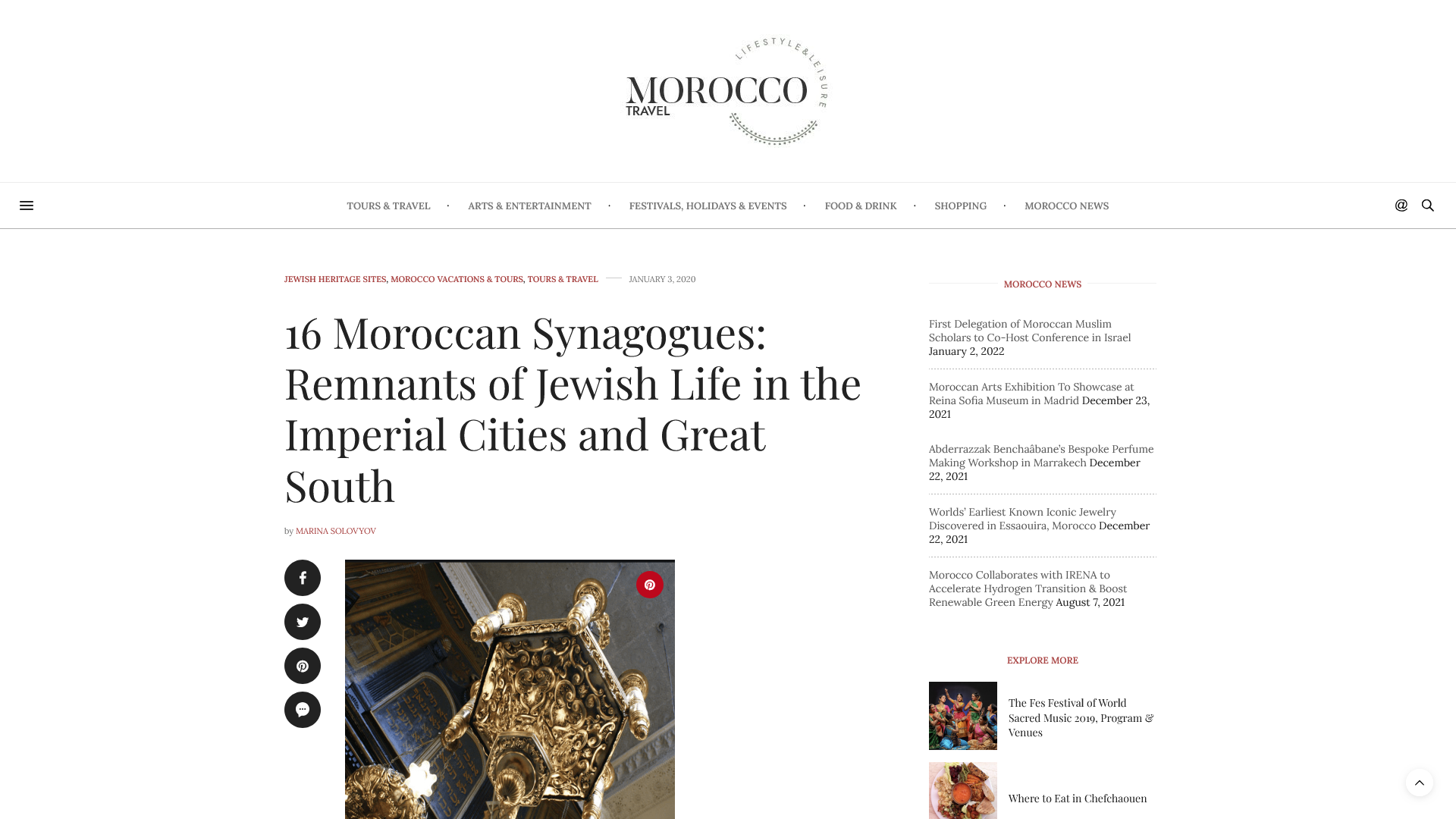
تتميز الصفحة بتضمينها لصورة كنيس موشي ناحون في طنجة كعنصر بصري يدعم المحتوى النصي، كما تتضمن إحصائيات دقيقة مثل زيارة حوالي 50,000 إسرائيلي للمغرب في عام 2017، وتقديرات عدد اليهود المغاربة الحاليين بحوالي 2,500 شخص. تشير المقالة أيضًا إلى افتتاح متحف اليهودية المغربية في الدار البيضاء عام 1997 كأول مؤسسة مخصصة لليهودية في العالم العربي، وخطط بناء متحف يهودي جديد في فاس تحت إشراف الدولة. هذه التفاصيل تجعل من المقالة مصدرًا معلوماتيًا شاملاً للراغبين في استكشاف البعد اليهودي من التراث المغربي العريق.
Esta página web del blog de viajes de Marruecos ofrece un análisis exhaustivo sobre el patrimonio judío marroquí, centrándose específicamente en 16 sinagogas históricas distribuidas por las ciudades imperiales y el gran sur del país. El artículo presenta un enfoque cultural e histórico dirigido tanto a viajeros interesados en turismo patrimonial como a personas de origen judío-marroquí que buscan conectar con sus raíces ancestrales. La publicación documenta la rica herencia de las comunidades judías que florecieron en Marruecos desde el año 70 d.C., destacando cómo estas comunidades coexistieron pacíficamente en los mellahs (barrios judíos) de las ciudades imperiales y en regiones rurales entre los bereberes.
El contenido revela datos fascinantes sobre la evolución demográfica de la población judía marroquí, explicando cómo una segunda ola migratoria significativa llegó en el siglo XV tras el Decreto de Alhambra de 1492, cuando familias sefardíes huyeron de España como refugiados. El artículo destaca que en la década de 1940, aproximadamente 350,000 judíos vivían en Marruecos, convirtiéndolo en el hogar de la comunidad judía más grande del mundo musulmán hasta la fundación de Israel en 1948. Según un informe gubernamental israelí de 2011, cerca de un millón de judíos israelíes tienen al menos algunas raíces marroquíes, lo que subraya la profunda conexión histórica entre ambas comunidades.
La página enfatiza los esfuerzos contemporáneos del Rey Mohammed VI para preservar este legado cultural, citando específicamente su declaración de 2011 donde afirmó que "protege a los judíos marroquíes que viven en Marruecos" y su programa de restauración del patrimonio judío destinado a rehabilitar 100 sinagogas y cementerios. Bajo la supervisión de Serge Berdugo, asesor personal del rey para la comunidad judía marroquí, se han restaurado más de 167 cementerios, 12,600 santuarios y docenas de sinagogas. El artículo también menciona la construcción de un museo judío estatal en Fez que comenzó en abril de 2019, complementando al Museo del Judaísmo Marroquí de Casablanca, que desde 1997 era la única institución dedicada a la judaica en el mundo árabe.
El elemento más notable de la publicación es su enfoque práctico para el turismo cultural, comenzando con la descripción de la Sinagoga Moshe Nahon en Tánger como el primer ejemplo de los 16 sitios destacados. La página combina contexto histórico profundo con información práctica para viajeros, mencionando que en 2017 aproximadamente 50,000 israelíes visitaron Marruecos, y promociona los tours de patrimonio judío como una forma de enriquecer la experiencia cultural de los visitantes, independientemente de sus orígenes religiosos o étnicos.
Citation (APA Style)
16 Moroccan Synagogues: Remnants of Jewish Life in the Imperial Cities and Great South - Morocco Travel Blog. (2025, 11 22).
moroccotravelblog.com.
https://moroccotravelblog.com/2020/01/03/16-moroccan-synagoguues-remnants-of-jewish-life-in-the-imperial-cities-and-great-south/