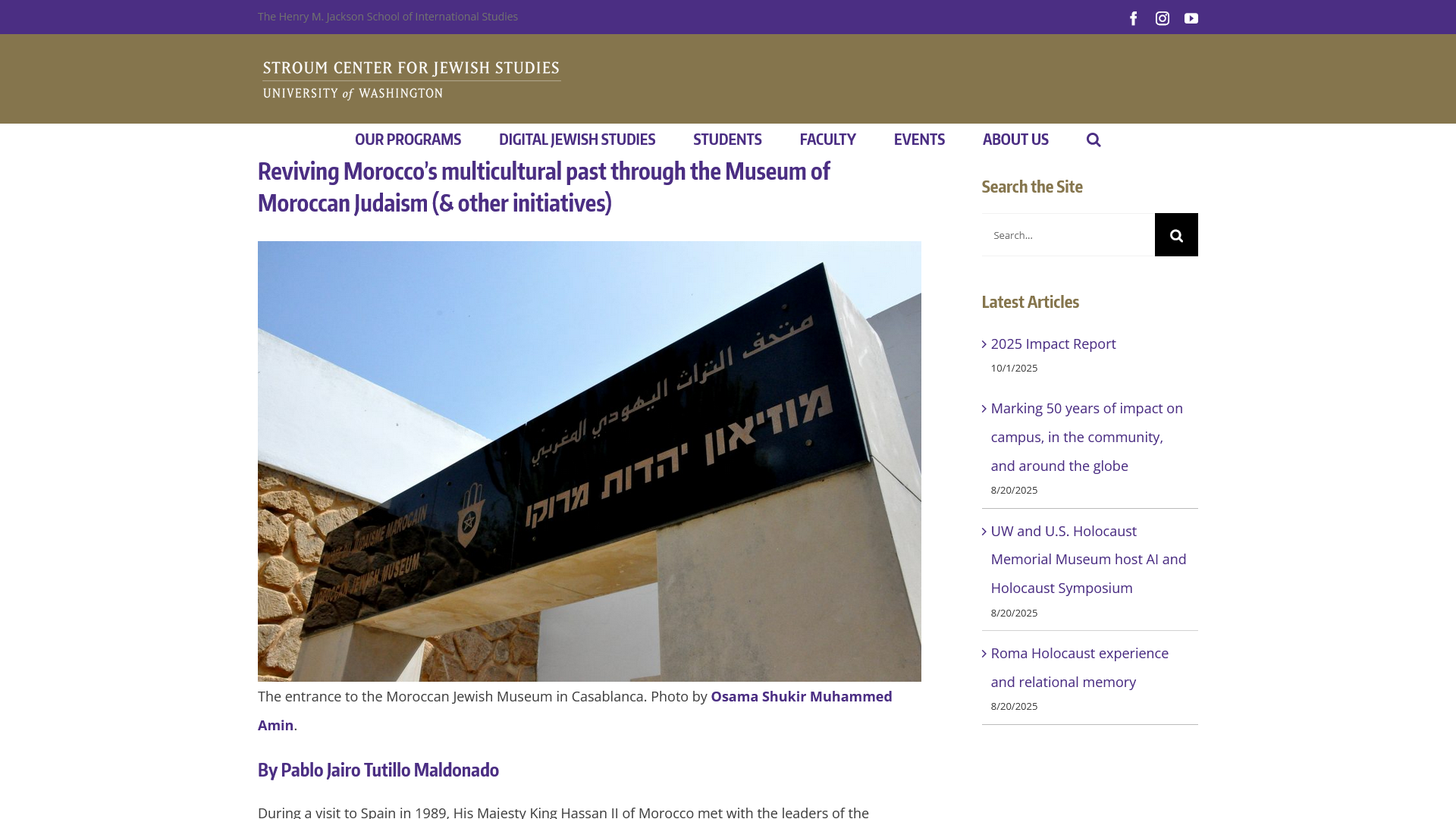
This web page from the University of Washington's Jewish Studies program explores the remarkable story of Morocco's efforts to reclaim and celebrate its multicultural Jewish heritage through the Museum of Moroccan Judaism in Casablanca. Written by Pablo Jairo Tutillo Maldonado, the article examines how Morocco is attempting to rehabilitate the memory of its Jewish population as indigenous Moroccan nationals, despite the fact that only about 2,000 Jews remain in the country today, primarily in Casablanca. The piece begins with a powerful 1989 statement by King Hassan II, who declared to Moroccan Jews in Spain: "I do not consider you Jews of Moroccan descent because Moroccan nationality is never lost... Your rights are guaranteed by the Constitution because there are two events in the reign of my father Mohammed V and mine."
The article provides crucial historical context for understanding the dramatic demographic shift in Morocco's Jewish population. At its peak in 1948, Morocco was home to approximately 265,000 Jews, but this number plummeted due to rising Arab nationalism and anti-Israeli sentiment following Morocco's independence from France in 1956 and its entry into the Arab League in 1958. The migration was catastrophic: from 200,000 Jews remaining after independence, the population dropped to just 50,000 by 1968, 18,000 by 1978, 4,000 by 2011, and only 2,150 by 2018. During this period, Moroccan Jews struggled to maintain their place in society, with some like Abraham Serfaty from the Ministry of Industry writing in defense of their identity, stating "I am an Arab-Jew and I am Jewish because I am an Arab Jew."
The Museum of Moroccan Judaism, established in 1997 and notably the only Jewish museum in the Arab world, represents a significant effort to preserve this vanishing heritage. Founded by the Foundation of Jewish Moroccan Cultural Heritage (FJMCH), the museum is housed in a former orphanage built in 1948 in memory of Murdoch Bengio, which later served as a yeshiva in the 1970s. The museum's creation reflects a broader initiative to restore and protect disappearing Jewish cultural sites throughout Morocco. The article suggests that despite lingering anti-Semitism and the virtual absence of Jews from modern Moroccan society, institutions like this museum are working to reintegrate Jewish history into Morocco's national narrative, positioning Jewish Moroccans as equal subjects of the Kingdom rather than a departed minority. This academic piece is clearly targeted at scholars and students of Jewish studies, Middle Eastern history, and diaspora studies, offering valuable insights into contemporary efforts at cultural reconciliation and historical preservation.
Cette page web présente une analyse approfondie du Musée du Judaïsme Marocain à Casablanca et son rôle dans la préservation de l'héritage juif du Maroc. L'article, rédigé par Pablo Jairo Tutillo Maldonado et publié sur le site des études juives de l'Université de Washington, explore comment ce musée unique - le seul musée juif du monde arabe - tente de raviver la mémoire multiculturelle du Maroc malgré l'absence quasi-totale de sa population juive historique. Le texte débute par une citation marquante du roi Hassan II en 1989, qui déclarait aux Juifs marocains de la diaspora : "Je ne vous considère pas comme des Juifs d'origine marocaine car la nationalité marocaine ne se perd jamais", soulignant ainsi la reconnaissance officielle de leur appartenance à l'identité nationale marocaine.
L'article retrace l'histoire dramatique de l'exode juif du Maroc, documentant le déclin vertigineux d'une communauté qui comptait 265 000 membres en 1948 pour n'en compter plus que 2 150 en 2018. Cette migration massive, survenue principalement entre les années 1950 et 1970, résulte de l'émergence du panarabisme et de l'opposition croissante à Israël dans la société marocaine post-indépendance. L'auteur détaille les tensions identitaires vécues par les Juifs marocains, citant notamment Abraham Serfaty qui écrivait : "Je suis un Arabe-Juif et je suis juif parce que je suis un Arabe-Juif", illustrant les tentatives de ces citoyens de légitimer leur marocanité face aux pressions nationalistes arabes.
Le musée lui-même, fondé en 1997 dans une ancienne villa ayant servi d'orphelinat puis de yeshiva, représente un effort remarquable de préservation culturelle mené par la Fondation du Patrimoine Culturel Judéo-Marocain (FJMCH). Sous la direction de figures comme Simon Levy, Jacques Toledano et Serge Berdugo, cette institution ne se contente pas d'exposer des artefacts, mais s'inscrit dans une démarche plus large de restauration et de protection des structures et de la culture des communautés juives marocaines à travers le royaume. L'article souligne la dimension politique et sociale de cette initiative : malgré la persistance de certains sentiments antisémites et l'absence physique de la communauté juive, le musée contribue à réhabiliter la mémoire des Juifs du Maroc en tant que citoyens marocains indigènes et sujets égaux du royaume.
Cette analyse académique s'adresse particulièrement aux chercheurs en études juives, en histoire du Maghreb et en patrimoine culturel, offrant une perspective nuancée sur les enjeux contemporains de mémoire collective et d'identité nationale dans le contexte post-colonial marocain. L'article intègre des éléments visuels significatifs, notamment des photographies historiques de Juifs marocains de Fès vers 1900 et des images contemporaines du musée, enrichissant la compréhension du lecteur sur cette transformation historique et culturelle majeure.
דף זה מתמקד בתולדות המוזיאון ליהדות מרוקו בקזבלנקה, המוזיאון היהודי היחיד בעולם הערבי, ובמאמצים לשקם את הזיכרון הקולקטיבי של היהודים המרוקאים כחלק אינטגרלי מהזהות הלאומית המרוקאית. הדף מציג את החזון של המלך חסן השני ממרוקו, שהצהיר ב-1989 בפני יהודים ומוסלמים ספרדים ממוצא מרוקאי: "איני רואה בכם יהודים ממוצא מרוקאי כי האזרחות המרוקאית לא הולכת לאיבוד לעולם... אנו רואים בכם ובכל אחיכם המתגוררים מישראל ועד קנדה, בוונצואלה, צרפת, אנגליה, אמריקה, אמריקה הלטינית ובמקומות אחרים, כנתינים מרוקאים הנהנים מכל הזכויות שהחוקה המרוקאית מעניקה לכם." הצהרה זו באה לאחר שכמעט כל האוכלוסייה היהודית המרוקאית - שמנתה 265,000 נפש ב-1948 - עזבה את המדינה בין שנות החמישים לשבעים של המאה ה-20.
התוכן מספק רקע היסטורי מפורט על הירידה הדרמטיתבמספר היהודים במרוקו, מ-200,000 ב-1956 (לאחר העצמאות מצרפת) ל-2,150 בלבד ב-2018. הסיבות לירידה זו כוללות את עליית הלאומנות הערבית והפאן-ערביזם, הצטרפות מרוקו לליגה הערבית ב-1958, ולחצים מצד מנהיגים כמו גמאל עבד נאצר להגדיר את הזהות המרוקאית כערבית ומוסלמית אך ורק. הדף מתאר כיצד יהודים מרוקאים ניסו להגן על מעמדם האזרחי דרך עיתונות יהודית כמו "La Voix des Communautes" ומפלגות מעורבות, אך מאמצים אלה נכשלו בסופו של דבר עקב הלחץ החברתי והפוליטי הגובר.
המוזיאון ליהדות מרוקו, שנוסד ב-1997 על ידי קרן המורשת התרבותית היהודית-מרוקאית (FJMCH), ממוקם בוילה היסטורית בקזבלנקה ששימשה במקור כבית יתומים יהודי (1948) ולאחר מכן כישיבה אורתודוכסית. בין מייסדי המוזיאון נמנים שמעון לוי, ז'אק טולדנו, בוריס טולדנו וסרז' ברדוגו, שפעלו לא רק להקמת המוזיאון אלא גם לשימור ושחזור מבנים ותרבות של קהילות יהודיות נעלמות ברחבי ממלכת מרוקו. כיום, כשרק כ-2,000 יהודים נותרו במרוקו (בעיקר בקזבלנקה), המוזיאון משמש כסמל למאמץ רחב יותר לשקם את הזיכרון של היהודים המרוקאים כאזרחים ילידים ושווי זכויות בממלכה, למרות נוכחותם של גילויי אנטישמיות מסוימים במדינה.
דף זה מיועד לקהל אקדמי וחוקרי יהדות ומזרח תיכון, ומציע פרספקטיבה מעמיקה על מורכבות הזהות הלאומית במרוקו המודרנית. הוא כולל צילומים היסטוריים, נתונים סטטיסטיים מדויקים על ירידת האוכלוסייה היהודית, וציטוטים מתועדים ממקורות עכשוויים. התוכן מדגיש את המתח בין החזון המלכותי של מרוקו רב-תרבותית לבין המציאות החברתית והפוליטית שהובילה לעזיבה המונית של היהודים.
هذه الصفحة من موقع الدراسات اليهودية بجامعة واشنطن تتناول موضوعاً فريداً وهاماً حول إحياء التراث اليهودي المغربي من خلال متحف اليهودية المغربية في الدار البيضاء. يركز المقال، الذي كتبه بابلو جايرو توتيلو مالدونادو، على الجهود المعاصرة لإعادة تأهيل ذاكرة اليهود المغاربة كمواطنين أصليين ومتساوين في المملكة المغربية، رغم انخفاض أعدادهم الدراماتيكي من 265,000 في عام 1948 إلى حوالي 2,000 فقط اليوم. يبدأ المقال بخطاب قوي للملك الحسن الثاني عام 1989 في إسبانيا، حيث أكد فيه أن اليهود المغاربة في الشتات يبقون "رعايا مغاربة يتمتعون بجميع الحقوق التي يمنحها لهم الدستور المغربي".
يقدم المقال تحليلاً تاريخياً مفصلاً للهجرة الجماعية لليهود المغاربة بين الخمسينيات والسبعينيات، مرتبطاً إياها بصعود القومية العربية ومعارضة دولة إسرائيل داخل المجتمع المغربي. يوضح كيف أن استقلال المغرب عن فرنسا عام 1956 ودخوله جامعة الدول العربية عام 1958 خلقا ضغوطاً على الهوية الوطنية المغربية لتكون عربية ومسلمة حصرياً، مما أجبر اليهود المغاربة على تبرير "مغربيتهم". يذكر المقال مقاومة بعض المثقفين اليهود المغاربة مثل إبراهيم الصرفاتي الذي كتب: "أنا عربي يهودي وأنا يهودي لأنني عربي يهودي"، مما يعكس التعقيدات الهوياتية في تلك الفترة.
القسم الأكثر إثارة للاهتمام يركز على تأسيس متحف اليهودية المغربية عام 1997، وهو المتحف اليهودي الوحيد في العالم العربي. يقع المتحف في فيلا قديمة كانت في الأصل داراً لليتامى اليهود أسست عام 1948 تخليداً لذكرى مردوخ بنجيو، ثم تحولت إلى مدرسة دينية يهودية في أواخر السبعينيات قبل أن تصبح متحفاً. تأسس المتحف بجهود مؤسسة التراث الثقافي اليهودي المغربي، ويديره اليوم ظهر رحيحيل، وهي مسلمة مغربية، مما يرمز للطبيعة التعددية الثقافية للمشروع. يبرز المقال كيف يعمل المتحف وغيره من المبادرات على إعادة إحياء الذاكرة الجماعية للتعددية الثقافية المغربية، رغم التحديات المعاصرة والعداء للسامية المتبقي في المجتمع.
Esta página web del programa de Estudios Judíos de la Universidad de Washington examina el esfuerzo por revivir y preservar la memoria del pasado multicultural de Marruecos a través del Museo del Judaísmo Marroquí en Casablanca. El artículo, escrito por Pablo Jairo Tutillo Maldonado, se centra en cómo esta institución cultural única busca rehabilitar la identidad judía como parte integral del discurso nacional marroquí, a pesar de la práctica desaparición de la población judía del país. El texto inicia con una poderosa declaración del Rey Hassan II de 1989, donde afirmaba que los judíos de origen marroquí nunca pierden su nacionalidad y siguen siendo "súbditos marroquíes que gozan de todos los derechos que la Constitución marroquí les otorga", estableciendo así el marco conceptual para entender la ciudadanía judía marroquí.
El artículo presenta un análisis histórico detallado del declive demográfico de la comunidad judía marroquí, que pasó de aproximadamente 265,000 personas en 1948 a solo 2,150 en 2018. Esta dramática reducción se atribuye principalmente a los conflictos identitarios surgidos tras la independencia de Marruecos en 1956, la presión del panarabismo liderado por figuras como Gamal Abdel Nasser, y el ingreso de Marruecos a la Liga Árabe en 1958. El texto documenta cómo los judíos marroquíes intentaron defender su lugar en la sociedad a través de periódicos como "La Voix des Communautés" y figuras como Abraham Serfaty, quien se definía como "árabe-judío", pero eventualmente se vieron obligados a emigrar masivamente entre las décadas de 1950 y 1970.
La descripción del Museo del Judaísmo Marroquí revela su significado como la única institución de este tipo en el mundo árabe, fundada en 1997 por la Fundación del Patrimonio Cultural Judío Marroquí (FJMCH). El museo ocupa una villa histórica que originalmente sirvió como orfanato judío en memoria de Murdoch Bengio (1948) y posteriormente como yeshiva ortodoxa en los años 1970. Bajo el liderazgo de figuras como Simon Levy, Jacques Toledano, Boris Toledano y Serge Berdugo, la institución no solo preserva artefactos culturales, sino que también trabaja activamente en la restauración de estructuras judías en desaparición por todo el reino. Actualmente dirigido por Zhor Rahihil, una musulmana marroquí, el museo simboliza el esfuerzo intercultural por mantener viva la memoria de una comunidad que formó parte esencial del tejido social marroquí durante siglos, desafiando las narrativas nacionalistas que excluyen las identidades no árabes y no musulmanas de la definición de "maroquinidad".
Citation (APA Style)
Reviving Morocco's multicultural past through the Museum of Moroccan Judaism (& other initiatives) - UW Stroum Center for Jewish Studies. (2025, 11 22).
jewishstudies.washington.edu.
https://jewishstudies.washington.edu/global-judaism/museum-of-moroccan-judaism-history-multiculturalism-morocco/